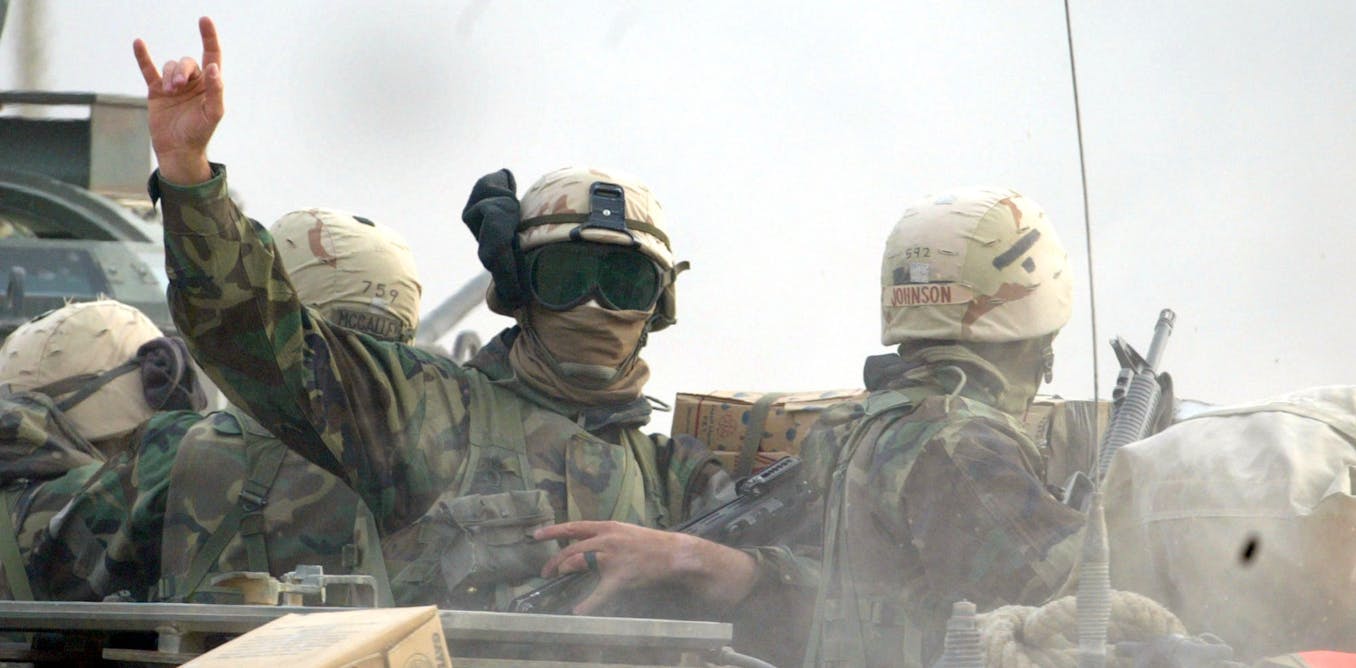
Mojtaba Khamenei’s March 8, 2026 succession cements IRGC dominance; the Revolutionary Guard controls an estimated 30–40% of Iran’s economy and a parallel state infrastructure. The article highlights that U.S. and Israeli strikes in 2025 left Iran with over 880 pounds of highly enriched uranium unaccounted for, increased regional war risk, and failed to provide a viable post-regime governance plan. Drawing lessons from post-2003 Iraq (US spent ~$2 trillion and 4,488 American lives; Baghdad fell in 21 days), the piece warns that military destruction without a political strategy creates vacuums filled by organized coercive actors, implying elevated geopolitical risk and market volatility.
The immediate market mechanism to watch is organizational arbitrage: when state capacity is degraded, non-state and para-state actors with pre-existing logistics, financing and mobilization networks expand operational reach. That outcome generates persistent, low‑intensity disruptions (maritime risk corridors, higher war‑risk insurance, targeted sanctions) that raise transaction costs across trade, energy and commodity logistics for quarters-to-years rather than days.
Defense and security supply chains are the natural recipients of re‑allocated government budgets and emergency procurement: platform sustainment, missiles, surveillance and cyber tools see front‑loaded demand with multi-year service/maintenance tails. Conversely, sectors exposed to just‑in‑time shipping or MENA manufacturing inputs face margin pressure — expect container rerouting and time‑charter spikes to lift freight indices by mid‑single digits within weeks and amplify input cost volatility.
Financially, risk‑off flows will compress carry strategies, widen EM sovereign and corporate spreads and lift real rates on safe assets; base effects in oil and insurance should increase commodity realized vol for 3–12 months, creating attractive premium selling opportunities but also material tail risk for energy longs.
A common consensus trade (buy defense, buy oil, sell EM) is directionally sensible but crowded; a short, sharp diplomatic de‑escalation would reverse moves quickly. Watch mediation signals and insurance market basis (LR/war premiums) as the highest‑fidelity short‑term reversal indicators over 1–3 months.
AI-powered research, real-time alerts, and portfolio analytics for institutional investors.
Request DemoOverall Sentiment
strongly negative
Sentiment Score
-0.70
