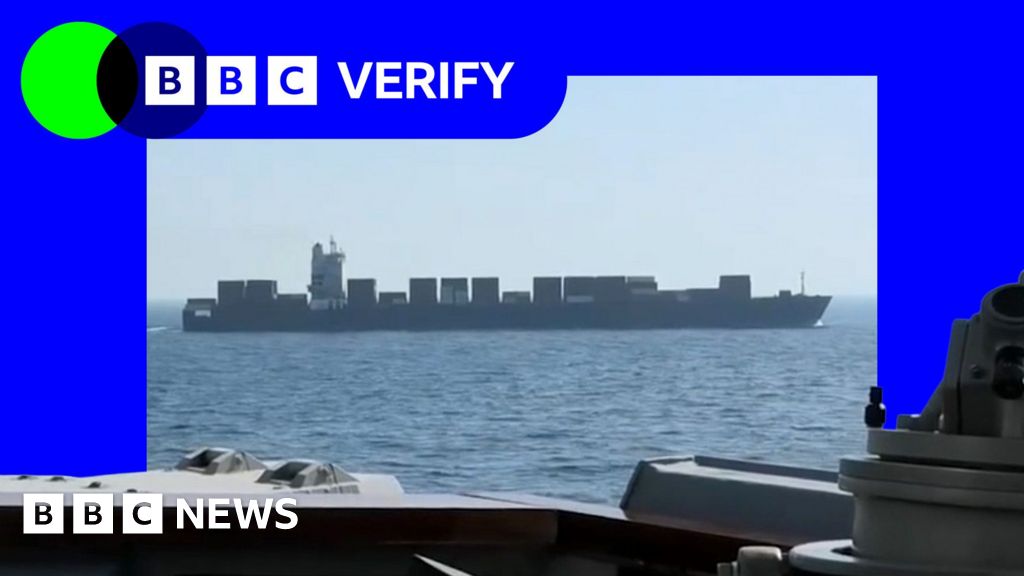
The US seized an Iranian ship entering the Gulf after it allegedly failed to respond to a warning to stop, marking the first such seizure since the blockade of Iranian ports began. Iran called the move a violation of the ceasefire and said it would retaliate for an "act of armed piracy." The escalation raises geopolitical and maritime security risks and could disrupt shipping, energy flows, and broader regional stability.
This is a low-probability, high-convexity escalation event whose first-order market impact is mostly in the volatility surface, not spot prices. The immediate beneficiaries are defense, maritime security, and select energy-logistics names with exposure to Red Sea/Gulf rerouting, escort demand, and naval replenishment cycles; the losers are import-dependent refiners, shipping insurers, and anyone with just-in-time exposure to Gulf throughput. The second-order effect to watch is not the seized hull itself, but whether counterparties start treating the Gulf as a sanction-enforcement zone, which raises friction costs across cargo financing, letters of credit, and vessel scheduling even if kinetic escalation stays contained.
The important catalyst window is days to weeks: retaliation rhetoric matters less than whether insurance premiums, port calls, and voyage times change immediately. If this becomes a template for interdictions, the market should price a durable increase in operating risk for tankers and feeder shipping, which can tighten effective supply without any change in physical production. That tends to support upstream energy and defense budgets while compressing margins for shippers and chemical users that depend on predictable Middle East routes.
The contrarian risk is that the market may overestimate follow-through: a one-off seizure can be politically loud yet commercially small if both sides calibrate to avoid broader shipping disruption. If the episode does not broaden within 1-2 weeks, the risk premium can fade quickly, especially in cyclicals that have already repriced on headline fear. The cleaner medium-term tell is whether peers in the sanctioned trade reroute, delay, or self-insure more aggressively; that is where a real regime shift would show up.
AI-powered research, real-time alerts, and portfolio analytics for institutional investors.
Request DemoOverall Sentiment
moderately negative
Sentiment Score
-0.40
