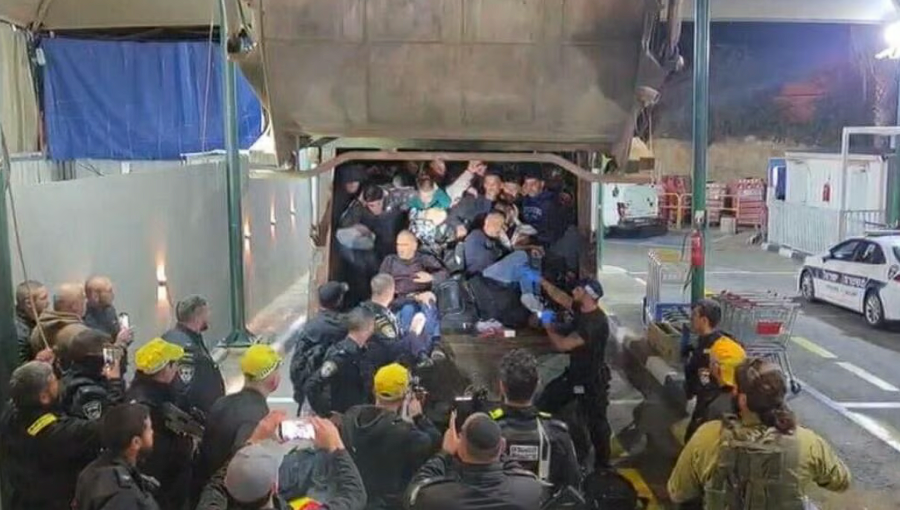
Israeli Border Police discovered 60 Palestinians concealed in a garbage truck at the Shomron Crossing checkpoint and arrested the driver, who was operating without a proper licence. The incident underscores continued security and border-control pressure in the West Bank, where Israeli officials say they have recorded about 5,300 apprehensions out of roughly 6,000 illegal crossings in 2025. The article also notes Israel's secret approval of 34 new settlements, raising tensions with local Palestinians and foreign governments.
The market-relevant takeaway is not the smuggling incident itself, but the signal that enforcement is becoming more intrusive while the underlying labor-and-mobility pressure remains unresolved. That combination tends to raise operating friction for Israeli employers that rely on flexible cross-border labor, especially construction, agriculture, and low-end services, which can translate into higher wage bills, delays, and a greater willingness to automate or substitute domestic labor over the next 3-12 months.
The settlement expansion adds a second-order risk: it increases the probability of a wider security perimeter and more frequent policy friction with European counterparts and multilateral institutions. That matters less for headline geopolitics than for flows into Israeli assets—incremental sanctions rhetoric usually hits small- and mid-cap domestic cyclicals first, then leaks into the currency and bank-beta as foreign investors demand a higher risk premium. In practice, the next catalyst is not another raid; it is whether foreign governments convert verbal pressure into procurement or investment friction over the coming quarter.
Contrarian read: the consensus will likely overprice immediate escalation and underprice the medium-term operational response. Tighter screening, more arrests, and more visible enforcement can actually support a stabilizing narrative for domestic security-sensitive sectors, while pushing labor-intensive businesses to pass through costs rather than suffer volume loss. So the cleaner trade is not a broad geopolitical short; it is a relative-value bet against sectors with the most labor intensity and least pricing power, versus beneficiaries of a durable security premium.
Tail risk is a localized security shock that forces a broader West Bank lockdown, which would hit transport/logistics and consumer activity in days. But if the enforcement regime tightens without a major flare-up, the larger impact should emerge over months through higher compliance costs, tighter labor supply, and more persistent investor caution toward domestically exposed names.
AI-powered research, real-time alerts, and portfolio analytics for institutional investors.
Request TrialOverall Sentiment
moderately negative
Sentiment Score
-0.35
