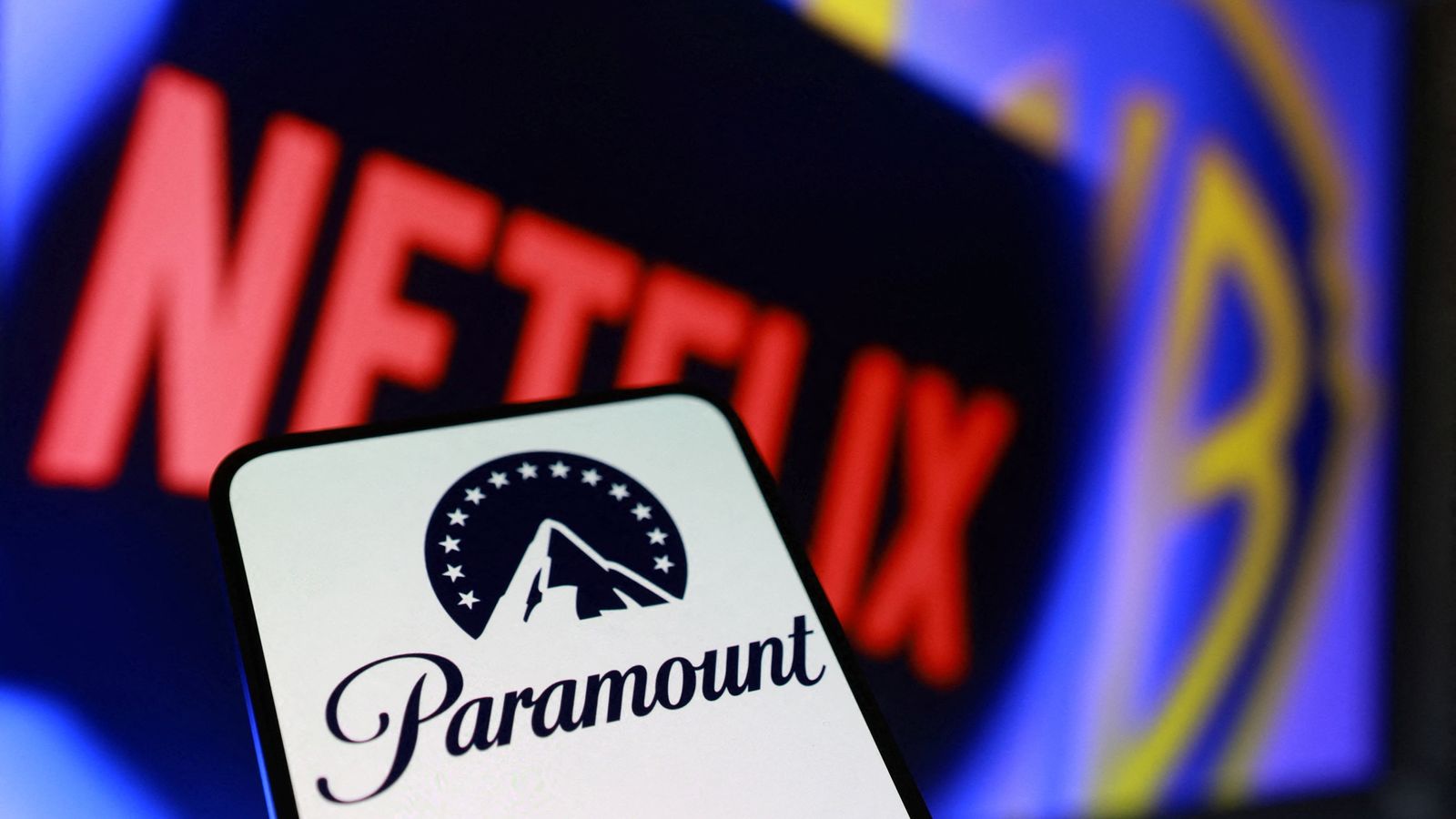
Paramount Skydance’s $31-per-share hostile bid (valuing Warner Bros Discovery at ~$111bn including debt) has been declared 'superior' by Warner’s board, prompting Netflix to withdraw its $27.75-per-share proposal for Warner’s studio and HBO Max units (valued at nearly $83bn including debt). Warner CEO David Zaslav signaled support for the Paramount combination, but shareholder and regulatory approvals — including antitrust and political scrutiny over media concentration — remain unresolved. Market reaction was notable in after-hours trading: Netflix +8.5%, Paramount +6.2% and WBD trading ~2% lower at $28.80, underscoring continued volatility and material implications for valuations and deal risk ahead.
Market structure: Paramount Skydance’s apparent lead concentrates premium Hollywood IP (HBO, Warner franchises, Paramount library) under fewer owners, increasing pricing power for subscription and licensing bundles over 6–24 months. Netflix’s withdrawal is a net positive for its free cash flow and margin profile (it avoided an ~$83bn acquisition) and should support a near-term rerating; WBD’s shares become a classic takeover-arb instrument with a $31 headline price and ~7–8% upside from current $28.8.Pricing dynamics will favour scale players that can cut duplicate content spend and reprice SVOD/AVOD bundles, pressuring smaller streamers and independent studios over 12–36 months.
Risk assessment: Highest tail risks are regulatory/government intervention around news concentration (DOJ/FTC complaint or conditions forcing divestiture of CNN/CBS News) and financing withdrawal by major backers (Ellison); either could reduce deal value >10–30%. Time buckets: days—heightened volatility and position re-pricing; weeks–months—HSR/regulatory reviews (expect 30–90 day windows) and activist/shareholder votes; quarters—integration/realized synergies or forced divestitures. Hidden dependencies include WBD’s leverage and ad market cyclicality; adverse ad weakness would reduce standalone valuations and make hostile bids harder to finance.
Trade implications: Short-term (0–3 months) favours merger-arb: buy WBD below $29 to capture the $31 bid (target capture ~7–10% in 3–9 months), but size modest (1–2% portfolio) and exit on a formal second-request. Tactical long NFLX exposure (2–3% or 1–2% notional in 1–3 month ATM calls) to capture the relief rally and balance-sheet optionality; hedge with WBD puts if regulatory noise increases. Sector rotation: reduce small-cap streamer exposure and increase large-cap scaled media/rights owners and advertising cyclicality shorts into FY26 results.
Contrarian angles: The market underprices the probability that regulators force divestiture rather than block the deal, which would lower effective consideration for WBD by >$2–5/sh and create broken-arb upside for targeted asset buys. Netflix’s withdrawal reduces an aggressive bidding floor — lowering the chance of a bidding war and thus downside for arbitrageurs if deal collapses, contrary to headline fear. Historical parallels: Comcast–TWC regulatory frictions (2014–15) show protracted reviews can produce deal value haircut of 5–20% and force remedies; plan positions assuming a 60–75% chance of close within 6–12 months, not certainty.
AI-powered research, real-time alerts, and portfolio analytics for institutional investors.
Request DemoOverall Sentiment
mixed
Sentiment Score
0.05
Ticker Sentiment
