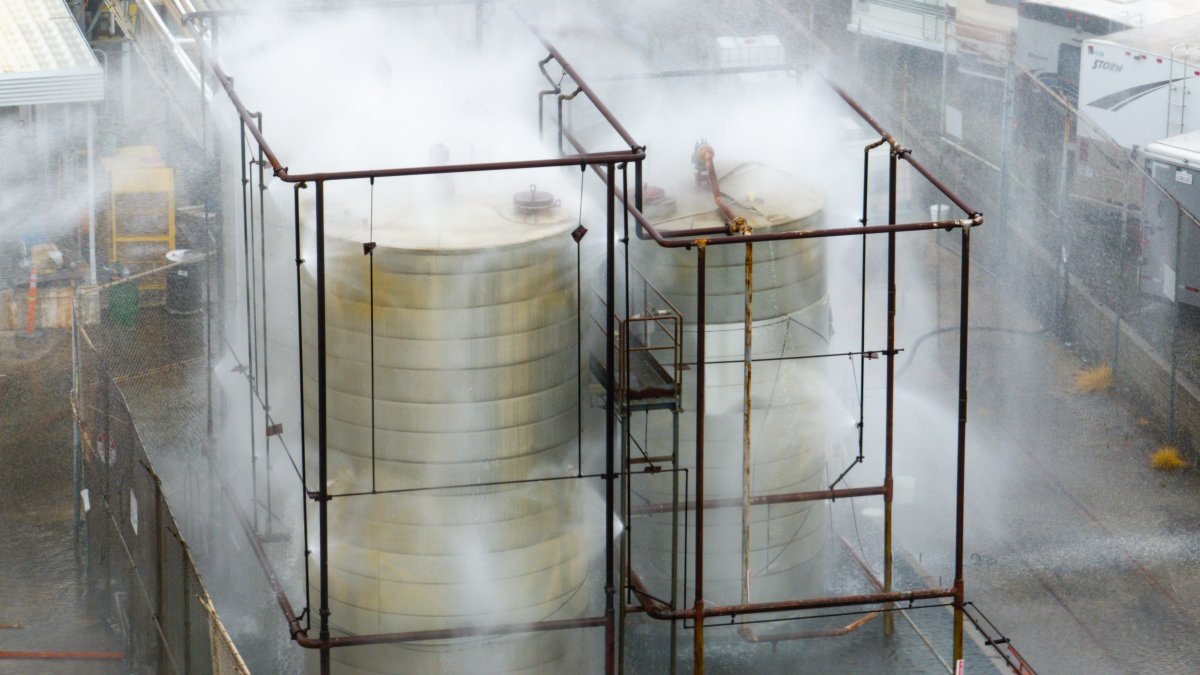
A toxic chemical tank incident at GKN Aerospace’s Garden Grove facility triggered an unprecedented emergency, though fire authorities said the explosion threat has now been eliminated. Evacuations for homes and businesses remain in effect, and the White House and federal officials are monitoring the situation after President Trump signed a Federal Emergency Declaration request from California. The incident is a localized but material operational and public-safety disruption.
The immediate market effect is less about the incident itself and more about the implication that a defense/aerospace manufacturer’s operational controls failed badly enough to trigger federal attention. For GE, the read-through is reputational and regulatory rather than direct revenue loss: even without a material financial charge, the cost of audits, remediation, insurance repricing, and customer scrutiny can linger for quarters. In defense-adjacent manufacturing, one high-profile safety event can tighten procurement language across the sector, especially where hazardous materials handling is outsourced or embedded in supplier networks.
The second-order risk is that this becomes a broader permitting and compliance issue for industrial operators in California, where state and local agencies can now layer on faster inspections and more restrictive storage rules. That tends to hurt smaller suppliers first, but it can also raise qualification costs for incumbents with complex facilities. If the company is forced into process changes or temporary shutdowns, the near-term hit is not just direct production interruption; it is schedule risk on downstream aerospace programs where delays often trigger penalty clauses and customer re-sourcing conversations.
The contrarian view is that the market may overestimate legal liability and underestimate how quickly this fades if the tank is stabilized and no release occurs. The real catalyst window is days, not months, for headline risk; the financial impact only compounds over months if regulators find systemic deficiencies or if evacuations create material downtime. Any evidence that the issue was contained early and that federal/state involvement is procedural rather than punitive should allow the stock to mean-revert, but absent that, the asymmetry is skewed toward underappreciated compliance drag rather than a one-time event.
AI-powered research, real-time alerts, and portfolio analytics for institutional investors.
Request DemoOverall Sentiment
moderately negative
Sentiment Score
-0.45
Ticker Sentiment
