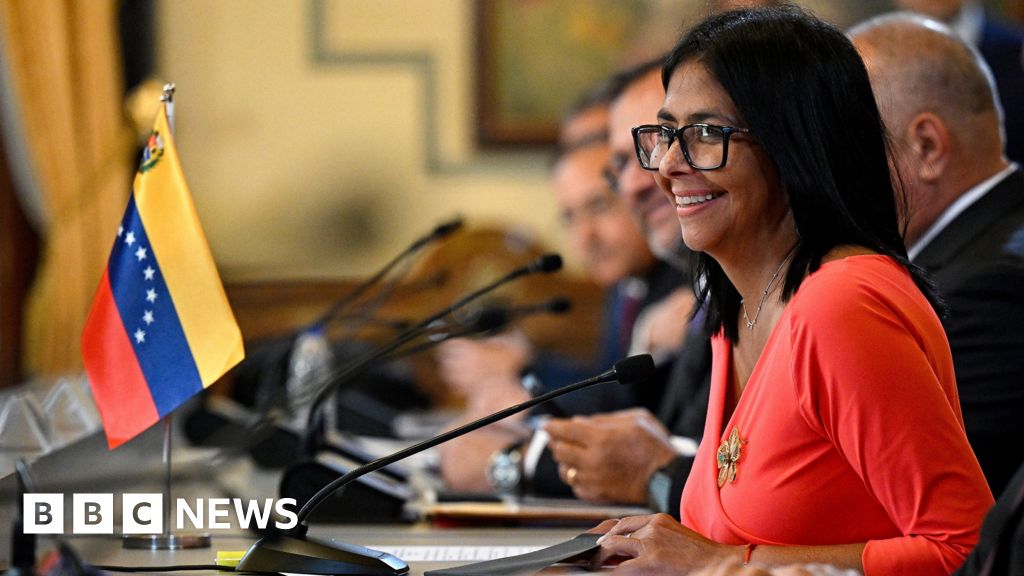
Venezuela's interim administration said the political-prisoner release scheme is "coming to an end" after 9 weeks, despite rights groups saying nearly 500 detainees have been freed and more than 500 still remain jailed. The dispute raises rule-of-law and governance concerns, with watchdogs calling the move arbitrary and unconstitutional and warning only another legislative act or referendum could reverse the amnesty. The article also highlights continued U.S.-Venezuela political maneuvering, including Washington's lifting of sanctions on Delcy Rodríguez.
The market-relevant issue is not the humanitarian optics; it is whether Washington still views this interim arrangement as a credible bridge to a durable settlement. If the prisoner-release channel is closed off early, it raises the probability that the US will demand a tougher compliance mechanism on sanctions relief, which would slow any re-engagement premium across Venezuela-linked assets and keep the country risk discount embedded for months rather than weeks.
Second-order effect: once the bargaining channel narrows, the regime has less incentive to make incremental concessions and more incentive to pivot back to coercive control. That tends to increase the tail risk of renewed detentions, policy reversals, and episodic sanctions snapback, which matters more for sovereign-exposed capital than for the near-term headline flow. The real loser is any asset class pricing in a linear normalization path; those trades typically fail when the transition is managed through ambiguity instead of formal institutions.
The contrarian read is that the current rhetoric may be less a reversal than a negotiating tactic to extract a better US position before the next phase. If so, the selloff in optimism could be overdone, but only tactically: the upside requires a credible, externally enforced sequencing of releases, elections, and sanctions relief, which is still absent. Over the next 30-90 days, the key catalyst is whether Washington publicly links any further easing to verifiable legal steps rather than political promises.
For broader EM, this reinforces a higher-risk template for US-mediated transitions: sanctions relief can be temporary and reversible, so capital should demand more conservative entry points and tighter stop-losses on any Venezuela beta.
AI-powered research, real-time alerts, and portfolio analytics for institutional investors.
Request DemoOverall Sentiment
mildly negative
Sentiment Score
-0.20
