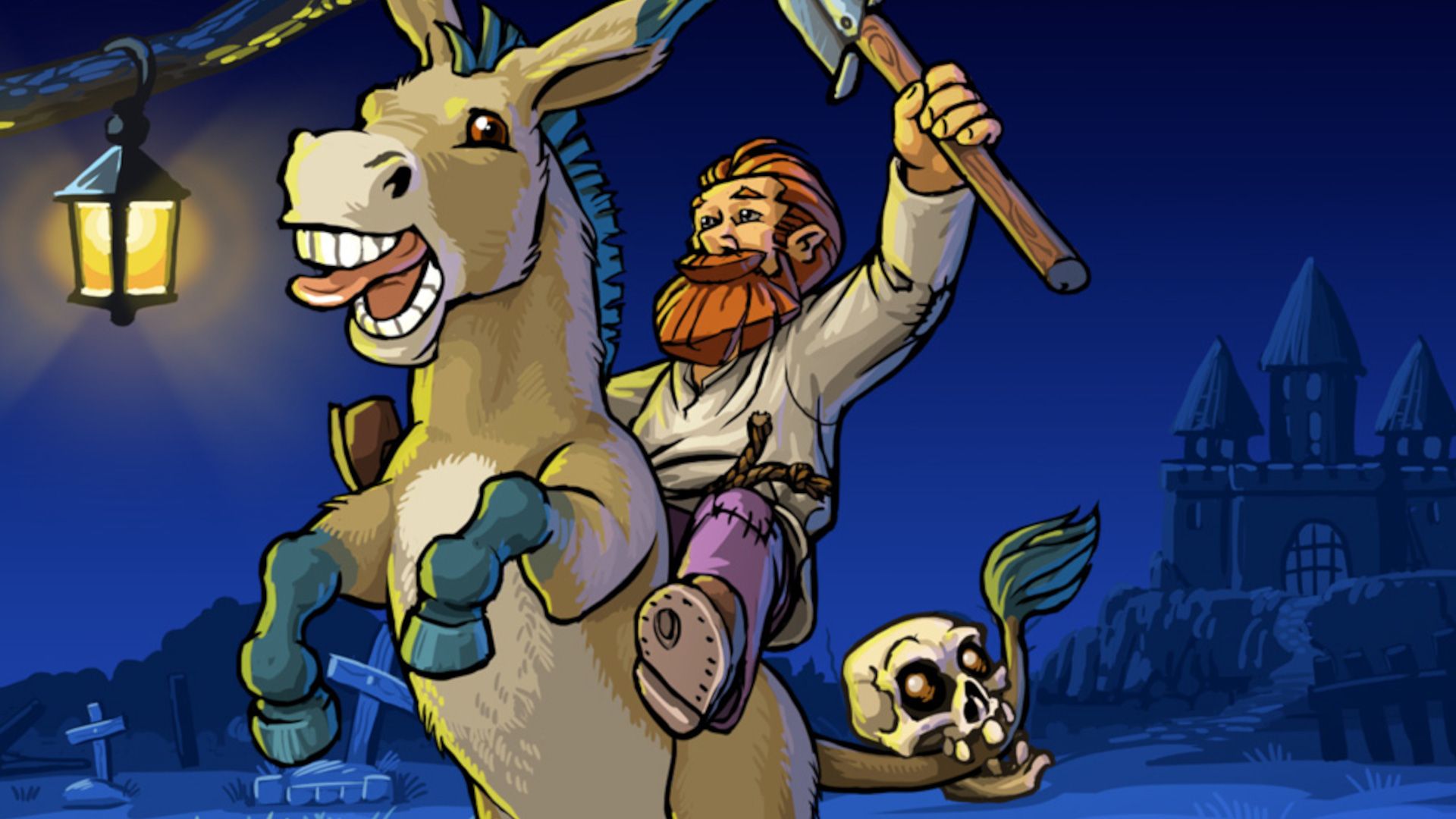
tinyBuild said Graveyard Keeper is currently among Steam’s top 39 most played games, with over 40,000 concurrent players, and that the sequel has reached 400,000 wishlists. The company also said it has made almost $250,000 from DLC sales for the original game on Steam alone after temporarily making the base title free. The update suggests the free-to-play promotion is boosting engagement and monetization ahead of Graveyard Keeper 2, though the likely market impact is limited.
This is a strong signal that the most efficient monetization path in lower-visibility gaming is shifting from pure launch economics to “content-financed acquisition.” Giving away the base game effectively turns the back catalog into a paid funnel: once the install base expands, the marginal economics are driven by DLC attach rather than unit sales, which materially raises the value of long-tail content libraries and lowers customer acquisition costs for sequels.
The second-order winner is not just the publisher/developer pair here, but any studio with a deep DLC stack, mod-friendly retention, or sequel pipeline. That likely widens the gap between franchises with years of expandable content and standalone premium indies that lack monetization depth; the latter may see free promos fail to convert because they have no follow-on revenue surface. For platform holders, a spike in concurrent users also reinforces engagement metrics that feed store-ranking algorithms, so the strategy can be self-reinforcing for titles with enough breadth to generate repeated play and wishlist momentum.
The key risk is that this model is not infinitely scalable: it works best when the back catalog is already built, the sequel is imminent, and the base game has enough brand equity to convert freebies into paying DLC users. If the broader market starts copying the playbook, the discount-to-free cadence could cannibalize premium pricing and train consumers to wait for giveaways, especially in a weak demand environment where indie discovery is already fragile. The catalyst to watch is whether this produces durable sequel wishlists and DLC conversion over the next 1-2 quarters, rather than a one-off spike in concurrency that fades once the free window closes.
Contrarian take: the market may underappreciate how much of the value here is really in the sequel pre-sale optionality, not the original IP itself. If the wishlists translate into launch-day sales, this becomes a low-cost demand-generation tactic; if not, the strategy is merely revenue front-loading from the old title at the expense of future price integrity. That makes the tradeable insight less about headline engagement and more about whether the company can repeatedly use the same playbook across its portfolio without degrading brand monetization.
AI-powered research, real-time alerts, and portfolio analytics for institutional investors.
Request TrialOverall Sentiment
moderately positive
Sentiment Score
0.45
