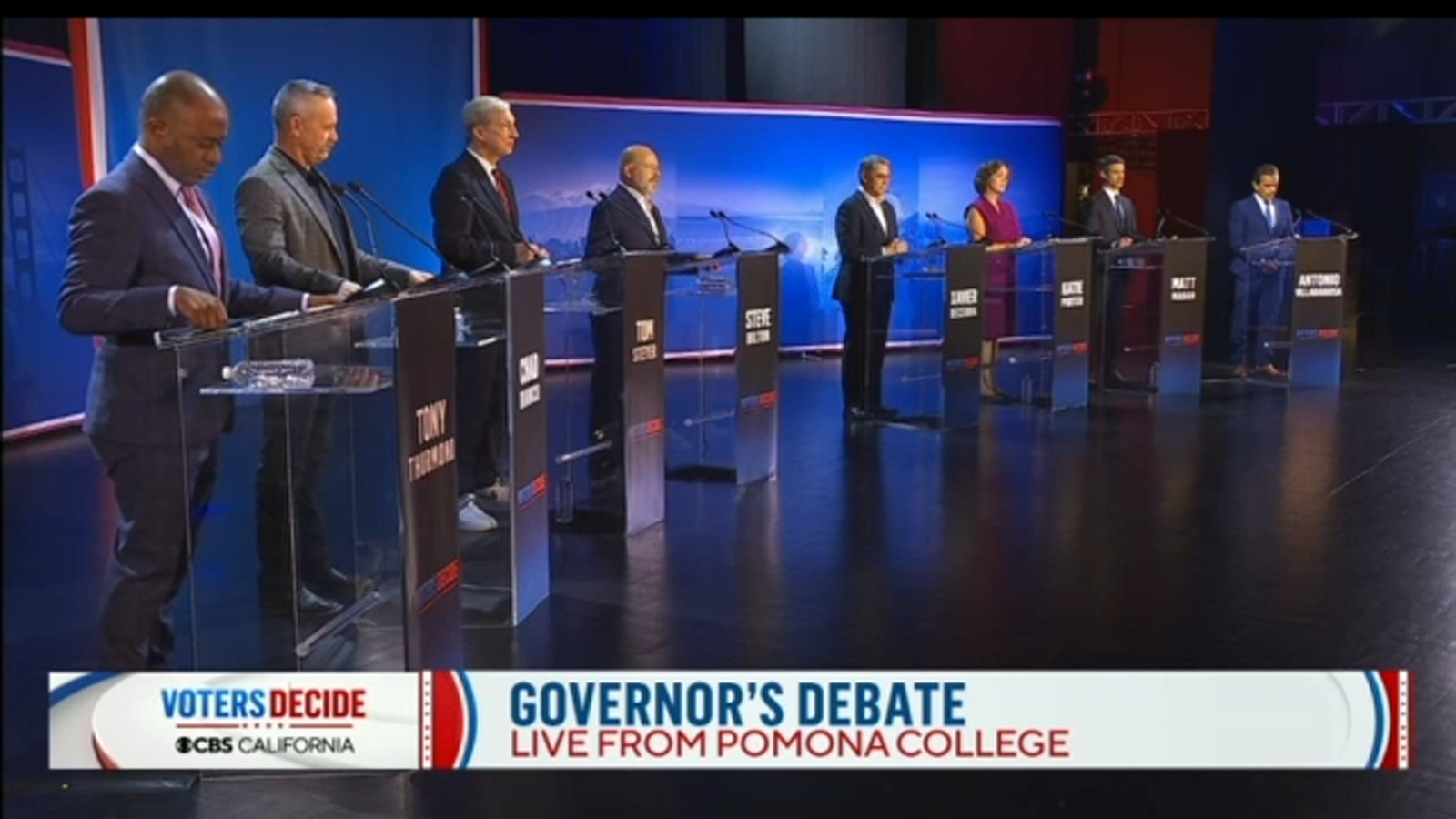
Eight candidates for California governor clashed in a televised debate ahead of the June 2 primary, with housing affordability, gas taxes, and broader cost-of-living issues dominating the discussion. Xavier Becerra, Steve Hilton, Tony Thurmond, Antonio Villaraigosa, Matt Mahan, Tom Steyer, Katie Porter, and Chad Bianco all exchanged sharp attacks, but the debate did not produce a clear breakout moment. The article is primarily political coverage and is unlikely to have a meaningful direct market impact.
The market implication here is not a broad policy shock but a repricing of intra-California political probability. The most tradable angle is that the race is effectively a binary option on housing, gasoline, and tax policy: if a pro-growth, housing-streamlining candidate consolidates the anti-incumbent vote, you get a modest near-term rerating in California-exposed real estate, construction, and consumer discretionary; if the field remains fragmented, the status quo policy mix becomes more likely, extending the pressure on affordability-sensitive sectors.
Second-order effects are more important than the headline debate noise. Any credible move toward faster permitting and first-time-buyer assistance would mostly benefit homebuilders and mortgage-related businesses with California exposure, but the lag is long: approvals and starts would take quarters to flow through, while sentiment can move in days. On the transportation side, gas-tax reform is a negative for California budget flexibility in the medium term, which raises the odds of offsetting fees or regulatory tightening elsewhere; that means the near-term consumer tailwind could be partially offset by delayed road-maintenance funding and more political friction around EV/road-pricing policy.
The contrarian mistake is to treat this as a pure anti-tax trade. California fiscal constraints make large, durable tax cuts hard to implement; the more likely outcome is a symbolic shift with limited enacted policy change. That argues for trading the probability shift, not the policy dream: look for short-duration setups into the primary rather than long-dated structural bets. The biggest tail risk is a late-campaign consolidation that changes the top-two calculus; that would hit the currently favored name the most because the race is close enough that small vote migrations can matter disproportionately over the next 4 weeks.
AI-powered research, real-time alerts, and portfolio analytics for institutional investors.
Request DemoOverall Sentiment
neutral
Sentiment Score
0.00
