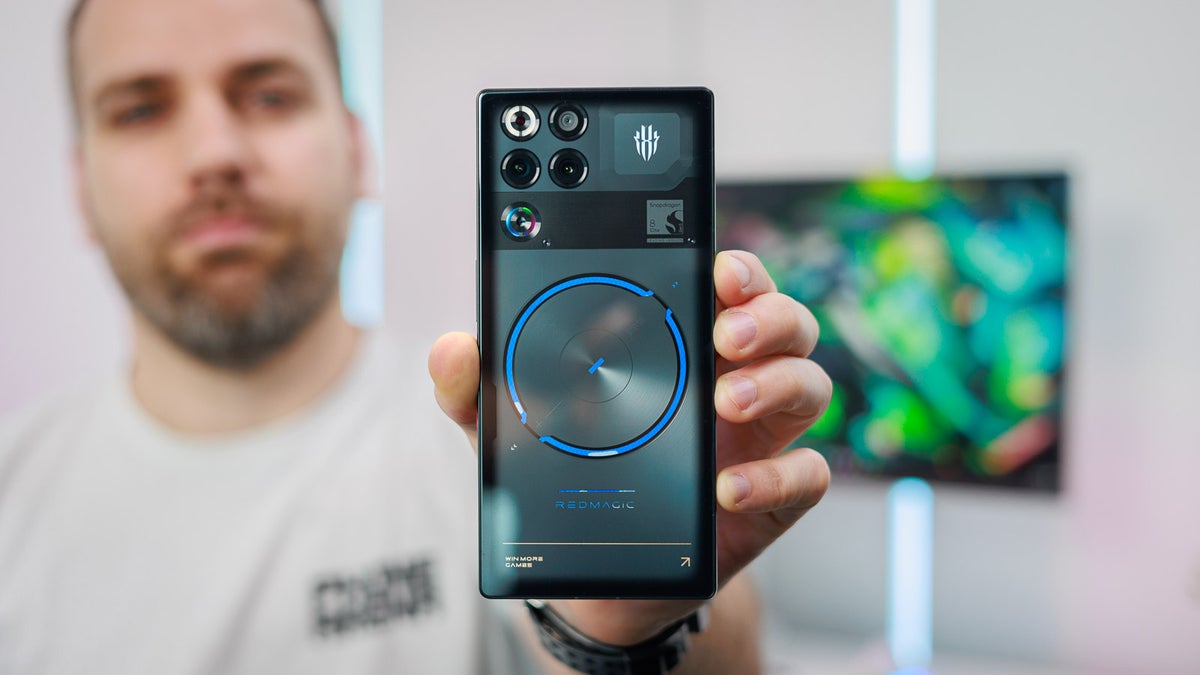
RedMagic 11S Pro launches as a minor refresh with a faster Snapdragon 8 Elite Gen 5 Leading Version chip, a 7500 mAh battery, 80W wired/wireless charging, and improved AquaCore cooling. The phone is positioned as a top-tier gaming handset, with benchmark-leading performance versus the Galaxy S26 Ultra and iPhone 17 Pro Max, though camera quality remains a compromise. Pricing rises by about $100 / €100 versus the prior model, with the 256GB version starting at $849 in North America.
This is less a handset review than a signal that the Android premium cycle is bifurcating: mainstream flagships are converging on incremental camera/AI upgrades, while niche devices are capturing enthusiast willingness-to-pay through compute, battery, and thermal headroom. The second-order implication is that Qualcomm’s leading-edge silicon is increasingly becoming a differentiated input for a small set of high-ASP devices, which should improve mix and pricing power at the margin even if unit volumes remain niche. For Apple, the threat is not share loss in total phones, but further erosion of the “best all-around hardware” narrative among power users, especially in gaming and battery-dominant use cases.
The bigger catalyst is not this model itself, but the validation that mobile performance can be monetized outside the camera race. If gaming phones continue to command $850-$950 price points with premium charging and memory/storage SKUs, accessory ecosystems, heatsinks, controllers, and even cloud gaming optimization become more important revenue pools than traditional handset upgrades. That tends to favor chip vendors and RF/power-management suppliers over OEMs with less differentiated software or weaker ecosystem control.
The contrarian takeaway is that the market may still underappreciate how much of this performance leap is thermal architecture rather than raw silicon. If competitors can replicate cooling and power delivery faster than Qualcomm can widen the chip gap, the endurance advantage becomes less durable and more easily commoditized over the next 6-12 months. The risk to the bullish hardware thesis is also obvious: a battery/performance monster without a camera story can stall at enthusiast share and never translate into broader brand pull, limiting the total addressable upside for the ecosystem.
AI-powered research, real-time alerts, and portfolio analytics for institutional investors.
Request DemoOverall Sentiment
strongly positive
Sentiment Score
0.78
Ticker Sentiment
