
Hantavirus: Foreign Office to help British nationals stranded on virus-hit ship get home
Source: BBC
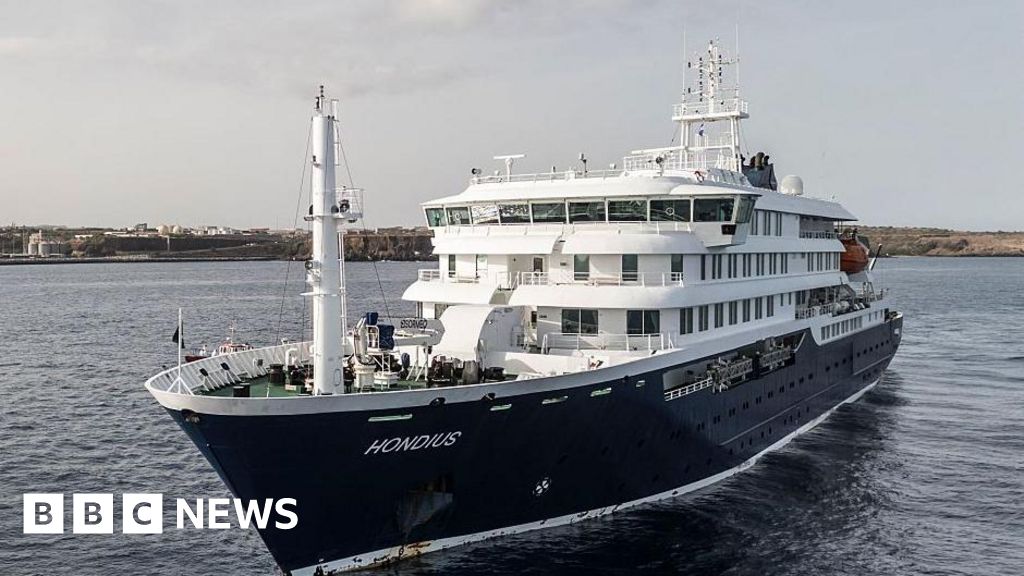
A hantavirus outbreak on the MV Hondius has killed 3 passengers and forced multiple medical evacuations, including a 56-year-old British doctor now reported in stable condition. There are 19 British passengers and 4 British crew onboard, with about 150 people still under strict precautionary measures as the ship is being routed to Tenerife for evacuation. The UKHSA says the risk to the UK public remains very low, limiting broader market impact, but the incident is negative for cruise/travel sentiment.
Analysis
The immediate market impact is less about the outbreak itself and more about the operational scar it leaves on niche expedition cruising: insurers, port authorities, and booking channels will likely treat this as an adverse datapoint for the entire small-ship, remote-itinerary segment. That matters because the economics of these operators depend on high load factors and pricing power; even a modest hit to forward bookings can compress margins disproportionately due to fixed charter, crew, and repositioning costs.
Second-order, the bigger loser may be the ecosystem around remote cruising rather than the headline ship operator alone: specialty travel agencies, expedition-leisure exposure in diversified cruise names, and any port services tied to high-touch passenger processing. Expect a short-term rise in cancellation clauses, medical screening requirements, and insurance premiums for itineraries that pass through limited-infrastructure jurisdictions, which could widen the spread between mass-market cruise demand and premium/adventure travel demand over the next 1-2 quarters.
The contrarian view is that the public-health risk to developed markets is likely being contained faster than headlines imply, so the selloff in broader travel may be overdone if investors extrapolate to all leisure travel. The more durable consequence is not virus transmission but regulatory friction: once a routing becomes associated with repatriation, quarantine logistics, and port denials, recovery in bookings usually lags the medical resolution by several months. In other words, this is a sentiment and operational risk event, not a systemic demand shock.
Catalyst path: the next 3-10 days are dominated by evacuation execution and any sign of additional symptomatic cases; over the next 4-8 weeks, look for booking commentary and insurer/agent behavior to signal whether this remains idiosyncratic or becomes a category-wide discounting event. A clean resolution with no secondary spread should support a rebound, but repeated incidents in expedition cruising would justify a more structural de-rating.
AllMind Terminal
AI-powered research, real-time alerts, and portfolio analytics for institutional investors.
Request TrialMarket Sentiment
Overall Sentiment
strongly negative
Sentiment Score
-0.65
Key Decisions for Investors
- Short-term: avoid initiating fresh long exposure to premium/expedition leisure operators until evacuation completes and no new cases are reported for 7-10 days; upside on a quick normalization is limited, while downside from another case is asymmetric.
- If holding broad travel exposure, prefer a pair: long mass-market leisure/travel recovery names with diversified demand, short high-touch expedition/cruise exposure for 1-2 quarters to capture booking and insurance repricing risk.
- For event-driven traders, consider a small tactical short in cruise-adjacent names on any bounce over the next 2-5 sessions; stop on confirmation of successful repatriation and no further health developments.
- Watch for a rebound trade only after forward booking commentary stabilizes: a relief rally in leisure equities would be more credible 4-6 weeks out than immediately after the evacuation headline.
More News
- Flames, smoke seen near Riyadh airport; Houthis claim attacks on Saudi capital
- JPMorgan Sees No Clear Endgame for Oil Markets
- Polish prime minister warns Russia is planning drone or rocket strikes on European countries supporting Ukraine as ‘Carpathian Eight’ meet
- Smoke visible near Riyadh airport after Saudi Arabia issues all-clear
- Central Command says U.S. military has aided the transit of 1 billion barrels of oil through Hormuz in past two months while Iran has ‘exported zero’
- UN Talks Offer a New Opening on Iran War
From AllMind Research
- Anthropic IPO Preview: Valuation, Timing, and What to Watch
- Shein After the IPO: Venue, Valuation, and What Must Be Proved
- What AI Research Tools Should a Small Hedge Fund Buy First?
- Run Cost-Controlled Financial Research in AllMind Agent Studio
- State of Public Markets, June 2026: Higher for Longer Meets the AI Supercycle