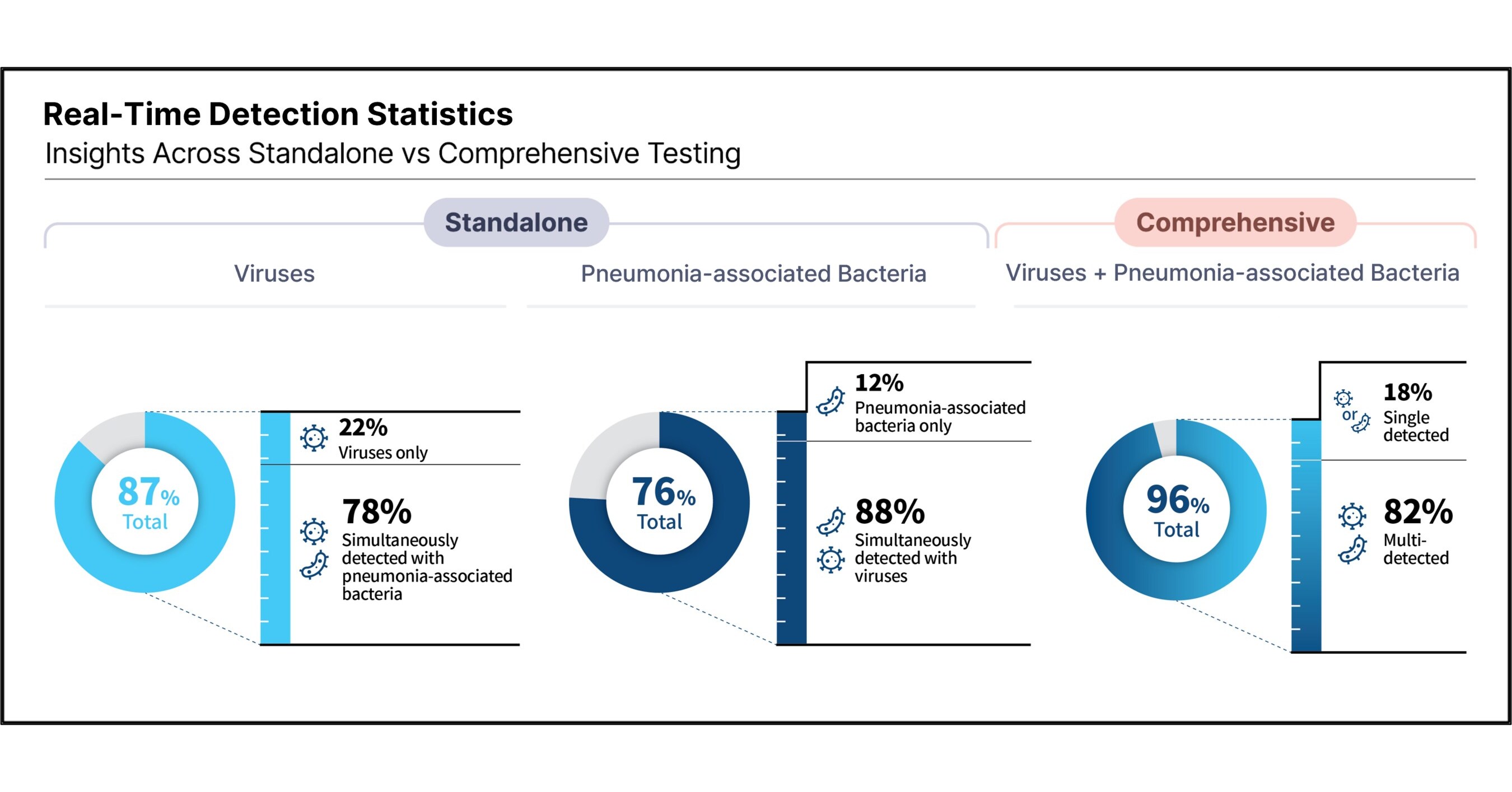
Seegene launched the Global Million Clinical Study (GMCS) to support a shift from virus-only respiratory testing to comprehensive syndromic PCR, analyzing ~260,000 pediatric (0-5) respiratory PCR results over 42 months. The study found that in virus-positive pneumonia cases, 78% also carried pneumonia-associated bacterial pathogens, while among pneumonia-bacteria positive cases, 88% also tested positive for viruses (comprehensive testing showed a 96% positivity rate, with 82% involving ≥2 pathogens). The initiative begins in August to generate real-world clinical evidence and potentially influence a new global diagnostic standard.
This is more of a standards-and-reimbursement story than a near-term earnings catalyst. If syndromic PCR wins, the value creation sits in mix shift toward higher-ASP, higher-complexity panels and the workflow layer around them, not in any single press release about clinical utility. The market should be careful not to price in a broad demand inflection until there is evidence that hospitals and payers will pay for the extra information, because that is the real gating factor.
The second-order risk is that broader detection can create interpretation friction: more co-detections often means more clinician ambiguity, more stewardship scrutiny, and more payer resistance if the test does not clearly change management. That makes outpatient pediatrics the weakest first beachhead, while inpatient and ICU settings are the only places where a broader panel could justify itself on reduced length of stay or antibiotic usage. If that evidence does not appear, the commercial winner becomes the platform vendor with automation and analytics attached, while standalone respiratory test menus face gradual commoditization.
Over the next 1-3 months, the key catalysts are independent validation, guideline mention, and reimbursement or procurement signals; without them, this is likely to fade as a marketing-driven move. Over 6-18 months, the bullish structural case is a menu shift away from single-target respiratory assays toward integrated molecular platforms, which favors larger diagnostics franchises with installed base and consumables leverage such as DHR and QGEN. The contrarian view is that the consensus may be overestimating how quickly better science converts into billable volume.
AI-powered research, real-time alerts, and portfolio analytics for institutional investors.
Request TrialOverall Sentiment
mildly positive
Sentiment Score
0.20
