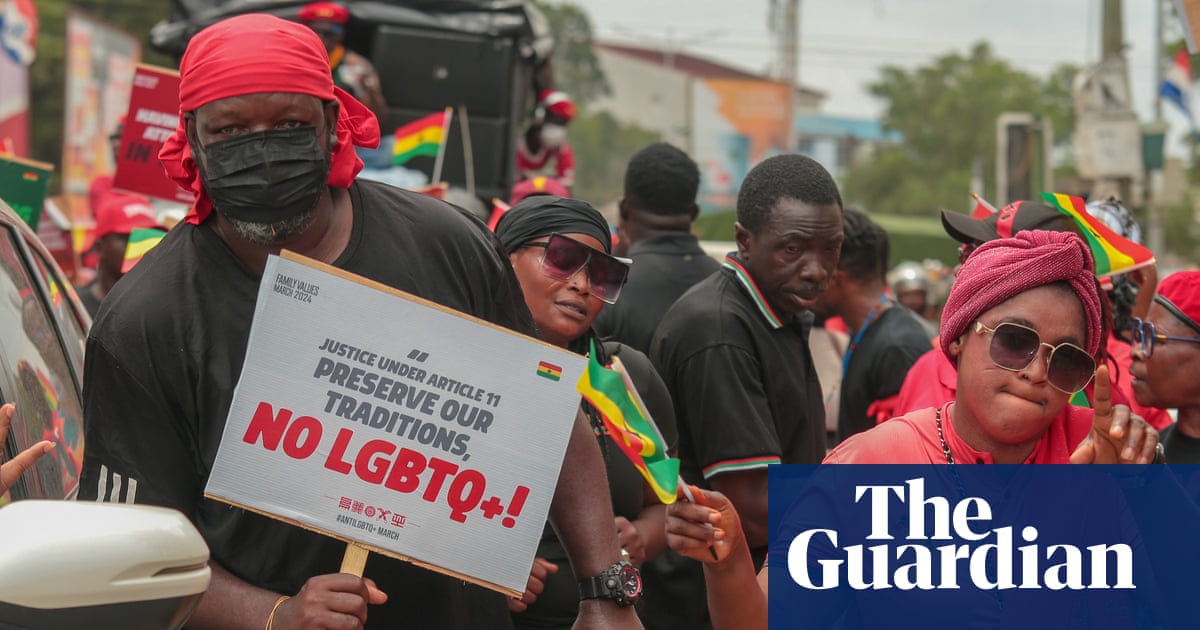
Ghana’s parliament approved a sweeping anti-LGBTQ bill that imposes prison terms of 3 to 10 years and is expected to be signed by President John Dramani Mahama. The law expands criminal liability to people providing support, advocacy, or services, raising legal and human-rights risk and triggering fears of evictions, job losses, and reduced access to healthcare. Rights groups say the measure could face court challenge, but it signals a broader tightening of social regulation in Ghana and the region.
The market read-through is less about social policy and more about institutional risk premia in a low-trust EM setting. A law that effectively deputizes private citizens to report on identity creates a measurable chilling effect on labor mobility, healthcare utilization, and NGO activity; that tends to show up first as a widening in governance discount, then as slower FDI approvals and harder terms from multinationals across consumer, telecom, and healthcare. The second-order loser is the formal economy: even if enforcement is uneven, the uncertainty tax raises compliance costs and weakens the investability of any business dependent on expatriate talent, regional HQ functions, or donor-linked funding.
The near-term catalyst is not implementation but selective enforcement. Over the next days to weeks, the highest-risk assets are companies with visible ESG screening, local-currency funding needs, or consumer brands exposed to Western procurement policies, because headlines around arrests or court challenges can quickly trigger exclusion from mandates and pressure on external financing. Over months, the bigger macro risk is reputational spillover into sovereign funding costs: Ghana does not need a material fiscal shock for spreads to reprice if the country begins to look like a higher headline-risk borrower in the same bucket as other governance-fragile frontier markets.
The contrarian point is that the bill may be priced as a pure headline event while the real damage accrues via soft channels that are slower and harder to reverse. If the president delays signature or a court blocks key provisions, there may be a tradable relief rally in local risk assets; but if signed, the downside is asymmetric because donor, NGO, and multinational responses can persist for quarters even if domestic enforcement remains patchy. That makes this more of a slow-burn capital allocation negative than a one-day political shock.
AI-powered research, real-time alerts, and portfolio analytics for institutional investors.
Request TrialOverall Sentiment
strongly negative
Sentiment Score
-0.80
