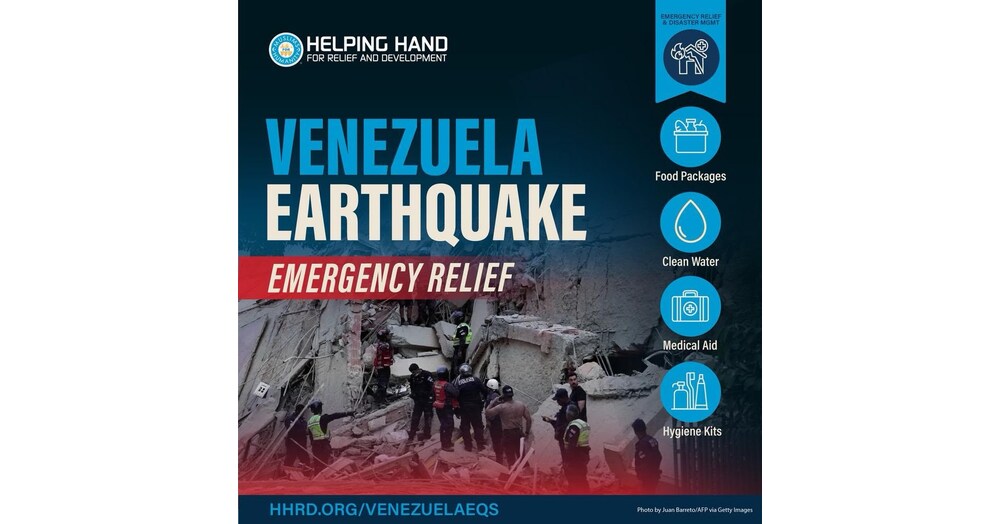
Helping Hand for Relief and Development (HHRD) pledged $1 million to fund emergency response after twin earthquakes in Venezuela on June 24, 2026. The Level 4 Relief Campaign will support distribution of food, clean drinking water, hygiene kits, medical assistance, and psychosocial care via local partners as needs are assessed.
This is not a tradable public-equity catalyst on its own; the spend is philanthropic, not a demand or pricing signal. The only potentially marketable second-order effect is if quake damage materially impairs transport, power, water, or port infrastructure enough to slow any already-fragile normalization in local commerce and fuel distribution. That would matter most for any distressed Venezuela-linked claims, not for broad EM risk assets.
Over the next 1-3 weeks, price action will be driven by headline sentiment rather than fundamentals, so any move in sovereign or PDVSA paper would likely be liquidity-driven and fade unless corroborated by independent damage assessments. The base case is that reconstruction and relief activity remain too small and too localized to move global commodities, but they can create pockets of demand for logistics, water treatment, medical supply, and NGO service providers in-country.
The contrarian point is that disaster headlines often trigger overstated reconstruction narratives. In Venezuela, the binding constraint is usually not aid capital but operating capacity and sanctions/frictions, so the true economic effect is more likely a drag on near-term activity than a boost from relief inflows. Falsification would come from verified sustained outages at energy or port infrastructure, or from official estimates showing multi-month disruption to domestic distribution networks.
AI-powered research, real-time alerts, and portfolio analytics for institutional investors.
Request DemoOverall Sentiment
neutral
Sentiment Score
-0.05
