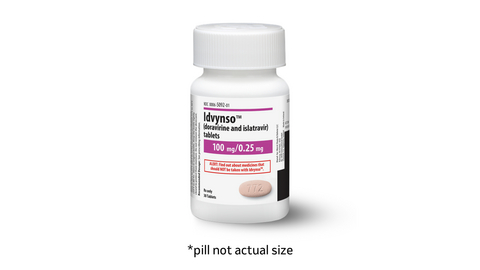
The FDA approved Merck’s once-daily IDVYNSO (doravirine/islatravir), a new two-drug, tenofovir-free HIV-1 regimen for virologically suppressed adults. In Phase 3 trials, IDVYNSO was non-inferior to comparator regimens at Week 48, with 1% of switch patients having HIV-1 RNA ≥50 copies/mL in Trial 052 versus 1% on BIKTARVY and 1% versus 5% in Trial 051 versus baseline ART. The approval expands Merck’s HIV portfolio and should be a positive catalyst for the stock, though safety and drug-interaction warnings remain.
This is a credible, but not explosive, commercial event: the approval broadens Merck’s HIV franchise by creating a switch option for suppressed patients who value pill simplification and a non-tenofovir, non-INSTI profile. The key second-order implication is not immediate share capture from the treatment-naive market; it is regimen switching within a mature, highly sticky population where tolerability, drug–drug interaction profile, and long-term metabolic concerns matter more than headline efficacy. That makes the opportunity real but gradual, with uptake likely measured in quarters rather than weeks.
Competitive pressure is more nuanced than a simple Biktarvy-versus-MRK framing. The more important threat is to the adjacent oral-switch basket across Gilead and ViiV ecosystems, because prescribers may now have a cleaner “de-risking” alternative for older, polypharmacy-heavy patients. If Merck can win even a low-single-digit share of the suppressed-switch market, it compounds through persistence and may modestly slow Biktarvy’s growth trajectory without requiring outright formulary displacement.
The bear case is that the label is narrow and the interaction/contraindication burden limits broad adoption in real-world HIV care, where patients often carry complex comedications. There is also a non-trivial tail risk that safety signals tied to hematologic or dermatologic effects keep the product in a conservative prescribing lane, capping enthusiasm after the launch pop fades. That said, the approval strengthens confidence in Merck’s HIV platform and lowers perceived execution risk on the company’s broader antiviral pipeline, which is the more durable equity story.
Contrarian view: the market may overfocus on near-term IDVYNSO revenue and underappreciate the option value of Merck establishing a differentiated oral HIV architecture ahead of next-wave once-weekly and prevention assets. The real upside is not this asset alone, but the platform credibility it confers if the company can convert the approval into a physician habit of viewing Merck as a regimen-optimization company rather than a legacy HIV entrant.
AI-powered research, real-time alerts, and portfolio analytics for institutional investors.
Request TrialOverall Sentiment
strongly positive
Sentiment Score
0.82
Ticker Sentiment
