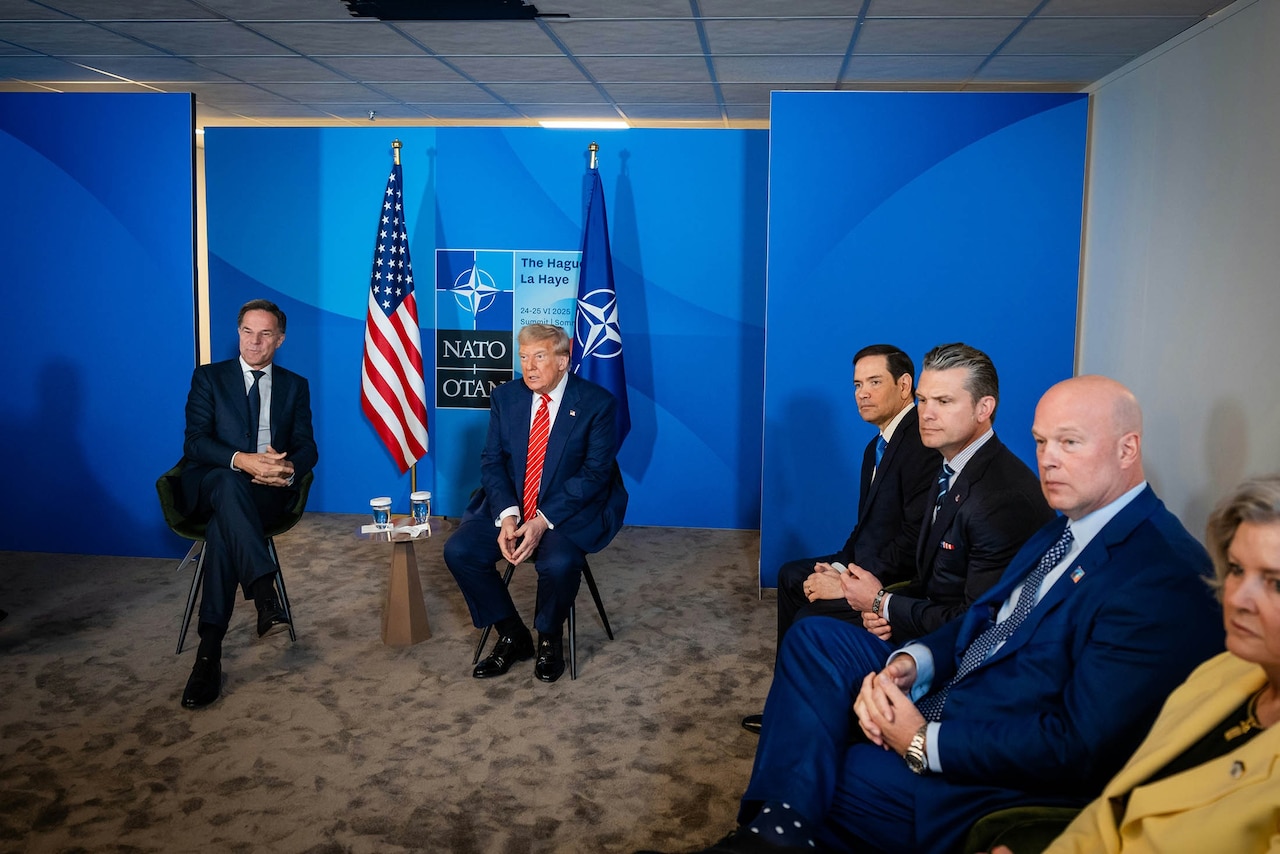
At the NATO Summit, President Trump announced allied nations committed to increasing defense spending to 5% of GDP, with a focus on acquiring U.S.-made military hardware and rebuilding the defense industrial base, spurred by the Ukraine conflict. Concurrently, Trump revealed a successful June 21, 2025 U.S. strike that obliterated Iran's nuclear facilities, leading to a historic Israel-Iran ceasefire and prospects for broader regional peace. This signals substantial long-term tailwinds for the defense industry and a significant geopolitical re-alignment in the Middle East.
A dual-catalyst event has emerged, signaling a significant structural shift for the defense sector and a major de-escalation in Middle East geopolitical risk. The commitment by NATO members to increase annual defense spending to a substantial 5% of GDP represents a massive, long-term tailwind for defense contractors. President Trump's explicit preference for this new capital to be allocated to "American-made" military hardware positions the U.S. defense industrial base as the primary beneficiary of what NATO's Secretary General terms a "quantum leap in our collective defense." This spending initiative is underpinned by the stated urgency to rebuild industrial capacity following the war in Ukraine. Concurrently, the disclosure of a successful U.S. strike on Iranian nuclear facilities on June 21, 2025, serves as a potent demonstration of U.S. military technological superiority. This event has directly led to a historic ceasefire between Israel and Iran, fundamentally altering the regional risk landscape and potentially paving the way for a broader peace agreement, which would reduce a key source of global market volatility.
AI-powered research, real-time alerts, and portfolio analytics for institutional investors.
Request DemoOverall Sentiment
strongly positive
Sentiment Score
0.85
