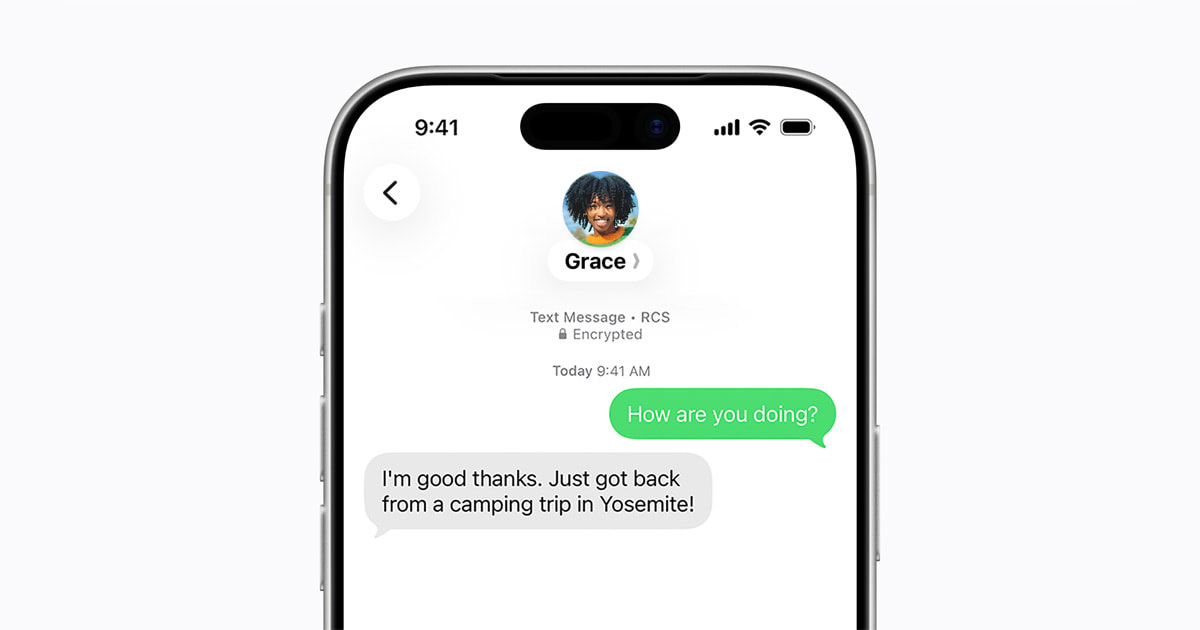
End-to-end encrypted RCS messaging is beginning to roll out in beta today for iPhone users on iOS 26.5 and Android users on the latest Google Messages. The update adds a lock icon for encrypted chats and makes encryption the default over time for new and existing RCS conversations. The move is a positive step for cross-platform privacy, though near-term market impact appears limited.
The strategic significance is less about immediate monetization and more about reducing a long-standing switching cost in mobile messaging. Once encryption becomes the default expectation across platforms, the moat shifts from transport security to UX, identity, and ecosystem integration; that is structurally favorable for Apple, because the default “safe” experience still accrues to iMessage when users are choosing among devices and social circles. For Google, this is a defensive win that narrows a privacy gap, but it does not by itself create a new revenue stream or materially change the Android ecosystem’s fragmentation problem.
The second-order effect is on carrier and messaging-adjacent value pools. If encrypted RCS becomes the baseline, enterprise and consumer users may feel more comfortable moving higher-value conversations off OTT apps, but the monetization upside likely accrues to platform owners rather than carriers. Over 6-18 months, the more important KPI is whether encryption meaningfully improves RCS retention versus iMessage/WhatsApp; if it does not, then the launch is mostly a hygiene upgrade and not a demand catalyst.
The market may be overestimating near-term impact because privacy features tend to matter at the margin, not as a primary purchase driver, unless they are paired with exclusivity or compliance use cases. The contrarian take is that this is mildly bullish for both names, but especially low-conviction for Google: it removes a negative talking point without changing the core economics of Search, Cloud, or Android. For Apple, the upside is subtler — the feature reinforces ecosystem stickiness and may modestly reduce user churn at the margin, but the trade is still dominated by broader AI/device-cycle drivers rather than messaging security.
Tail risk is mostly executional: if rollout is fragmented by carriers or interoperability bugs persist over the next 1-2 quarters, the narrative can reverse quickly and reinforce the perception that third-party apps remain the safer standard. The positive read-through is best viewed as a slow-burn sentiment tailwind, not a catalyst for multiple expansion on its own.
AI-powered research, real-time alerts, and portfolio analytics for institutional investors.
Request DemoOverall Sentiment
mildly positive
Sentiment Score
0.20
Ticker Sentiment
