

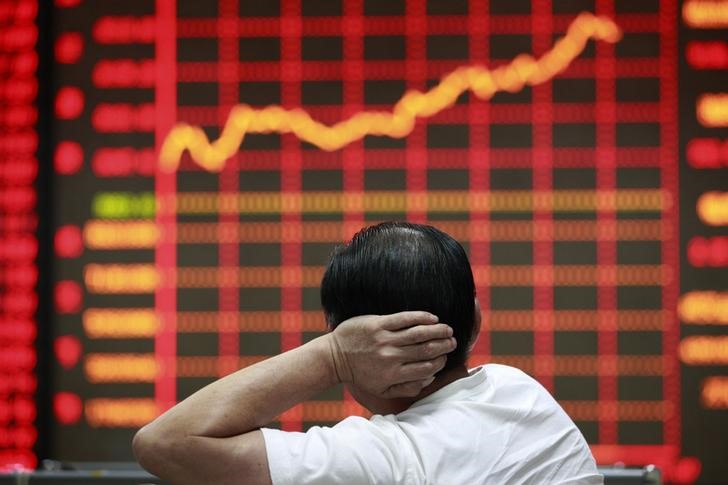
Asian equities rallied broadly, led by a 3.4% jump in South Korea’s KOSPI and a 2.5% rise in Japan’s Nikkei 225 as chip and technology shares tracked strong U.S. tech-led gains. China’s March exports rose just 2.5% year-on-year versus 8.3% expected, while imports jumped 27.8%, leaving the trade surplus around $51 billion and highlighting mixed macro signals. Geopolitical risk also remained in focus as tensions around the U.S.-Iran conflict and the Strait of Hormuz added an overhang to regional sentiment.
This is a classic “rates-down, semis-up” reflexive tape, but the more important read-through is that Asian chip beta is now being driven by the same AI-capex narrative that has supported U.S. hyperscalers. When SK Hynix and Samsung gap together, the market is signaling a belief that memory pricing and leading-edge demand are both inflecting, which tends to pull a long tail of suppliers, equipment names, and export-heavy indices higher over the next 1-3 months.
The China trade print is the key second-order check on that enthusiasm. Weak exports with strong imports usually means domestic demand is holding better than external demand, but it also implies global manufacturing momentum is not broadening fast enough to support cyclical Asia outside tech. That creates a divergence trade: semis and AI infrastructure can keep working even if industrials, shipping, and non-tech exporters lag, especially if the U.S. dollar stays soft and bond yields remain contained.
Geopolitics is the latent volatility catalyst. A blockade risk around Hormuz raises tail risk more for inflation duration than for equities immediately; the first-order equity hit would be to airlines, chemicals, and energy-intensive manufacturers, while the second-order beneficiary is upstream energy and defense-adjacent names. The market is currently pricing a low-probability, short-duration disruption; if talks fail again, the repricing could be abrupt within days, not weeks.
Contrarian view: the move in Asian semis may already be front-running good news that is unlikely to be linear. If the China export slowdown persists into the next 1-2 monthly prints, the market will start distinguishing between AI beneficiaries and everything else, and the broad Asia rally should narrow sharply. That favors owning the highest-quality compute and memory exposure while fading low-conviction regional beta.
AI-powered research, real-time alerts, and portfolio analytics for institutional investors.
Request TrialOverall Sentiment
mildly positive
Sentiment Score
0.35
Ticker Sentiment
