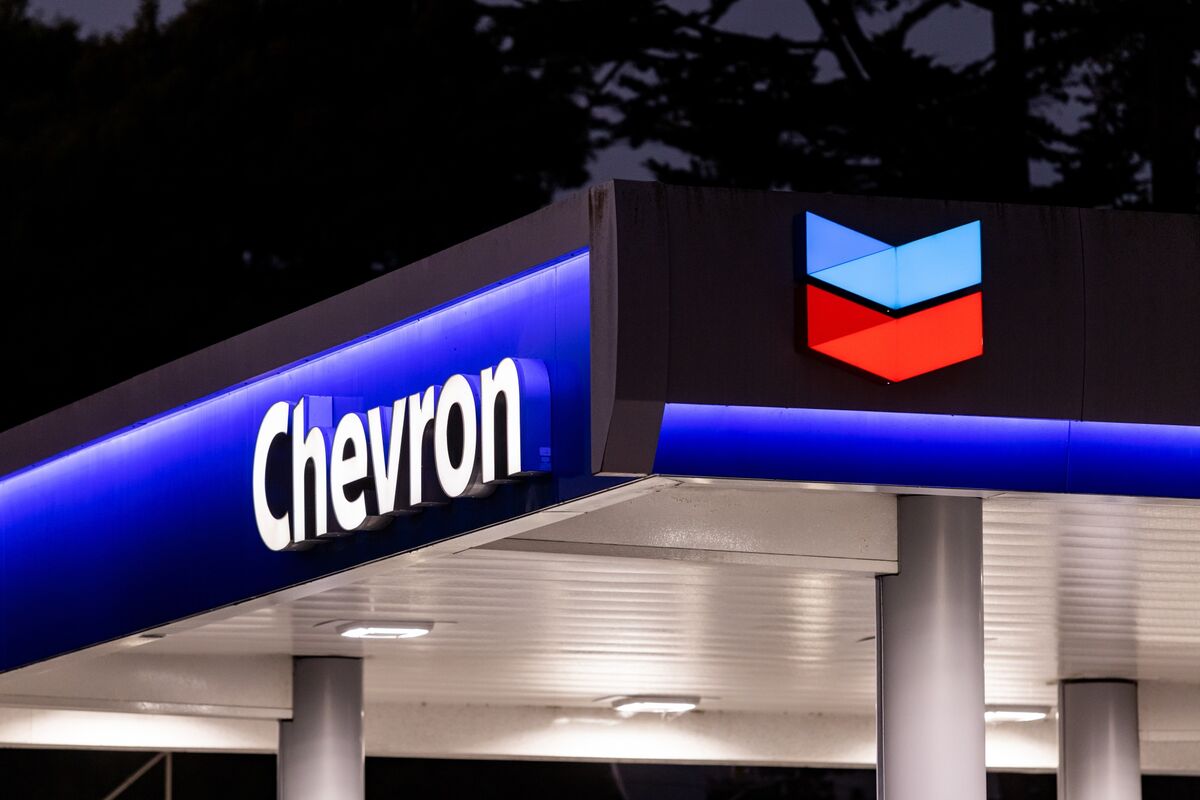
Chevron is flying employees from Caracas to its Venezuelan oil production sites by charter despite a U.S. FAA warning that air travel in the region may be unsafe due to military satellite interference. The Houston-based company, the only U.S. crude producer remaining in Venezuela, said the flights are part of routine weekly oversight of ventures that account for roughly 25% of the country's output, underscoring continued operational exposure to geopolitical, regulatory and safety risks that could draw scrutiny or disrupt production.
Market structure: Chevron (CVX) is the direct loser—operational risk raises near-term outage probability for ~25% of Venezuela’s output Chevron oversees (~150–200 kbpd), which is ~0.15–0.2% of world supply; that’s enough to move Brent ~$1–3/bbl on short-term outages. Winners are onshore U.S. upstream names (EOG, OXY) and non-Venezuela-focused majors (XOM) which gain relative pricing power if Venezuela output falls. Regional players (PDVSA partners, Russia/China oil service firms) could pick up capacity but with longer lead times and higher costs.
Risk assessment: tail scenarios include a forced evacuation or military incident grounding flights leading to >150 kbpd outage (low probability, high impact) or a regulatory win for Venezuela (nationalization/sanctions) causing multi-quarter losses to CVX; either raises CVX idiosyncratic risk and EM contagion in CDS/FX (VES wider). Immediate (days) = headline-driven CVX/WTI volatility; short-term (weeks–months) = operational suspensions or limited restart cycles; long-term = contractual/expropriation risk and political bargaining over compensation. Hidden dependencies: insurance/charter availability, U.S. sanction policy shifts, and local security arrangements that can flip quickly.
Trade implications: reduce CVX directional exposure and hedge idiosyncratic tail risk—buy 3-month CVX 5% OTM puts sized ~0.5–1% of portfolio or structure a collar to cap downside through quarterly results; implement a relative-value pair: short CVX (1–2% net) and long XOM (1–2%) to isolate geopolitical risk. For commodities, buy a conservative 1–3 month Brent call spread (5–10% OTM) sized to 0.5% portfolio to capture $1–4/bbl spikes; avoid large directional long oil positions unless outage >100 kbpd persists beyond 30 days.
Contrarian angles: consensus likely underestimates the speed at which a localized security incident could force multi-week outages—market may be underpricing CVX tail risk but overpricing long-duration oil upside given spare global capacity. Historical parallels (Venezuela expropriations, 2007–2010) show headlines can compress then revert; if CVX is forced out, Venezuela will reallocate production partners (Russia/China) which structurally reduces recoverable value for U.S. shareholders. Monitor two triggers: (1) FAA advisory changes or U.S. travel bans and (2) confirmed production outages >100 kbpd for >14 days—either should prompt escalation or de-risking.
AI-powered research, real-time alerts, and portfolio analytics for institutional investors.
Request DemoOverall Sentiment
mildly negative
Sentiment Score
-0.25
Ticker Sentiment
