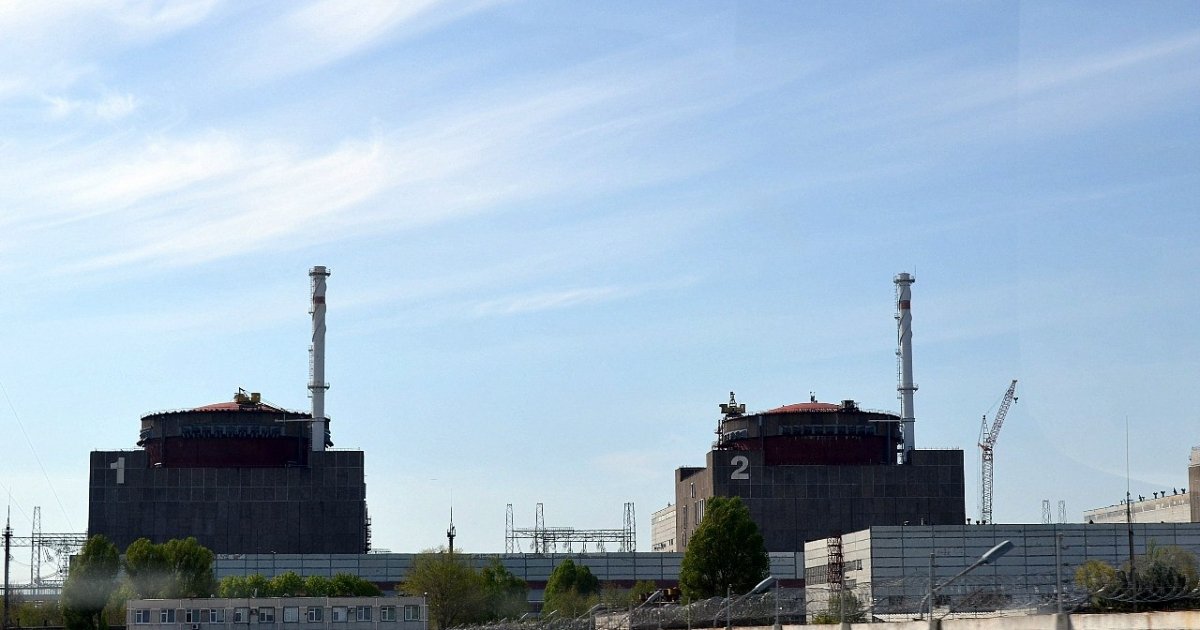
IAEA Director General Rafael Grossi confirmed that the Zaporizhzhia NPP suffered a total loss of external power overnight — the 11th full blackout since Russia's full-scale invasion — and was reconnected to a 330 kV line after roughly a 30-minute outage while the 750 kV line remained disconnected. Simultaneous large-scale Russian strikes damaged thermal power plant equipment, forcing expanded consumption limits and causing power outages across eight Ukrainian regions, raising acute operational risk for the plant and heightening short‑term disruption and volatility risks for regional power markets and sovereign risk exposure.
Market structure: Immediate winners are LNG exporters and merchant storage/Traders (US LNG supplier Cheniere, ticker LNG) and defense primes (Lockheed LMT, Northrop NOC) as power/gas tightness transfers pricing power to flexible suppliers; losers are Ukrainian assets, vertically‑integrated European utilities with regulated retail exposure (Enel ENEL.MI, RWE RWE.DE) and local corporates facing outages. Expect European power and Dutch TTF forward curves to reprice higher by 20–50% on short notice; commodity volatility (gas, coal, oil) will be the transmission channel to equities and CDS.
Risk assessment: Tail risks include a credible nuclear incident (low probability, catastrophic) that would spike energy/commodity volatility and trigger sovereign risk repricing; secondary is broad sanctions disrupting LNG flows. Time horizons: days—power/winter price spikes and option vol surges; weeks–months—storage draws and margin pressure into spring; quarters–years—accelerated capex into LNG/regas and grid resilience. Hidden dependencies: weather (-2σ cold snap → ~10–15% incremental gas demand), rerouting of Russian flows, and EU emergency policy (capacity payments, market interventions).
Trade implications: Tactical (0–3 months) — buy short-dated exposure to European gas (Dutch TTF futures or options) sized to 1–2% portfolio risk, exit on +30% move or by end of winter; establish 2–3% long in LNG (Cheniere, LNG) for 3–6 months target +20–30%, stop -15%. Strategic (3–12 months) — add 1–2% long split LMT/NOC (0.5–1% each) as defense remilitarization accelerant. Risk-off tilt — reduce exposure to ENEL.MI and RWE.DE by 30% vs benchmark over 1–3 months; hedge with 3‑month puts if volatility compresses.
Contrarian angles: Consensus may overprice systemic nuclear catastrophe risk; if IAEA reports stabilize and outages remain localized, utility equities and curves often mean‑revert within 4–8 weeks — consider opportunistic buybacks of high‑quality utility credit yielding >4.5% on 6–12 month dips. Historical parallels (2014–15 energy shocks) show commodity price spikes can be transitory while capex cycles drive longer term winners in LNG infrastructure — avoid crowding long gas beyond winter unless structural signals (storage <80% by March) persist.
AI-powered research, real-time alerts, and portfolio analytics for institutional investors.
Request DemoOverall Sentiment
strongly negative
Sentiment Score
-0.60
