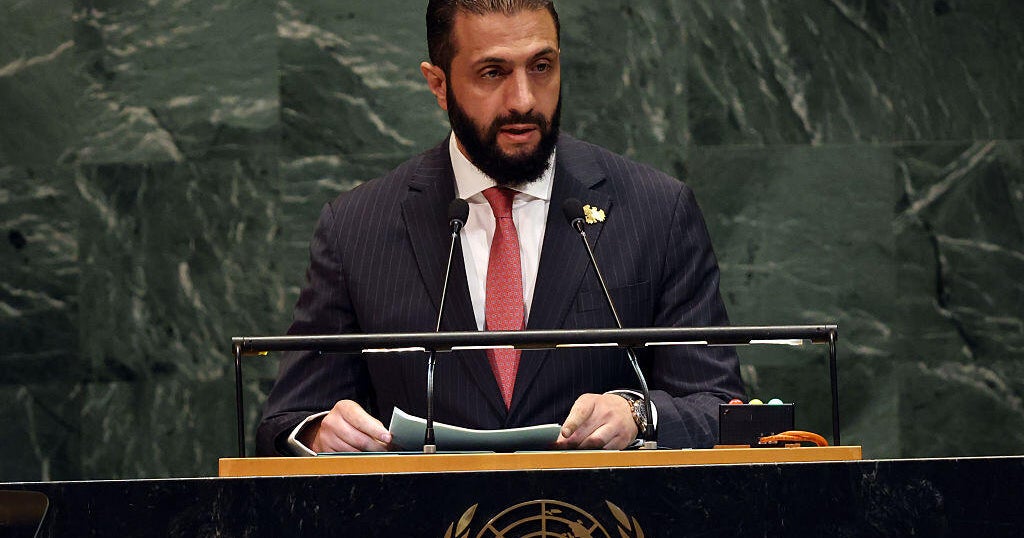
Syrian President Ahmed al-Sharaa, in his first UN address since taking power, warned that Israel's military actions, including recent strikes in Qatar and near Syria's presidential palace, threaten U.S. interests and risk alienating its strategic allies. Al-Sharaa, whose previous terrorist designations were recently lifted by the U.S., called for a security agreement with Israel, demanding the return of lands seized post-Assad regime, as the U.S. actively mediates de-escalation efforts amidst heightened regional instability.
The new Syrian administration under President Ahmed al-Sharaa is navigating a complex geopolitical landscape, balancing aggressive rhetoric with diplomatic overtures. In his historic UN address, al-Sharaa explicitly warned that recent Israeli military actions, including strikes near the presidential palace, risk alienating U.S. allies and constitute a "declaration of war," yet Syria notably did not retaliate. This dual-track approach of public condemnation and private negotiation is underscored by ongoing U.S.-led diplomatic efforts to de-escalate tensions. The U.S. has signaled a pragmatic shift by removing a $10 million bounty and lifting a terrorist designation on al-Sharaa's group, positioning itself as a key mediator. The core of the current negotiations is al-Sharaa's demand for a new security agreement contingent on Israel's withdrawal from territories seized since December and the deployment of U.N. peacekeepers. With Israeli officials confirming talks are continuing, the situation remains highly uncertain, as reflected by the moderately negative sentiment score (-0.5) and moderate market impact score (0.55), indicating a fragile balance between a potential path to stability and the significant risk of regional conflict.
AI-powered research, real-time alerts, and portfolio analytics for institutional investors.
Overall Sentiment
moderately negative
Sentiment Score
-0.50
