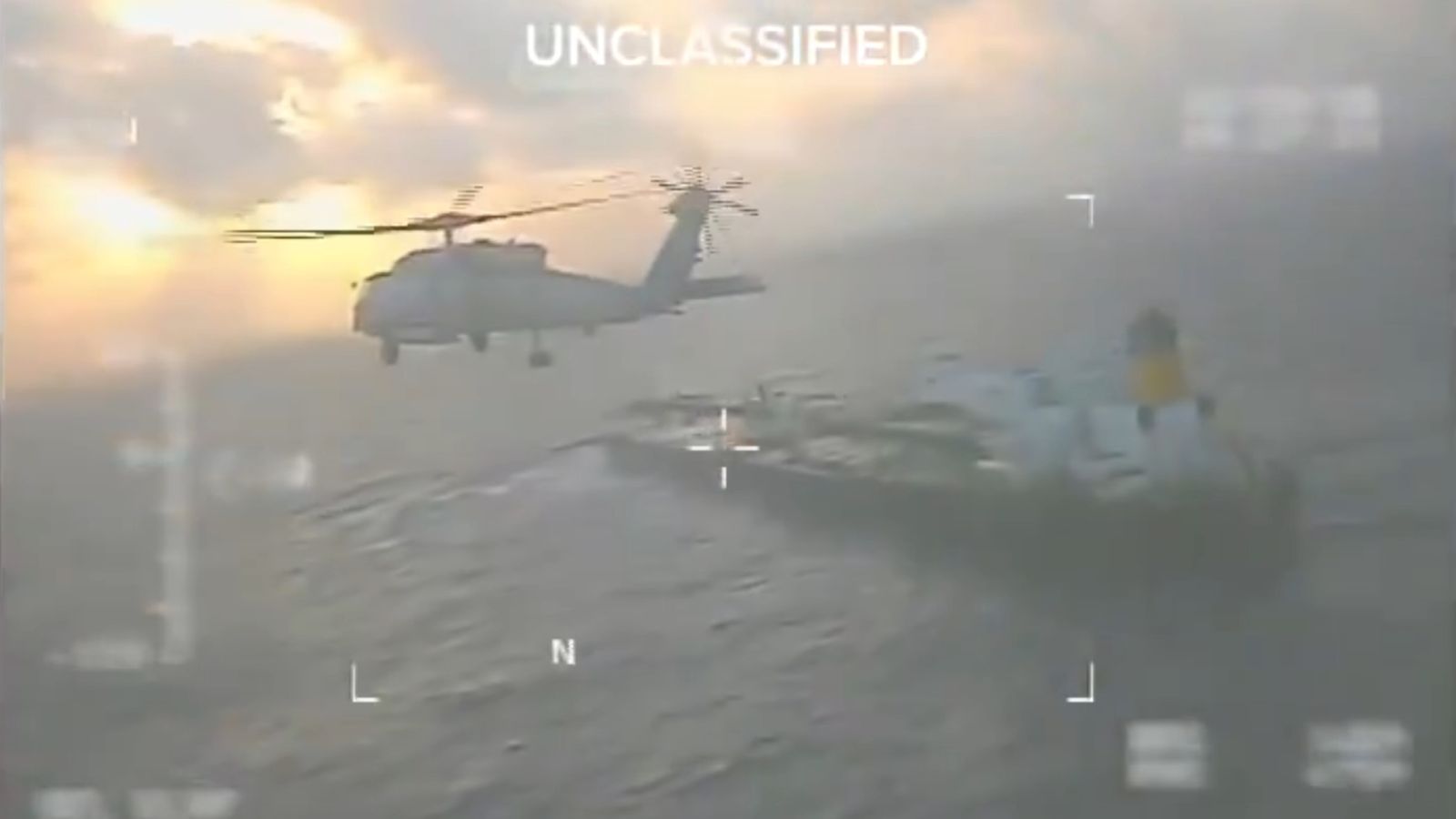
U.S. forces seized a Panama‑flagged oil tanker, Centuries, east of Barbados in a consented boarding after it last docked in Venezuela; the vessel reportedly carried about 1.8 million barrels loaded under a false name and was bound for China. The operation — the second recent tanker seizure following the Skipper — comes amid President Trump's order to blockade sanctioned Venezuelan tankers, a regional U.S. military buildup, and warnings from Brazil's president; the moves heighten geopolitical risk to oil flows, shadow‑fleet behavior (70+ tankers in Venezuelan waters, ~38 U.S.-sanctioned) and shipping/insurance dynamics.
Market structure: Immediate winners are liquid US-listed integrated oil majors (XOM, CVX) and energy infrastructure owners (ETP/MDU-style MLPs) via higher realized prices and basis improvement; losers are tanker owners (FRO, EURN) and insurers whose risk premia will reprice. If US interdiction removes 0.2–0.8 mbpd of Venezuelan flows for weeks, expect a 5–15% upward shock to Brent/WTI and freight rate spikes (VLCC timecharter implied +20–80% in short run). Competitive dynamics favor producers who can ramp shale within 3–6 months and refiners that accept light-sour swaps.
Risk assessment: Tail risks include an expanded blockade or kinetic escalation that could push Brent >$120/b (+~50% from $80 baseline) and trigger broad EM liquidity draws; probability low (<10%) but high impact. Near-term (days) volatility will be +/−5–10%; short-term (weeks–months) a sustained risk premium of 5–15% is plausible; long-term (quarters) depends on whether flows recover or shadow-fleet tactics normalize (0.3–1.0 mbpd structural downside to Venezuelan exports possible). Hidden dependencies: war-risk insurance repricing, legal rulings on seizure legitimacy, and China’s willingness to re-route via ship-to-ship transfers.
Trade implications: Tactical 3–6 month trades: overweight XOM/CVX (2–3% portfolio each) and buy a 3-month Brent call spread (buy 1 12% OTM call, sell 1 30% OTM call) to capture a 8–25% upside while limiting premium. Short 1–2% exposure to tanker equities (FRO) or buy 3-month puts (25% OTM) as enforcement news-flow intensifies. Allocate 1–2% to GLD as asymmetric geopolitical hedge; trim EM sovereign credit (EEM sovereign exposure) by 25–50 bps duration.
Contrarian angles: Consensus overestimates permanence — shadow-fleet workarounds and legal/diplomatic pushback could mean the price shock is front-loaded and mean-reverts within 6–12 weeks; tanker equities could be oversold by 30–50% if seizures stop. Conversely, if seizures continue, secondary sanctions could entrench long-term supply rerouting, benefiting US producers and analytics/monitoring vendors. Avoid >6 month leveraged crude longs; instead prefer convex, time-limited option structures and selectively buy distressed tanker equity OTM calls if enforcement visibly de-escalates.
AI-powered research, real-time alerts, and portfolio analytics for institutional investors.
Request DemoOverall Sentiment
moderately negative
Sentiment Score
-0.50
