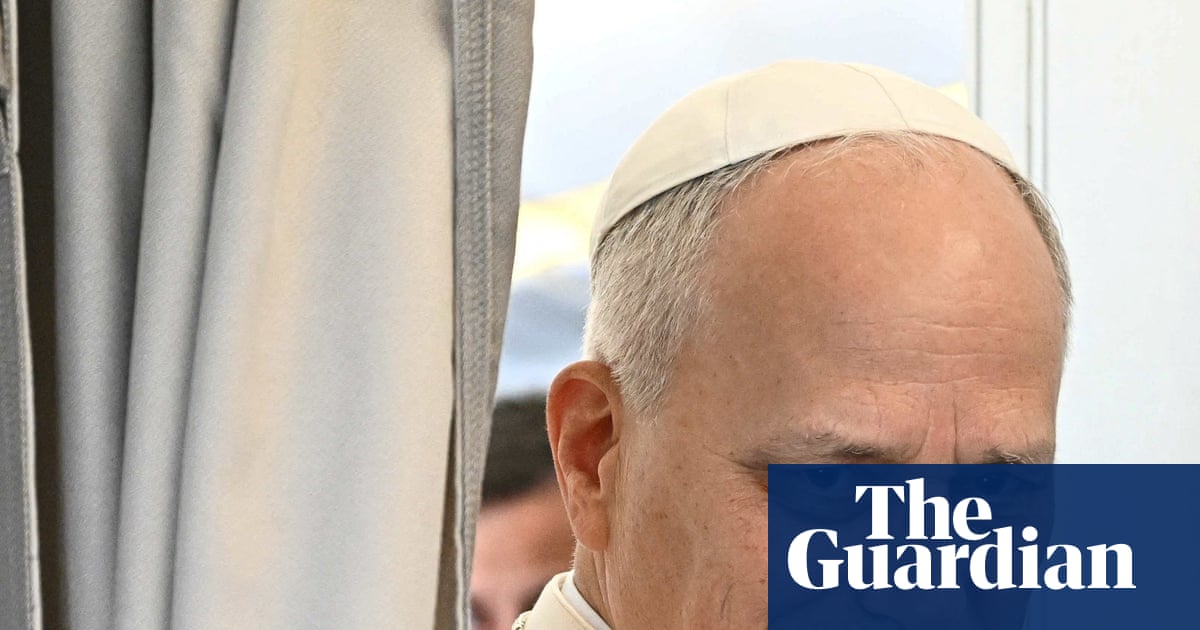
Pope Leo XIV reiterated that he will keep preaching peace and said it is "not in my interest at all" to debate President Trump over the Iran war. The article centers on the Trump-Iran-Pope dispute, including criticism over the US-Israeli strike on Iran and the pope’s rejection of nuclear war rhetoric, but it does not present direct economic or corporate market implications. The broader backdrop is elevated geopolitical tension and domestic political backlash, with limited immediate market impact.
This is a reminder that religious institutions can become accidental political volatility amplifiers even when they are trying to de-escalate. The near-term market effect is not through direct fundamentals, but through attention allocation: when a globally trusted moral voice is pulled into partisan warfare, it tends to lengthen the half-life of outrage cycles, which can keep domestic polarization trades bid for days to weeks rather than hours. That favors media and engagement-driven platforms over any clean “resolution” setup, because controversy is now the asset class.
The second-order risk is reputational spillover into Catholic-affiliated consumer and political networks, especially among higher-trust, older cohorts that are already sensitive to institutional legitimacy. If the conflict intensifies, there is a modest but real chance of fundraising and attendance softness for Catholic charities, schools, and parish-linked consumer behavior in swing-state communities over the next few months. More importantly, the episode reinforces a broader pattern: institutions that try to remain above politics get priced as partisan anyway, which increases the likelihood of future flashpoints being monetized by cable/news ecosystems.
The contrarian read is that the market may be overestimating the durability of this storyline. Religious authority has low direct economic transmission, and if the Vatican refuses escalation, the news flow can decay quickly into a low-signal culture-war segment. That means the best risk/reward is not chasing headline beta, but positioning for a brief attention spike followed by mean reversion in the most politically exposed media names.
From a geopolitics lens, the more meaningful signal is that the Iran war narrative remains a catalyst for domestic coalition politics, not just foreign policy. That raises the odds of more extreme rhetoric around war, immigration, and institutional legitimacy into the next U.S. policy news cycle, which could matter more for election odds and sector rotation than for any one church-related asset.
AI-powered research, real-time alerts, and portfolio analytics for institutional investors.
Request TrialOverall Sentiment
neutral
Sentiment Score
-0.05
