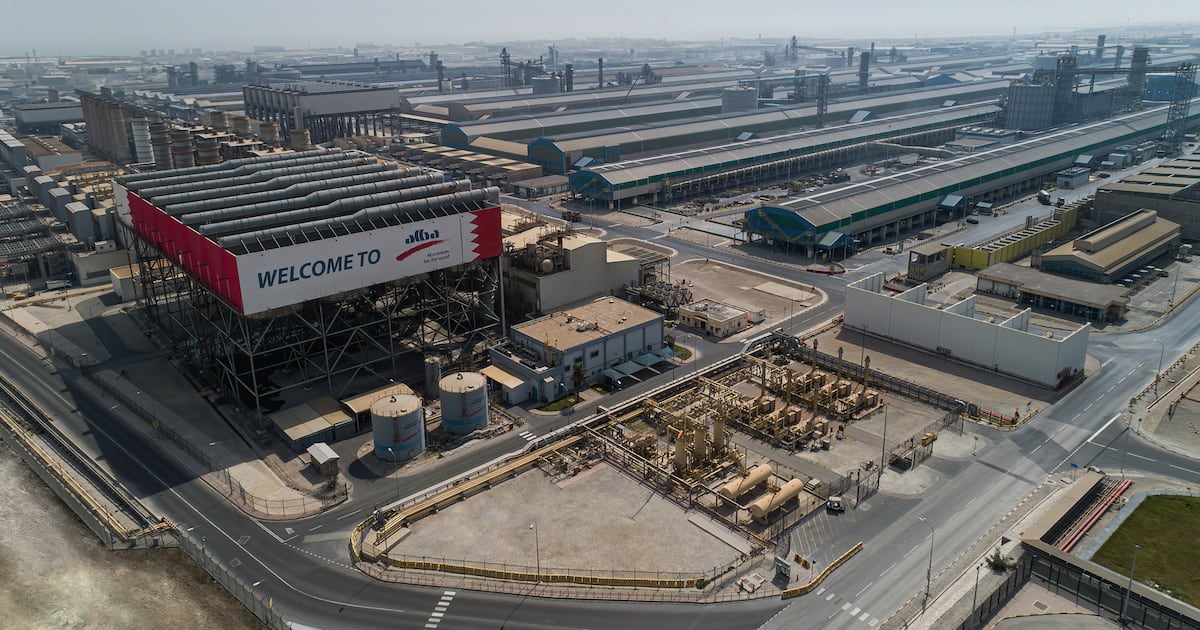
Alba has initiated a controlled shutdown of roughly 19% of its aluminium production capacity by idling lines 1-3 (from a total capacity >1.62 million tpa) due to sustained disruption in the Strait of Hormuz. The closure has contributed to oil prices jumping above $100/bbl and aluminium spiking to $3,544/t (now ~$3,439.5/t), raising near-term supply risk and the prospect of prices approaching $4,000/t if disruptions persist.
Concentrating feedstock and running a smaller, more sustainable configuration buys time but creates a material restart friction: idled reduction lines typically require weeks of synchronized electrode/cathode conditioning and can suffer step-change yield losses on first restart. That amplifies a shipping shock into a multi-week-to-months supply shortfall even after transit routes reopen, because physical throughput is capped by both logistics and smelter ramp mechanics.
Regionally, alternative supply from outside the Gulf faces three binding constraints — alumina availability, power-cost differentials at rival smelters, and incremental freight/insurance that raises landed cost non-linearly. Those frictions favor producers with captive bauxite/alumina, long-term low‑cost power, or nearby consumer markets; downstream integrators will either pay elevated spot premiums or accelerate substitution to secondary aluminium where available, pressuring scrap markets and spreads.
Market microstructure will react before fundamentals fully adjust: expect tighter prompt physical availability to steepen the forward curve and widen physical premiums, increasing the value of convex option structures. Insurers and shippers repricing risk will also elevate landed-cost volatility, so volatility purchases (vs outright directional exposure) are an efficient way to express the macro risk with bounded downside.
The consensus focuses on an imminent one-off supply gap; it underestimates restart risk and the potential for protracted higher landed costs driven by insurance/shipping repricing and scrap market rebalancing. Reversal catalysts are clear — de-escalation and reopened transit lanes — but operational reality implies a lagged supply response measured in multiple weeks to quarters, not days.
AI-powered research, real-time alerts, and portfolio analytics for institutional investors.
Request DemoOverall Sentiment
mildly negative
Sentiment Score
-0.25
