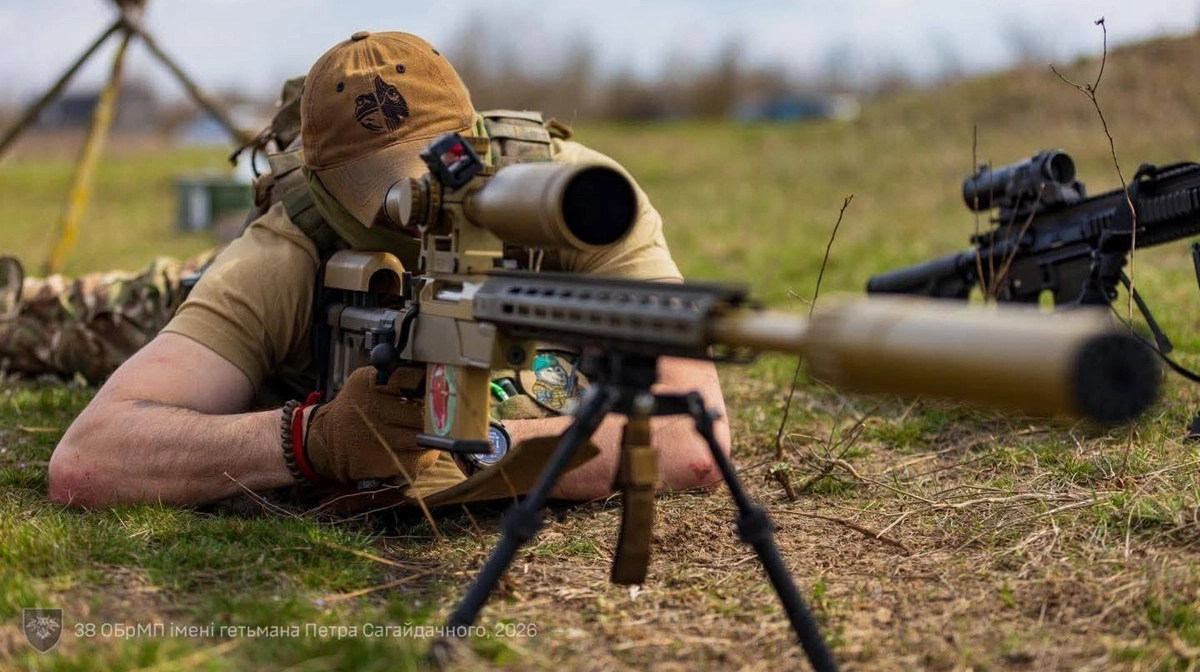
Ukraine's Defence Ministry announced new drone-assault units that integrate aerial and ground drones with infantry into a single combat system. The ministry says the approach has already contributed to the liberation of a large area in southern Ukraine since February, suggesting improved battlefield effectiveness. The update is strategically meaningful for the defense sector and the war outlook, but it is not likely to have an immediate direct market-wide price impact.
This is less a headline about battlefield tactics than a sign that Ukraine is industrializing a force-multiplier model that compresses the cost of offense. The second-order effect is that every incremental gain in autonomy, sensor fusion, and low-cost munition production raises the marginal cost for the defender much faster than it raises Ukraine’s own cost base, which is strategically bullish for the side with deeper external financing and a faster iteration loop. If the model scales, it also changes procurement priorities away from legacy platforms and toward software-defined robotics, comms, jamming resistance, batteries, optics, and rapid battlefield repair.
The real beneficiaries are not just drone primes; it is the broader Western defense ecosystem that can supply the “picks and shovels” of a drone-centric war: electronic warfare, secure radios, thermal imaging, microelectronics, targeting software, and low-cost precision manufacturing. That should support sentiment for companies with exposure to counter-UAS, autonomous systems, and battlefield networking, while pressuring legacy land-systems multiples if investors conclude that future defense budgets will shift mix rather than expand uniformly. A useful nuance: the more successful this doctrine is, the more it accelerates an arms race in jamming and counter-drone defenses, which tends to sustain recurring replacement demand rather than one-off hardware sales.
Near term, the key risk is not battlefield adoption but scaling quality: training, command-and-control integration, attrition of operators, and the ability to maintain a software-update cadence under electronic attack. Over months, the trade becomes contingent on whether the model demonstrably reduces casualty rates and improves territory retention; if it does not, enthusiasm will fade quickly. The contrarian view is that markets may already overestimate how transferable these systems are to conventional armies with slower procurement cycles, so the durability of the signal depends on whether Western defense ministries convert this into budget line items within 1-2 fiscal cycles, not just headlines.
AI-powered research, real-time alerts, and portfolio analytics for institutional investors.
Request TrialOverall Sentiment
mildly positive
Sentiment Score
0.20
From a portfolio perspective, this is a medium-duration thematic catalyst rather than an immediate macro shock, but it is actionable in the defense innovation basket. The asymmetry is strongest if investors are still anchored to traditional armor/artillery procurement while underpricing autonomy, counter-UAS, and battlefield software as recurring revenue categories.
