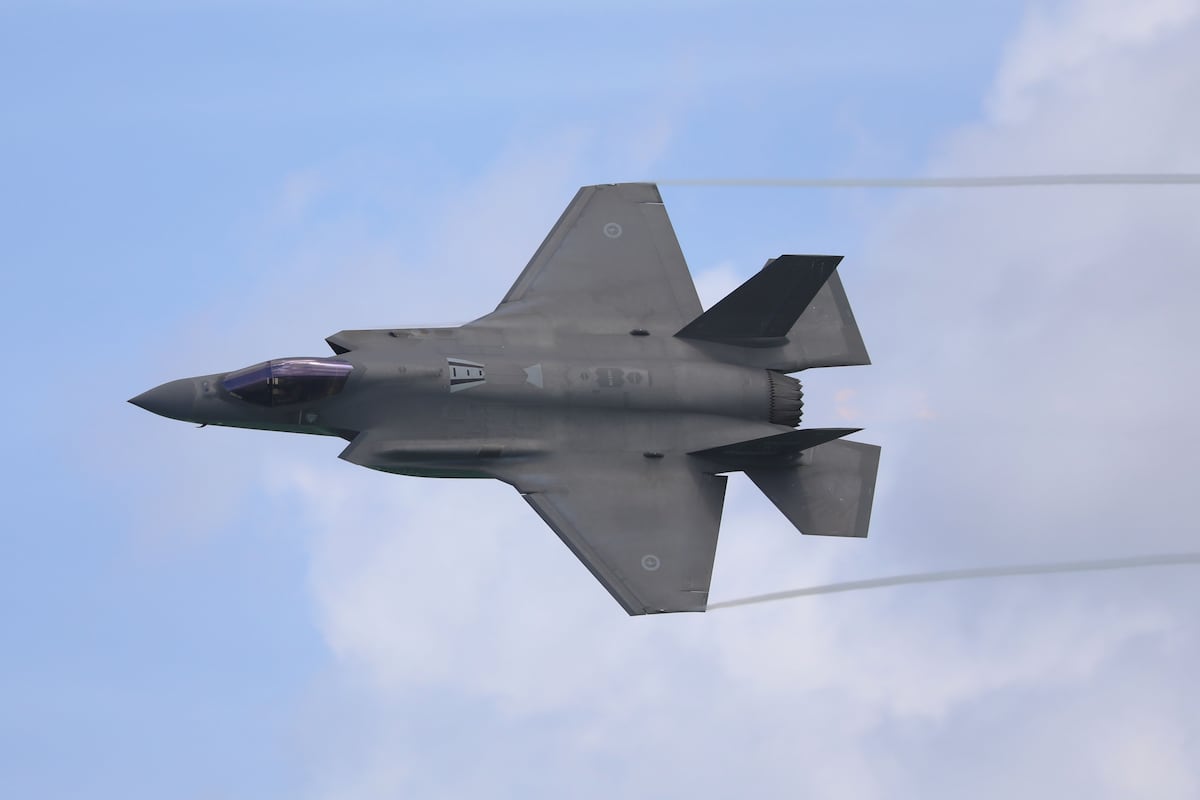
Singapore will introduce Lockheed Martin F-35B fighters into service later this year, receiving four F-35Bs from a 2019 order and operating them initially from Ebbing ANG Base before basing in Tengah around 2029; the RSAF has eight additional F-35Bs due in 2028 and eight F-35As ordered in 2024 for delivery by 2030, bringing its fleet to 20 F-35s. Lockheed delivered a record 191 F-35s last year (inflated by Technology Refresh 3 rollout delays), says the company, has cleared the TR-3 backlog and expects about 156 deliveries this year; the piece also details regional operator counts (Australia 72; Japan planned 105 F-35A + 42 F-35B; South Korea 40 delivered + 20 on order) and notes two of four global heavy MRO facilities are in the Asia-Pacific (Australia, Japan).
Market structure: Lockheed Martin (LMT) is a clear near-term beneficiary as Asia‑Pacific demand and sustainment (MRO) rollouts in Australia/Japan concentrate high-margin aftermarket revenue; expect revenue recognition tailwinds as TR‑3 backlog clears and deliveries normalize to ~156 units in 2026. Regional buyers (Japan, Australia, South Korea, Singapore) increase pricing power for the F‑35 ecosystem while competitors without fifth‑generation platforms (most SEA nations) face capability gaps and potential budget reallocation to air-defence/anti-access systems.
Risk assessment: Tail risks include geopolitically driven export blocks (e.g., Taiwan/Thailand denial), a new TR‑3 software/production delay, or a regional conflict that disrupts supply chains — low probability but high impact on order cadence and margins. Immediate (days) risk is muted market reaction; short term (3–12 months) is guidance sensitivity around delivery cadence; long term (3–7 years) the payoff centers on sustainment/MRO revenue and software-as-a-service tails.
Trade implications: Direct exposure to LMT captures both new-build and long-lived sustainment; consider position sizing to reflect delivery guidance volatility. Relative-value: long pure-defense exposure (LMT/RTX) vs commercial-heavy aerospace (BA) to isolate procurement-driven upside; options can be used to express convexity into certified delivery/capability milestones.
Contrarian angles: Consensus underweights the multi-decade service revenue from avionics/software updates — historical F‑16/F‑15 aftermarket tails increased supplier margins for 10–20 years. Conversely, saturation by 2030 (Sheehy’s ~300 regional F‑35s) could compress new-airframe growth and shift politics toward sustainment competition; track host‑nation basing deals and export approvals as potential regime-change catalysts.
AI-powered research, real-time alerts, and portfolio analytics for institutional investors.
Request DemoOverall Sentiment
mildly positive
Sentiment Score
0.25
Ticker Sentiment
