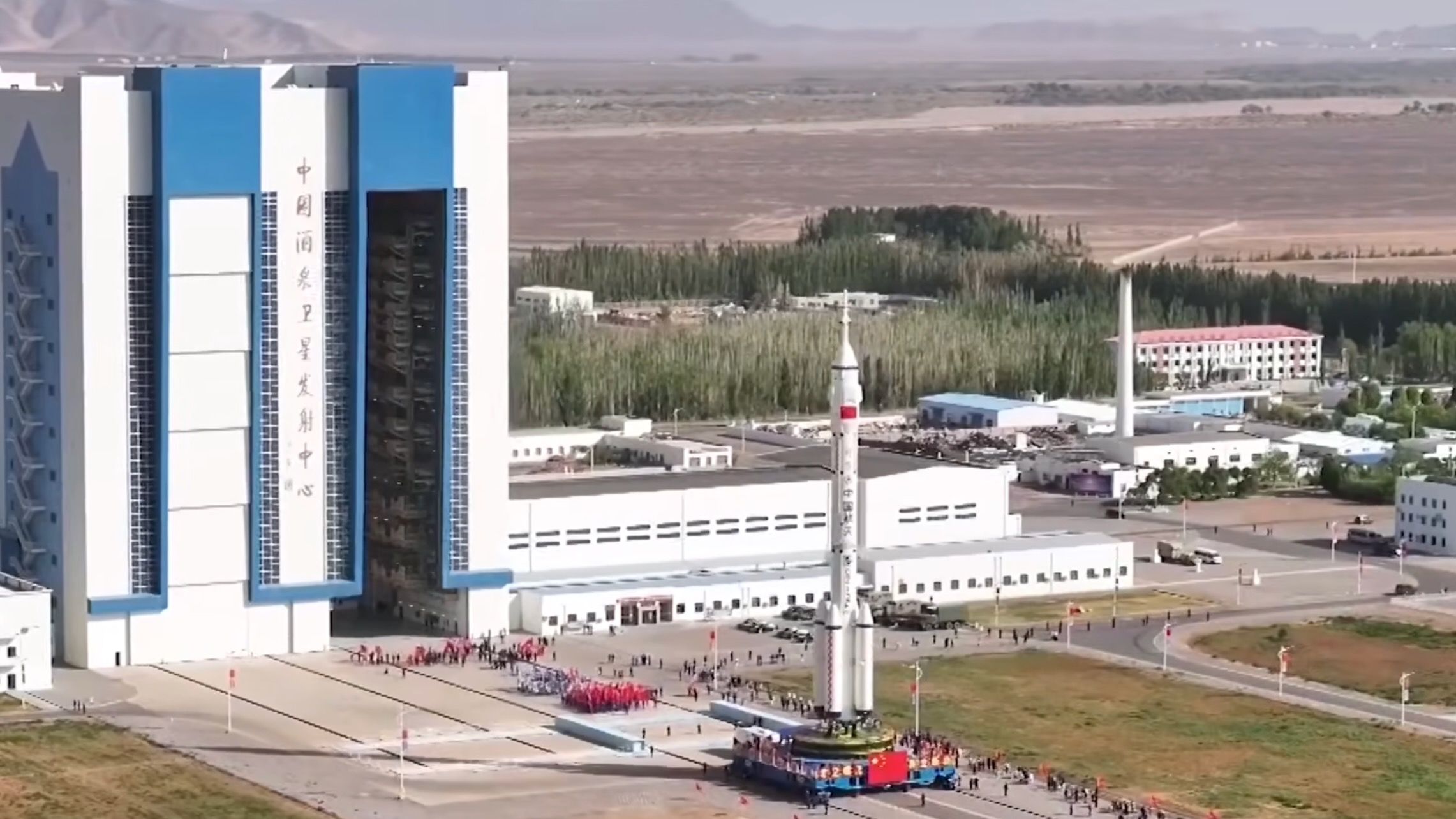
China is scheduled to launch the Shenzhou 23 crew to Tiangong on May 24 at 11:08 a.m. EDT, sending three astronauts for a six-month mission and potentially beginning China's first year-long human spaceflight. The mission will also end the emergency-extended Shenzhou 21 stay and follows the May 11 arrival of Tianzhou 10 with nearly seven tons of supplies. The article is largely operational and geopolitical in nature, with limited direct market impact.
This is a modest but real positive read-through for China’s sovereign space-industrial complex: the market signal is less about one launch and more about operational maturity under stress. A successful crew rotation after an emergency lifeboat event reduces the probability of a policy-driven reset in cadence, which matters for supplier order visibility across propulsion, guidance, thermal systems, ground infrastructure, and mission services. The first-year human mission and the planned international seat exchange also imply a move from “prestige program” to platform monetization, which is how state-backed space stacks eventually justify more persistent capex.
The second-order effect is competitive, not scientific. If Tiangong continues to absorb incremental crews and partner payloads, it strengthens China’s bargaining position for standards, training, and access in a bifurcating space ecosystem, while widening the gap versus countries that still treat human spaceflight as episodic. For defense investors, the more relevant takeaway is that a resilient low-Earth-orbit logistics chain is becoming a strategic capability, not just a headline event; that can support sustained funding for launch cadence, tracking, communications, and debris resilience.
The near-term catalyst path is binary: a clean launch and clean handoff extend confidence into the next 1-3 months; any anomaly would likely reverberate through Chinese aerospace contractors and semis with satellite exposure. The contrarian view is that the market may already be underweighting the importance of this program’s operational reliability, but also overestimating immediate commercial spillover: the monetization is mostly indirect and the biggest earnings impact will still come from procurement, not from tourism or international visits.
Watch for policy follow-through around the next Tianzhou/next-crew cycle: if cadence holds, the trade is on the infrastructure enablers, not the astronauts. If cadence slips, expect a temporary de-rating in China space-prime sentiment and a relative rotation into non-China space names with more diversified government exposure.
AI-powered research, real-time alerts, and portfolio analytics for institutional investors.
Request DemoOverall Sentiment
neutral
Sentiment Score
0.05
Ticker Sentiment
