
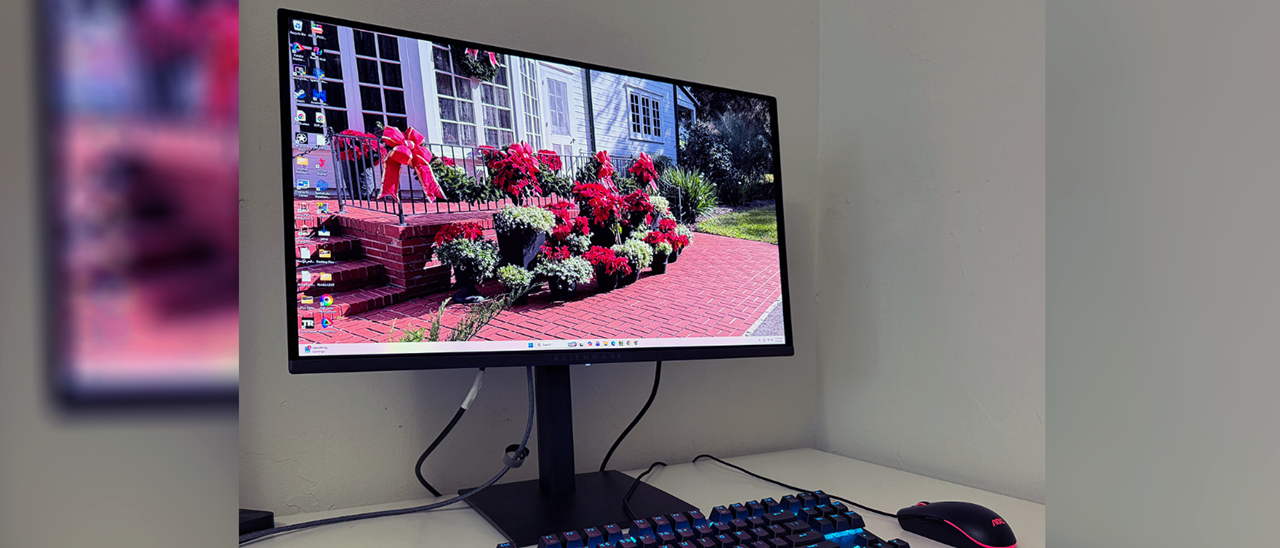
Alienware’s AW2726DM is a $350 27-inch QD-OLED gaming monitor with 240 Hz refresh, QHD 2560x1440 resolution, HDR10, and Adaptive-Sync, delivering premium-level gaming performance at a much lower price than prior 27-inch QD-OLEDs above $500. The review highlights sharp, colorful image quality, very low input lag, and a three-year burn-in warranty, with drawbacks limited to lower peak brightness, no USB ports, no internal speakers, and no sRGB mode. Overall, the article frames the monitor as an exceptional value proposition rather than a major market-moving event.
This is less a product review than a pricing event: DELL has effectively reset the entry point for premium gaming OLED, which should pressure the entire monitor stack, especially mid-tier LCDs and higher-priced OLEDs that were relying on feature bundling to justify premiums. The important second-order effect is not just unit share gain, but mix: sub-$400 OLED broadens the addressable market from enthusiasts into mainstream upgrade buyers, which can accelerate attach of premium panels into retail channels and improve Dell’s leverage with component suppliers over the next 2-3 quarters.
Competitive pain should show up first in brands positioned around $450-$700 QHD gaming monitors, where the value proposition becomes hard to defend unless they offer materially better brightness, USB-C docking, or larger form factors. The likely loser is not OLED broadly, but “good enough” IPS/mini-LED products that depended on avoiding direct comparison with OLED on motion and contrast; those SKUs may need promotions, which would compress gross margins at the channel level. If this price holds, expect competitors to respond with either spec inflation or aggressive rebates rather than true technology differentiation.
The main risk is that the market is extrapolating too quickly from a headline price to sustained demand. At this brightness tier, the product is best suited to controlled indoor use, so the install base may be narrower than the hype suggests; a demand mismatch could surface in 1-2 quarters if buyers discover it is not a universal living-room/office display. Another risk is that Dell used a launch-price strategy to clear share, and later normalization could reduce the elastic demand story, making the current enthusiasm more tactical than structural.
The contrarian takeaway is that the real value here may be margin discipline, not just volume. If Dell can convert price leadership into ecosystem lock-in without having to include low-value extras, it may preserve profitability better than rivals chasing feature lists. That makes this a better relative-value long on Dell’s monitor franchise than a broad basket trade on display vendors.
AI-powered research, real-time alerts, and portfolio analytics for institutional investors.
Request TrialOverall Sentiment
strongly positive
Sentiment Score
0.70
Ticker Sentiment
