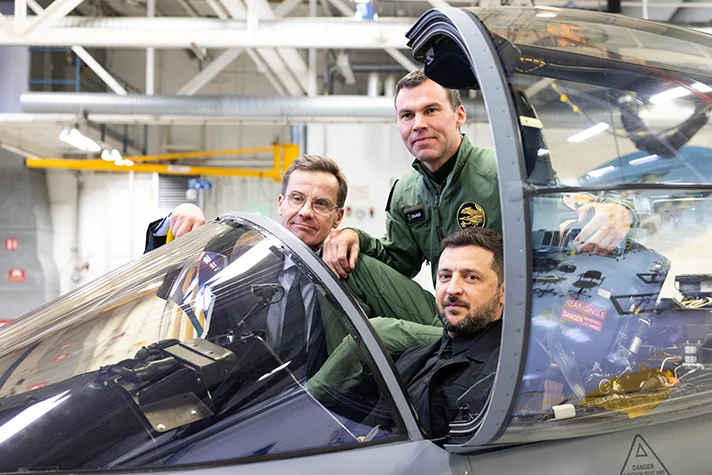
Ukraine is set to receive 16 older Gripen C/D fighters by early 2027 and 22 new E/F aircraft by 2030, with Kyiv also planning to buy up to 150 E/Fs using a proposed €90bn EU loan. The article argues Gripens and Meteor missiles could materially improve Ukraine’s air-defense and strike capacity, while Russia’s logistics in the south are deteriorating, with front-line food shortages emerging and transport routes in Kherson, Zaporizhzhia and Crimea under sustained drone attack. The Oryx-based tally shows Russia with 23,439 visually confirmed heavy equipment losses versus 11,253 for Ukraine as of 11 May.
The near-term market implication is not “more war,” but a sharper asymmetry in cost imposition. Airframes optimized for dispersed operations, rapid turnaround, and modern beyond-visual-range missiles shift Ukraine from a pure survivability posture toward selective air denial over the front, which should raise the expected cost of Russian glide-bomb operations before it materially changes sortie counts. That matters for the ground war because it can compress Russia’s safe stand-off envelope, forcing either longer-range munitions use or higher attrition to crews and aircraft.
The more immediate second-order effect is on logistics rather than air combat. Persistent drone pressure on southbound corridors and Crimea gateways creates a classic compounding failure: food, fuel, and spare parts shortages feed lower vehicle uptime, which further increases convoy density and predictability, making the same lanes even more vulnerable. If this persists for another 2-6 weeks, expect a nonlinear deterioration in Russian defensive elasticity in the south and a higher probability of local withdrawals or forced rationing at the front.
The sanctions/export-controls angle is less about the specific missile debris and more about supply-chain exposure. A fully domestic component stack reduces the odds that this class of missile is constrained by Western interdiction, so the relevant variable becomes Russia’s internal electronics/production bottlenecks, not import bans. That implies the market should focus on industrial capacity and transport chokepoints rather than headline sanctions announcements; if those bottlenecks loosen, Russian strike cadence can remain elevated even under tighter export rules.
Contrarian view: the Gripen announcement may be being read too linearly as a battlefield game-changer. The real option value is in survivability and sortie generation under contested basing, but that payoff only realizes if training, munitions integration, and dispersal infrastructure keep pace. Short-term, the bigger tradable signal is Russia’s logistics degradation; medium-term, the risk is that Western airpower upgrades improve resilience more than they improve kill rates, which would disappoint anyone pricing in a rapid step-change in battlefield dynamics.
AI-powered research, real-time alerts, and portfolio analytics for institutional investors.
Request DemoOverall Sentiment
neutral
Sentiment Score
0.15
