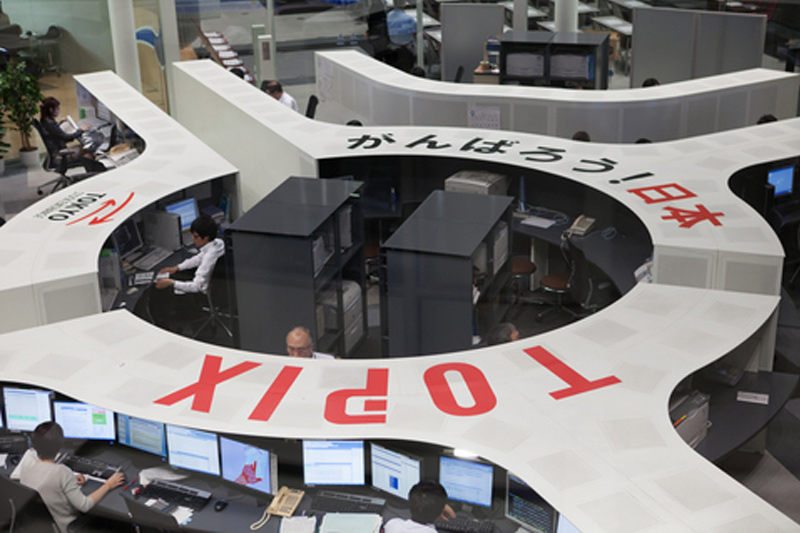
Nikkei 225 fell 0.53% at the Tokyo close with decliners 2,703 vs advancers 888, led by losses in Paper & Pulp, Transport and Communication. Key movers: Yokogawa Electric +4.07% to 5,654; Furukawa Electric +3.96% to 44,640 (all-time high); Kanadevia +3.40% to 1,217 (52-week high); Aeon -8.19% to 1,800; Socionext -5.23% to 1,830; Mitsui Chemicals -5.19% to 1,983.50. Volatility and macro: Nikkei Volatility down 9.21% to 36.09; WTI May crude +2.83% to $97.08, Brent +2.26% to $96.89, June gold -0.86% to $4,735.95; USD/JPY 158.78 (+0.14%) and DXY futures 98.85 (-0.08%); geopolitical comments on U.S. military posture near Iran represent an upside risk to energy and FX volatility.
The near-term geopolitical premium in energy re-prices marginal operating costs across both demand-side and supply-side participants. Energy-driven increases in power and cooling costs make data-center TCO more sensitive to efficiency gains; vendors that can demonstrate materially better performance-per-watt will likely win share from legacy OEMs, while ad-driven growth businesses face a higher probability of revenue compression as consumer spend and marketing ROAS are rerated.
Currency moves that weaken the yen materially change competitive dynamics: Japanese component and systems exporters become more competitive in USD-denominated procurement cycles, accelerating reorder windows for buyers looking to lock lower effective hardware prices. This benefits regionally exposed hardware suppliers and stretches the time it takes for higher upstream commodity costs to pass through into final customer price — a multi-quarter transmission mechanism that can both boost unit demand and compress supplier margins sequentially.
Behavioral and flow signals matter: falling equity-option implied vol reduces the cost of directional exposure and makes structured option sales more attractive, but it also masks fat-tail geopolitical risk that can reappear in an instant. For SMCI the dominant positive is multi-year AI capex elasticity — short-term macro noise is an amplifier, not the primary driver — whereas for ad-tech platforms the same macro noise is more likely to directly shave top-line growth and therefore valuation multiples.
The contrarian read is that the market may be under-discounting how a sustained energy shock reallocates capex toward energy-efficient compute, creating a multi-quarter window of share gains for specialized hardware vendors; the flip side is that export controls, component scarcity, or a sharper-than-expected consumer slowdown would reverse that thesis rapidly. Key watchables: multi-month power-cost trends for hyperscalers, regional order book fill rates, and any export-control announcements that constrain high-performance GPU flows.
AI-powered research, real-time alerts, and portfolio analytics for institutional investors.
Request DemoOverall Sentiment
neutral
Sentiment Score
0.00
Ticker Sentiment
