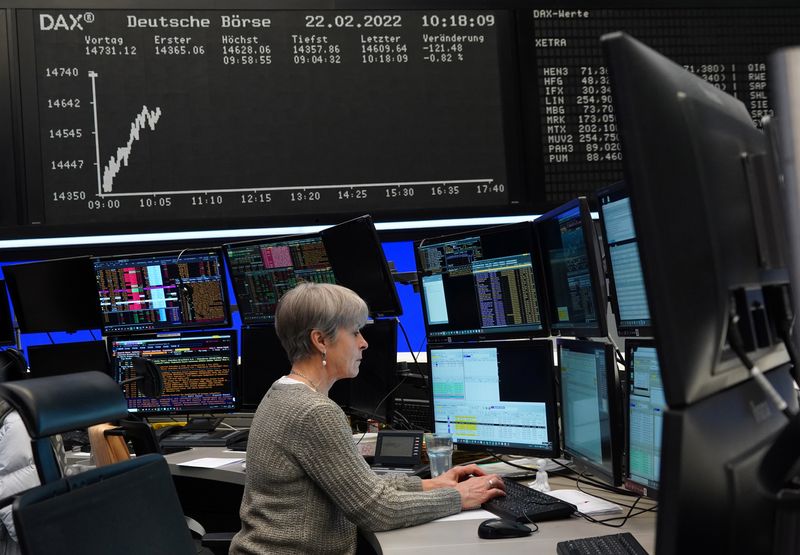
European equities were flat to slightly lower, with the STOXX 600 down 0.03% at 635.66, as fragile U.S.-Iran ceasefire hopes were offset by renewed geopolitical risk and firmer crude prices. Investors are watching Tuesday’s Doha meeting, upcoming U.S. non-farm payrolls, and ECB Chair Lagarde’s remarks for clues on inflation and rate paths, with markets still pricing at least one more ECB hike and two 25 bp Fed hikes by December. AI-related stocks remain under pressure from valuation concerns, while Nagarro surged 90% on takeover bids and Prosus rose 2% after results.
The near-term setup is less about outright risk-on/risk-off and more about factor rotation. A firmer oil tape plus upcoming macro prints creates a bad mix for crowded duration assets: higher energy acts like a tax on the consumer just as payrolls and ECB guidance can reprice the path of rates, which is precisely the regime where high-multiple AI names tend to de-rate fastest. That makes the current divergence in AI leadership more important than the broad index move; when dispersion widens, passive exposure stops working and stock selection starts to dominate.
The biggest second-order winner is not just energy producers but anything with pricing power and low energy intensity relative to revenue. If oil stays elevated for even a few sessions, the market will begin revising forward inflation expectations, which can push real yields higher and compress long-duration equity multiples before headline CPI even shows up. Conversely, the weakest links are firms whose valuation depends on uninterrupted capital-market support, especially AI hardware and infrastructure names where the market has already paid for perfect execution.
The catalyst window is days, not months: geopolitics can reverse on any Doha headline, but the payrolls/ECB combination can lock in the macro direction for several weeks. The market is likely underestimating how quickly “ceasefire hope” can turn into an oil-driven growth scare if shipping insurance, freight rates, or tanker rerouting persist. That argues for using any relief rally to fade expensive growth and own hedges that monetize both higher volatility and a flatter earnings revision path.
Consensus appears too comfortable treating this as a temporary headline shock. The more durable effect is that higher transport and input costs will feed through margins with a lag, while the Fed’s reaction function gets more complicated if labor stays firm at the same time inflation expectations re-accelerate. In that regime, the market tends to reward balance-sheet quality and punish narrative-heavy names, even if the macro headline looks benign.
AI-powered research, real-time alerts, and portfolio analytics for institutional investors.
Request DemoOverall Sentiment
neutral
Sentiment Score
-0.05
Ticker Sentiment
