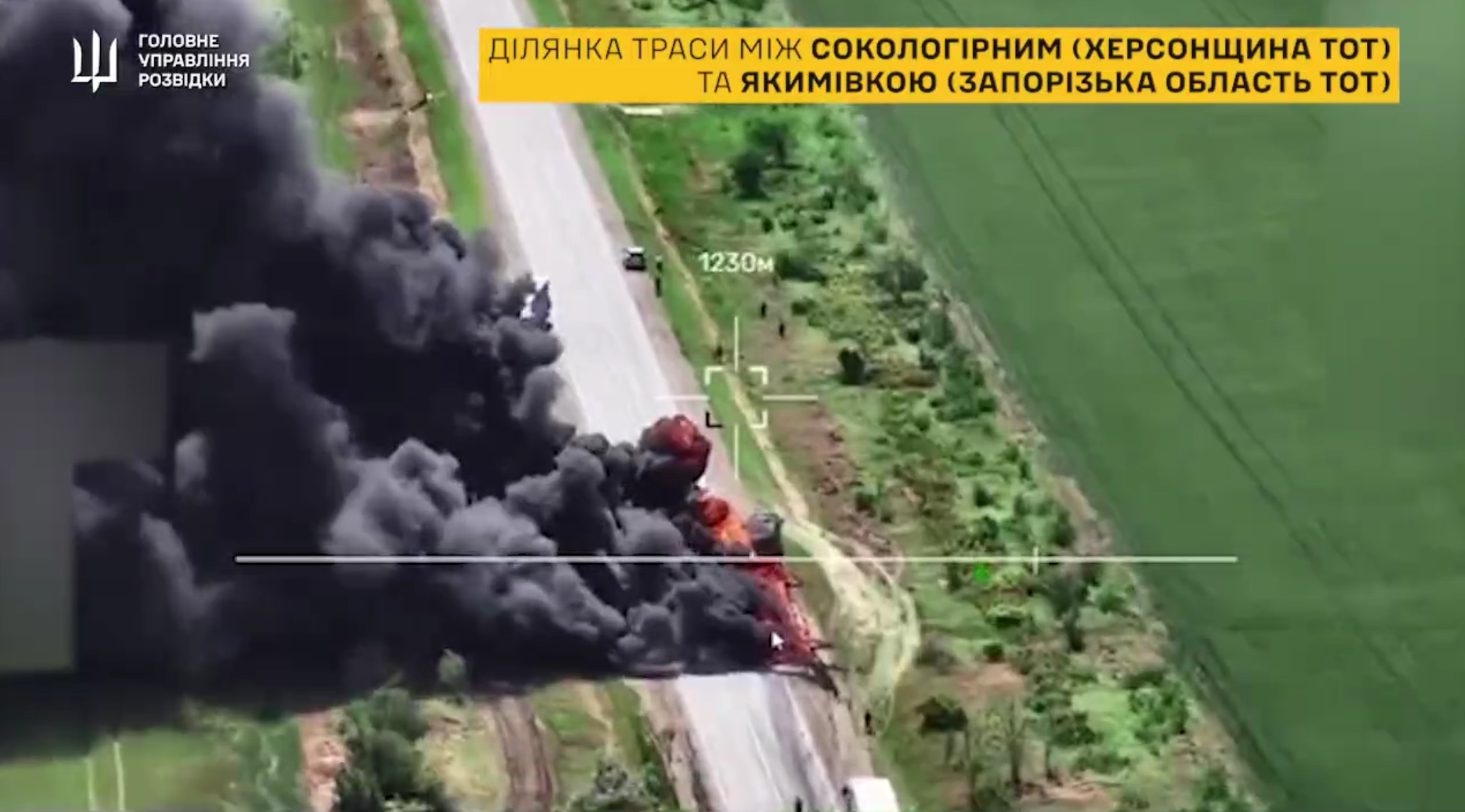
Ukrainian military intelligence says it is disrupting the Crimea–Donbas logistics corridor, claiming sections between Berdyansk, Melitopol, and Dzhankoi are under fire control. The report says Russian military vehicles can no longer reliably move troops and supplies along the route, while occupied southern cities are also facing worsening electricity and water outages. The developments point to intensified pressure on Russian logistics and infrastructure in occupied territory.
The immediate market implication is not a broad geopolitical reprice, but a tightening of the logistics premium embedded in regional assets with any direct exposure to Black Sea trade, Russian supply chains, or reconstruction timing. When a military corridor starts behaving like a contested transport lane, the second-order effect is throughput degradation: higher fuel burn, more convoy dispersion, lower asset utilization, and rising replacement cost for trucks, rail-adjacent assets, and depot inventory. That tends to be felt first in margins, then in delivery reliability, and only later in headline prices.
The more important medium-term signal is that infrastructure fragility is compounding operational risk in occupied territory. Power and water instability creates a feedback loop: fewer specialists, slower repairs, lower industrial uptime, and weaker civilian support, which in turn raises security and maintenance burdens for any logistics network in the region. If this persists for weeks rather than days, expect a growing drag on Russian force regeneration and on any local economic activity that depends on stable electricity, fuel distribution, or refrigerated transport.
For markets, the clearest beneficiaries are not defense primes in the abstract, but companies insulated from Eurasian route disruption and any non-Russian shipping corridors that can absorb incremental volume if rerouting occurs. The more interesting trade is on volatility rather than direction: escalation risk is asymmetrical, but reversals can come quickly if interdiction intensity drops or if Russia reroutes to protected rail nodes, capping the duration of the disruption. Consensus may be underestimating how quickly “temporary” logistics friction becomes structural when repair labor, spares, and power supply all deteriorate simultaneously.
AI-powered research, real-time alerts, and portfolio analytics for institutional investors.
Request DemoOverall Sentiment
moderately negative
Sentiment Score
-0.30
