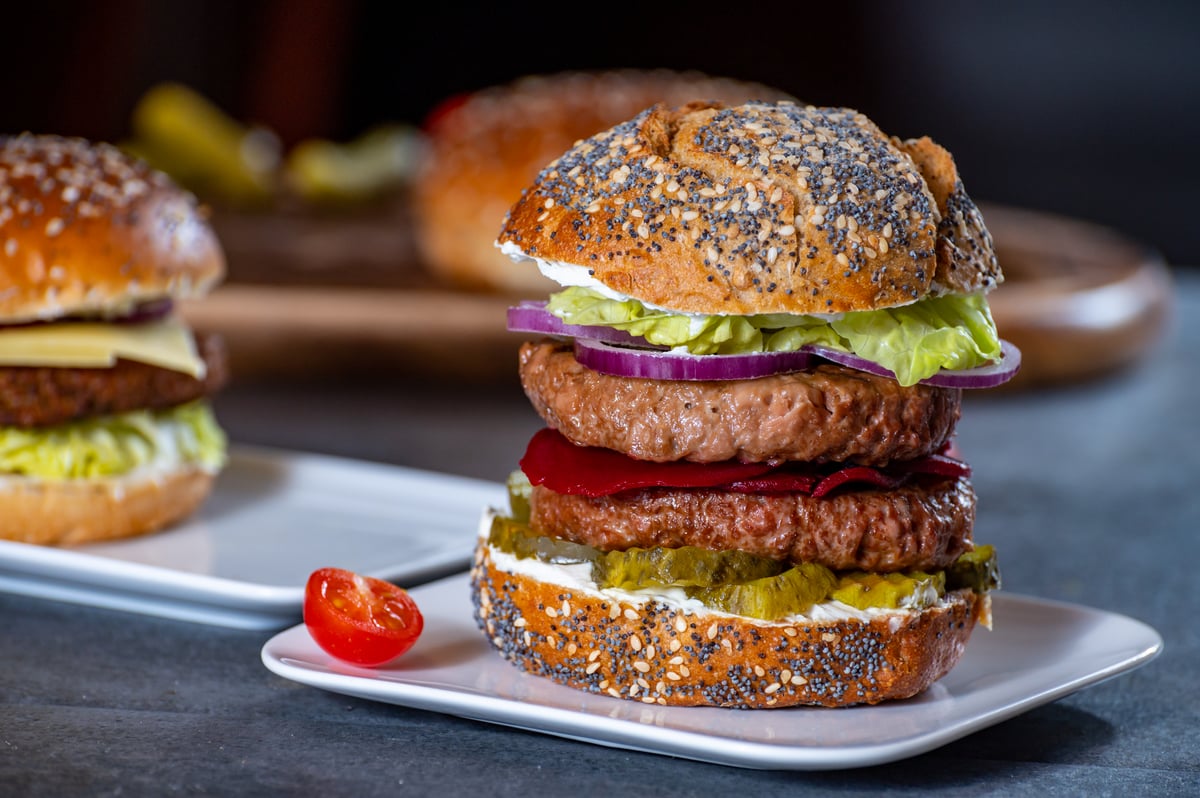
Beyond Meat reported Q3 net revenue of $70.2 million, a 13% year‑over‑year decline, and guided Q4 revenue to $60–65 million (roughly a 15% YoY decline at the high end). The company cites weak category demand, shrinking U.S. retail distribution and lower international restaurant sales, and carries $1.3 billion of long‑term liabilities; it refinanced about $900 million by converting bonds into 318 million shares and won approval to expand authorized shares from 500 million to 3 billion, creating substantial dilution risk. Shares remain down 98% since the 2019 IPO (67% YTD) despite a recent meme‑driven pop, leaving the equity a high‑risk, speculative proposition given deteriorating fundamentals, leverage and governance‑driven dilution.
Market structure: The combination of a 13% Q3 revenue decline, Q4 guide of $60–65M (-15% y/y) and a charter increase from 500M to 3B shares shifts power toward short-term equity holders and potential acquirers of newly issued paper; incumbent protein players (TSN, HRL) and vegetable-protein ingredient suppliers (pea protein processors) win as retail shelf space reverts. Supply/demand for plant-based patties appears oversupplied vs. weak consumer demand which suggests price pressure and markdown-driven margin erosion over the next 2–6 quarters. Cross-asset: equity volatility will stay elevated (options implied vol bid), credit risk is rising despite recent debt-for-equity conversions (long-term liabilities were ~$1.3B pre-conversion), and commodity demand (pea/soy protein) could see 5–15% weaker offtake in near term.
Risk assessment: Tail risks include a liquidity-driven bankruptcy within 12 months if cash runway is <12 months or further covenant breaches trigger acceleration, aggressive anti-labeling regulation that limits premium pricing, or a retail de-listing cascade that slashes revenue >30% sequentially. Near term (days-weeks) risk is meme-driven squeeze; short-term (1–6 months) risk is operational (distribution losses) and dilution; long-term (≥1 year) binary outcomes hinge on successful margin recovery and meaningful distribution wins. Hidden dependencies: retail shelf algorithms, fast-food contracts, and covenant triggers in converted bonds could create step-function dilution events. Key catalysts: Q4 revenue release (Feb quarter cadence), retail reorders, shelf-win announcements, and any SEC filings on share issuances.
Trade implications: Primary directional trade is short BYND equity or buy puts to limit tail loss—target a 2–3% portfolio position implemented via 3–6 month puts 25–40% OTM sized to cap downside; use staggered entries to mitigate squeeze risk. Relative-value: enter a dollar-neutral pair—short BYND vs long Tyson (TSN) or Hormel (HRL) for 1–2% portfolio exposure, expecting share gain by incumbents as plant-based share contracts. Avoid outright long common stock until shares outstanding growth decelerates to <10% y/y and cash runway >12 months; consider distressed bond exposure only after legal review and spread >800bps over US IG.
Contrarian angles: Consensus under-weights the scenario where aggressive cost cuts and SKU rationalization regain retail distribution and push BYND back to profitable unit economics within 12–18 months; that path requires ~300–400bps sequential gross margin improvement and stable/flat retail POS in two consecutive quarters. The recent meme-driven rallies mean short squeezes can produce 20–50% spikes; therefore option structures (puts with limited cost) are superior to naked shorts. Historical parallels: consumer turnaround stories (post-reorganization brands) show recoveries are possible but typically take 12–36 months and require meaningful balance-sheet repair and clear distribution wins—absent that, downside remains the higher-probability outcome.
AI-powered research, real-time alerts, and portfolio analytics for institutional investors.
Request DemoOverall Sentiment
strongly negative
Sentiment Score
-0.70
Ticker Sentiment
