
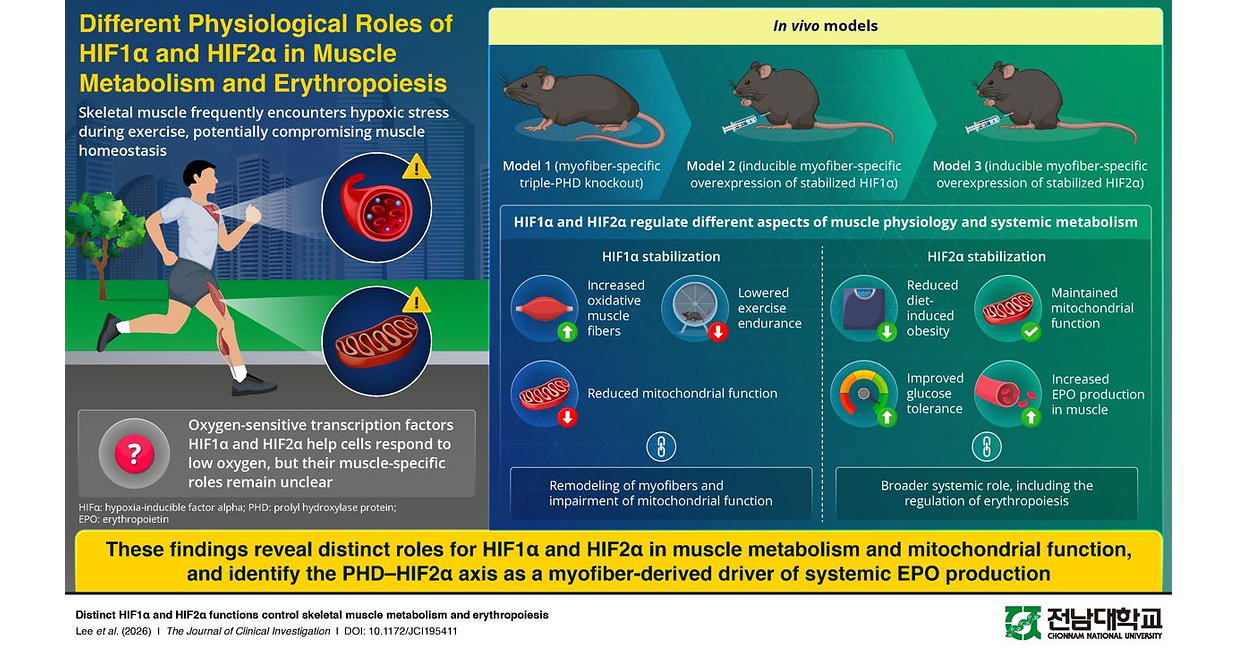
Mouse study (JCI DOI: 10.1172/JCI195411) finds isoform-specific roles for oxygen-sensing factors HIF1α vs HIF2α in skeletal muscle. HIF1α stabilization shifts muscle toward oxidative fiber identity but impairs treadmill/exercise performance and mitochondrial function, while HIF2α activation improves glucose tolerance, reduces diet-induced obesity, preserves mitochondrial function, and unexpectedly drives muscle-derived erythropoietin (EPO) production that normalizes hematologic abnormalities when EPO is deleted from muscle.
This is scientifically interesting but not yet investable on the tape. The main market mechanism is a long-dated rerating of the HIF/erythropoiesis and metabolic-disease toolkits: if isoform-selective muscle signaling ever proves druggable in humans, the first beneficiaries would be platform biotech names with hypoxia, anemia, or obesity franchises, not a consumer stock like TGT. For now, translation risk is extreme: mouse myofiber biology rarely survives human dosing, tissue targeting, and safety constraints, especially where a pathway can simultaneously alter mitochondrial function, appetite, glucose handling, and red-cell production.
The more immediate second-order effect is competitive, not product revenue. Any credible human follow-up would pressure companies building HIF-PH inhibitor or HIF-modulator narratives to prove selectivity and avoid off-target hematologic effects; it also raises the bar for broad “metabolic reprogramming” claims in obesity pipelines. If anything, this reinforces the market’s preference for validated incretin economics over speculative pathway biology.
Contrarian take: the consensus may overread the EPO angle and underread the safety problem. A muscle-derived EPO signal sounds attractive, but any chronic activation of this axis could run into viscosity, thrombosis, or tolerability issues long before it becomes a commercial therapy. Time horizon is years, not months; absent a human proof-of-concept or a partner/license announcement, there is no catalyst for the next 1-3 quarters and no direct thesis for TGT.
AI-powered research, real-time alerts, and portfolio analytics for institutional investors.
Overall Sentiment
mildly positive
Sentiment Score
0.18
Ticker Sentiment
