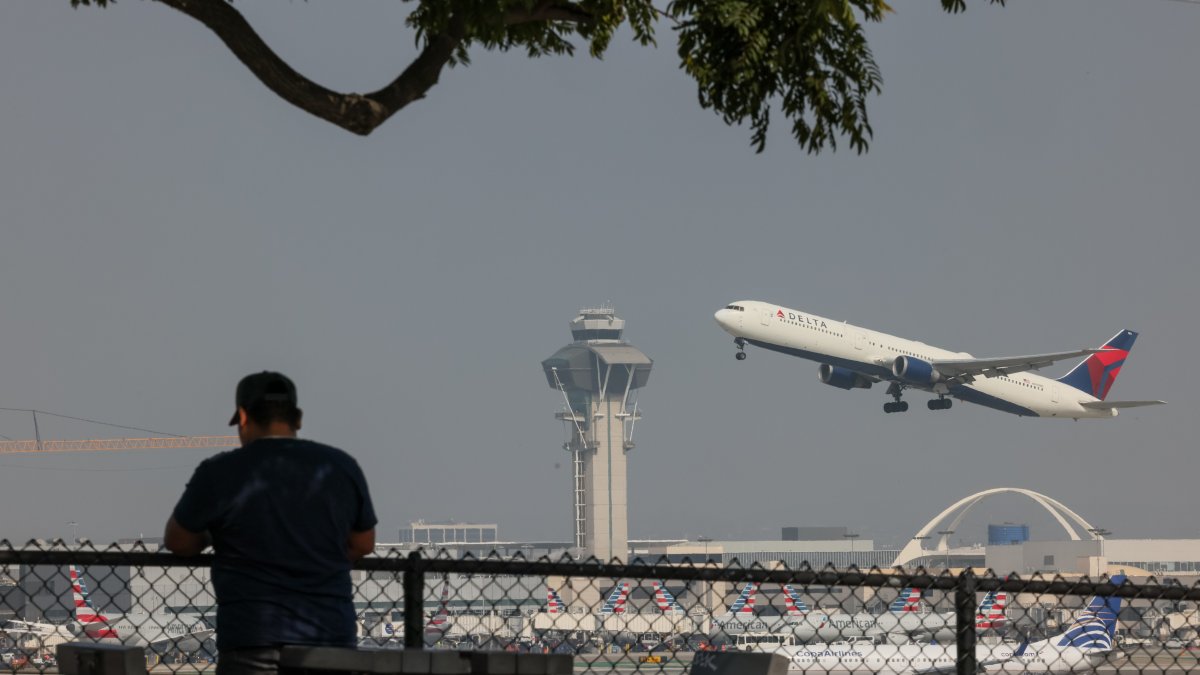
Board approved increasing the per-trip fee for taxis and rideshare companies from $4 to $6 (and to $12 for pickups/drop-offs within the central terminal area) once the SkyLink people mover begins operation (late 2024 or 2027). LAWA expects the hike to generate roughly $100 million in revenue and to reduce curb congestion by shifting activity to SkyLink. Rideshare firms (Uber/Lyft) and some providers object, warning of passthrough costs to riders; implementation timing remains uncertain due to SkyLink delays.
The fee increase is a localized margin shift that looks small in isolation but is a levered pain point for platform economics: airport pickups concentrate high-frequency, short-trip rides where per-ride contribution margins are already thin and driver availability is elastic. If platforms absorb the increase to protect demand they take an immediate hit to adjusted contribution margins in the LA corridor; if they pass it through, demand elasticity will show up as lower utilization on price-sensitive segments (non-business travelers, short hops) and visible slip in same-store booking velocity at LAX vs other hubs.
Second-order winners will be alternate ground-transport modes whose unit economics improve with even modest modal share gains — curbside parking, rental cars and express transit linking remote lots — while local congestion externalities could invite additional municipal curbs on airport pickups, raising structural access costs over a multi-year horizon. Driver behavior will matter: elevated access costs reduce effective driver take-home on LAX trips, incentivizing drivers to avoid the airport unless surge pricing compensates, which in turn raises pickup times and could push consumers toward pre-booked ground transport.
Timing is binary and drawn out: the revenue transfer is contingent on the airport people-mover completion, creating a long, low-conviction window where political pressure, litigation or vendor delays can reverse or dilute impact. Near-term market moves will be driven not by realized economics but by guidance and investor perception; expect the clearest trading opportunities around corporate earnings that update airport pricing pass-through assumptions or when the people-mover achieves a new construction milestone (announcements or missed milestones within 1–12 months).
AI-powered research, real-time alerts, and portfolio analytics for institutional investors.
Request DemoOverall Sentiment
mixed
Sentiment Score
0.05
Ticker Sentiment
