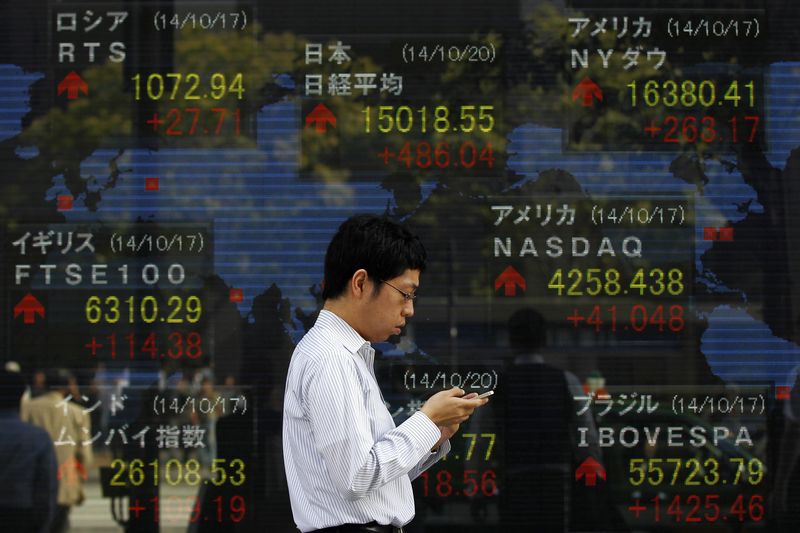
Iran called the Pakistan-brokered ceasefire 'unreasonable', leaving the Strait of Hormuz largely closed and prompting an oil-price rebound that kept markets on edge; U.S.-Iran talks in Pakistan are planned but details remain unclear. Asian equities fell: South Korea KOSPI -1.3%, Japan Nikkei -0.4% and TOPIX -0.6%, CSI 300 and Shanghai Composite about -0.5% each, Hang Seng -0.5%; Alibaba dropped ~3% after a Jefferies cut. The move reflects heightened risk-off positioning and uncertainty over oil flows and the ceasefire terms, risking further regional market volatility.
Persistent disruption risk to the Hormuz chokepoint has outsized, non-linear effects beyond headline oil moves: insurance, voyage time and fuel consumption re-rate shipping economics, which benefits owners of tankers and LNG carriers and penalizes refiners that depend on a narrow basket of Middle East crudes. Expect freight-cost pass-through into refined product and LNG spot prices over the next 2–12 weeks; a 20–40% increase in voyage costs can shave refinery margins by mid-single digits and raise delivered Asian LNG breakevens by $1–2/MMBtu.
Market structure amplifies short-term moves—physical bottlenecks lift spot and freight before futures fully reprice, creating a 3–4 week window where owners and option holders capture disproportionate gains. Conversely, reopening the strait would cause rapid mean reversion: oil and freight could retrace 10–25% within days as floating storage unwinds and arbitrage flows resume. Portfolio effects are asymmetric: energy producers and shipping see front-loaded cashflow gains, while semiconductor and export-led emerging-market equities face second-order declines from higher input costs and risk-premium widening.
Catalysts to watch with tight timestamps: bilateral talks in Pakistan (days), observable ship transits through Hormuz (hours–days) and announcement of insurance premium hikes or charter cancellations (48–72 hours). Tail-risk remains two-way—an escalation to direct strikes on shipping assets or wider regional states would sustain premiums for months; a diplomatic breakthrough with formal transit guarantees would compress them within a week. Position sizing should reflect this event-driven, high-volatility regime with stop levels tied to observable physical-flow metrics rather than price alone.
AI-powered research, real-time alerts, and portfolio analytics for institutional investors.
Request DemoOverall Sentiment
mildly negative
Sentiment Score
-0.30
