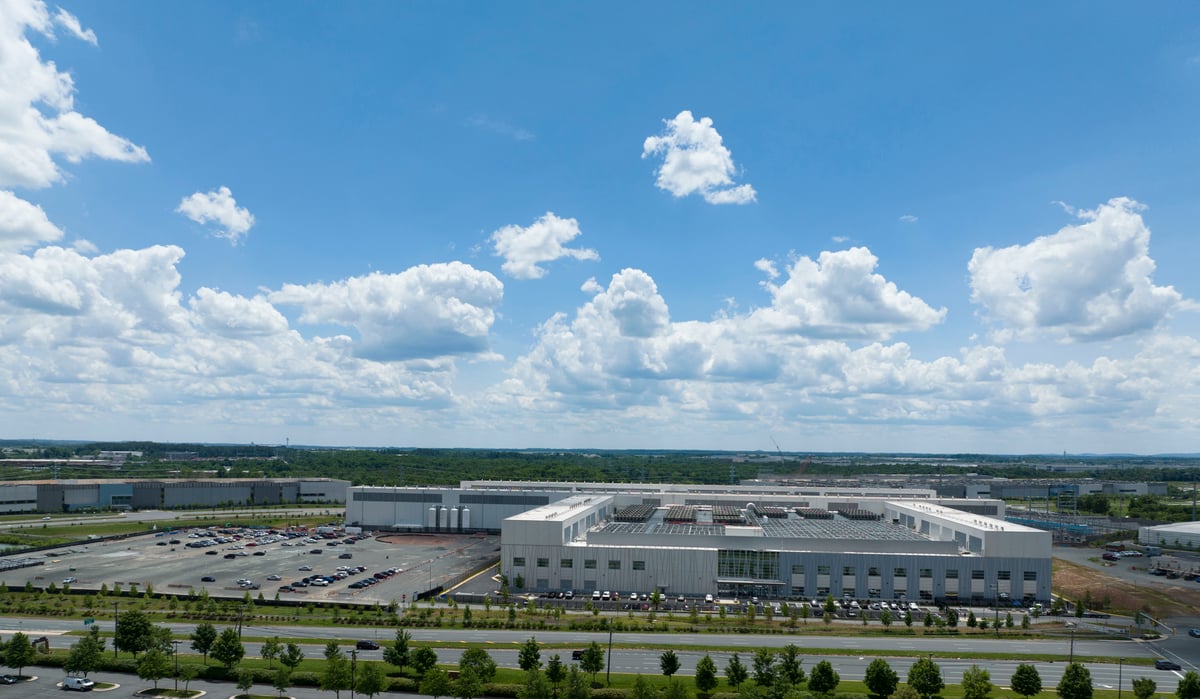
Sterling Infrastructure posted Q1 revenue of $825.7 million, nearly doubling year over year, while backlog rose 78% to $5.15 billion, or 51% excluding the CEC Facilities acquisition. Its e-infrastructure segment, which serves data centers and semiconductor fabs, grew backlog 123% year over year and continues to benefit from AI-related hyperscaler spending. The company also expanded through acquisitions, including CEC Facilities Group and Stone Ridge Contracting, reinforcing the growth thesis.
The market is still underestimating how quickly AI capex becomes a margin story, not just a revenue story, for the infrastructure vendors closest to the data-center buildout. STRL sits in a sweet spot where backlog visibility, project mix, and pricing power can compound simultaneously; that matters because backlog growth at this pace usually leads reported earnings by multiple quarters, so the next several prints can look less like linear growth and more like a step-up in operating leverage. The second-order effect is pressure on smaller regional contractors and specialty trades that lack scale, permitting expertise, and balance-sheet capacity to pre-finance large projects.
The acquisition cadence is also strategically important beyond simple top-line accretion. If management can keep bolting on local capacity and customer relationships, STRL can turn fragmented regional demand into a networked national platform, which tends to expand bid participation rates and improve utilization across the cycle. The risk is that integration slippage or a normalization in AI-related construction starts would show up first in margin compression, not revenue collapse, because a lot of the current enthusiasm is being capitalized into expectations.
Consensus likely focuses too much on the run-up and not enough on duration: this is not a one-quarter trade if hyperscaler capex plans stay intact. The key question is whether the current backlog is a trough-to-peak snapshot or a sustainable run-rate, and the answer will depend on whether data-center and semiconductor fab customers continue converting announced spending into groundbreakings over the next 6-18 months. If that conversion rate slows, STRL can still look fundamentally fine while the stock de-rates hard because the market has already priced in a premium growth multiple.
The contrarian angle is that the best risk/reward may be in using STRL strength to express a relative-value view against lower-quality infrastructure names rather than outright shorting the stock. The company has genuine fundamental momentum, but after a huge move the main hazard is not business deterioration; it is multiple compression if investors conclude AI infrastructure spend is too front-loaded. That argues for owning the best-in-class operator while fading the second tier that lacks backlog quality or acquisition optionality.
AI-powered research, real-time alerts, and portfolio analytics for institutional investors.
Request DemoOverall Sentiment
strongly positive
Sentiment Score
0.72
Ticker Sentiment
