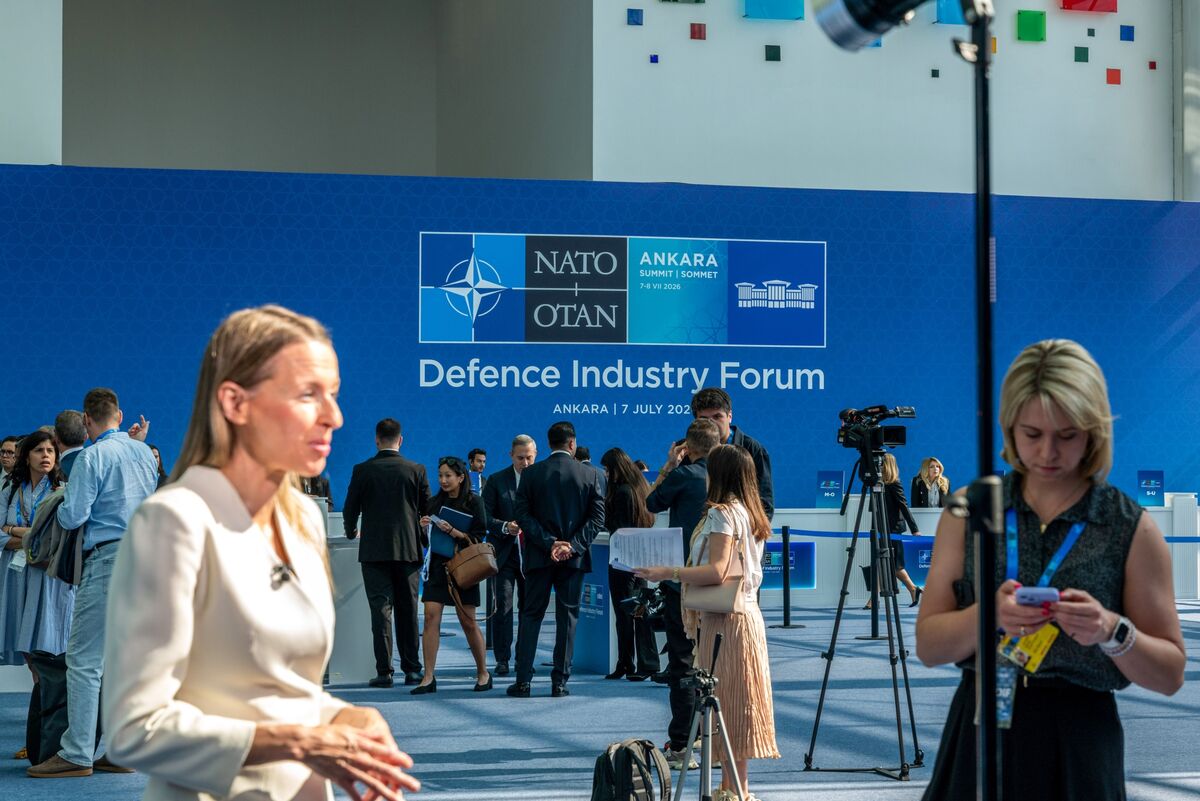
The provided text contains only a headline/landing-page snippet noting that Trump and NATO leaders are gathered for the second day of a summit. No concrete policy decisions, figures, or economic implications are included, so market impact cannot be quantified from the supplied content.
This type of summit risk is usually more important for relative performance than for the tape direction. The first-order move tends to be in defense and aerospace, but the real P&L driver is whether rhetoric converts into appropriations, replenishment orders, and multi-year procurement visibility; without that, any pop is typically just multiple expansion on sentiment, not an earnings revision.
The second-order winner, if policy tightens, is not the headline primes alone but the suppliers with long backlogs and scarce capacity in munitions, sensors, and air defense components. If European members are pushed toward higher spending, that can also pressure fiscal-sensitive sectors and reinforce bid rotation out of rate-sensitive domestic cyclicals into contractors, but the impact usually shows up over 1-3 months as budget language and contracting flow becomes visible.
The contrarian risk is that consensus overweights the optics of alliance meetings and underweights the probability of policy drift. If the event ends in ambiguity or burden-sharing theater, defense names can give back quickly because the market is already positioned for persistent geopolitical tension; conversely, any credible de-escalation path would hit the sector’s duration-like multiple more than its near-term backlog. The cleanest falsifier is a lack of follow-through in budget drafts, aid tranches, or order announcements over the next quarter.
AI-powered research, real-time alerts, and portfolio analytics for institutional investors.
Request DemoOverall Sentiment
neutral
Sentiment Score
0.00
