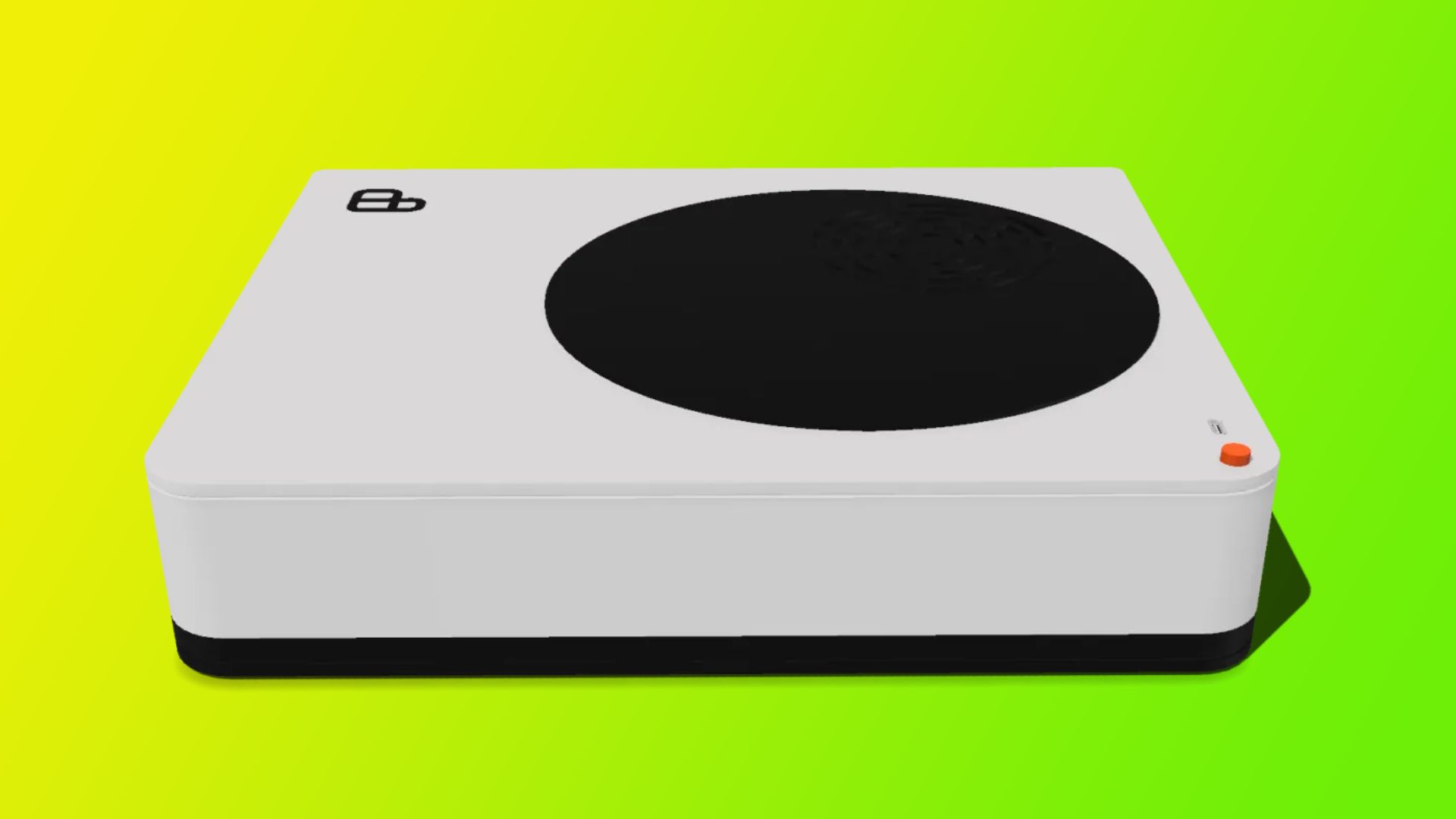
EmuDeck’s Playnix Console is a $1,139 mini PC/console hybrid built around a 6-core AMD Ryzen 5 5500, RX 9060 XT 16 GB GPU, 16 GB DDR4-3200, and a 512 GB SSD. The system runs a custom Arch Linux distro with Steam Gaming Mode and is advertised as 4K-capable; an earlier model reportedly delivered 55-58 fps in Cyberpunk 2077 at 4K High with FSR Quality upscaling. The article frames it as a credible Steam Machine alternative, but it is primarily a product announcement rather than a market-moving event.
This is less an AMD demand event than a proof-of-concept that the Ryzen 5 + discrete Radeon combo can anchor a premium, turnkey “living-room PC” category outside the core DIY enthusiast market. The important second-order effect is channel pull for midrange desktop parts: builders chasing console-like simplicity may accept higher BOMs for compact, curated systems, which supports ASPs for mainstream CPUs/GPUs even if unit volumes stay niche. That said, the economics still look fragile; at this price point the product is competing against both subsidized consoles and better-known small-form-factor PC brands, so adoption likely stays hobbyist-driven rather than scaling into a meaningful TAM in the next 12 months.
For AMD, the message is mixed but constructive. A single showcase system does not move earnings, but it reinforces the company’s positioning in the only part of the PC market where consumers will pay up for performance-per-watt and enough graphics muscle to make 4K claims plausible. The larger hidden benefit is ecosystem validation: Linux-friendly gaming hardware broadens AMD’s relevance beyond Windows OEM cycles and could modestly improve pull-through for Radeon-branded SKUs among boutique integrators over the next 2-4 quarters.
The risk is that this narrative overstates retail demand while underweighting supply-side substitution. If console-like mini PCs remain a low-volume enthusiast segment, the winner may be component vendors and boutique assemblers rather than the headline semiconductor names. The contrarian view is that this is actually bearish for price discipline in the midrange GPU market: if more builders copy this formula, excess inventory pressure could persist in the $300-$500 card tier even as marketing headlines sound bullish on gaming hardware.
HPQ is effectively neutral here; the article reinforces that third-party mini-PC competition is increasingly differentiated by software and industrial design, not generic OEM scale. If the category expands, it could slightly pressure mainstream desktop replacement demand, but the more immediate substitution is against console buyers who want flexibility and upgrades, not against HP’s core enterprise channels.
AI-powered research, real-time alerts, and portfolio analytics for institutional investors.
Request DemoOverall Sentiment
mildly positive
Sentiment Score
0.22
Ticker Sentiment
