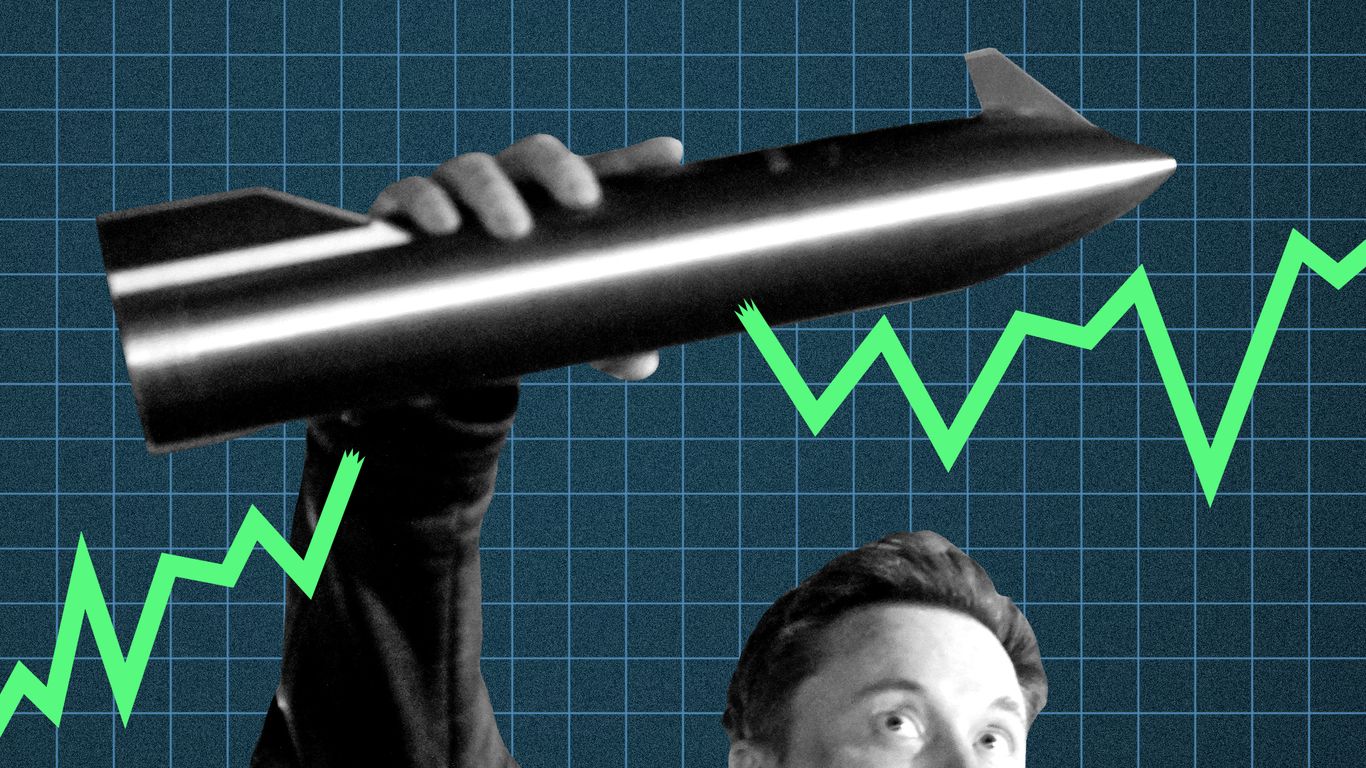
SpaceX disclosed a $4.9 billion net loss on $18.67 billion of 2025 consolidated revenue, underscoring that its upcoming IPO valuation near $1.75 trillion will depend heavily on future growth rather than current profitability. Starlink remains the only profitable unit and accounted for most Q1 revenue, while the AI business generated just $818 million in Q1 2026 despite a reported $1.25 billion-per-month compute deal from Anthropic. The company is expected to begin trading next month on Nasdaq under ticker SPCX.
The market is likely to misprice the first-order signal here: this is less a pure SpaceX story than a reset of the entire private-market AI/space complex’s discount rate. A $1.75T headline valuation anchored to weak current earnings makes the IPO a sentiment event, but the bigger second-order effect is that it pulls forward capital into adjacent “scarcity assets” — profitable infra like datacenter compute, launch supply chain bottlenecks, and exchange/market-structure beneficiaries if retail/IPO volumes reaccelerate.
Near term, the most fragile part of the narrative is not SpaceX’s operating loss; it is the assumption that high-multiple private AI assets can clear public-market scrutiny at similar multiples. If the deal is well received, it likely compresses risk premia for late-stage AI names for 2-6 weeks; if it trades down, it becomes a fast-feedback warning that growth at any price is no longer tolerated. That matters because a poor aftermarket print would hit the entire pipeline of rumored AI listings and could delay capital raises across the sector.
NDAQ has a clean, if modest, beneficiary path: more IPOs and higher primary volume should lift fee revenue, listing velocity, and market-data usage, with upside extending over months rather than days. TSLA is more interesting as a positioning expression: Musk beta works both ways, so a weak SpaceX reception could spill into Tesla through sentiment and governance-overhang channels even if fundamentals are unchanged. The contrarian read is that the market may be overfocusing on losses and underappreciating that the only durable monetization engine here is infrastructure scarcity; the long-duration winners are likely the picks-and-shovels providers, not the hero asset itself.
AI-powered research, real-time alerts, and portfolio analytics for institutional investors.
Request DemoOverall Sentiment
moderately negative
Sentiment Score
-0.45
Ticker Sentiment
