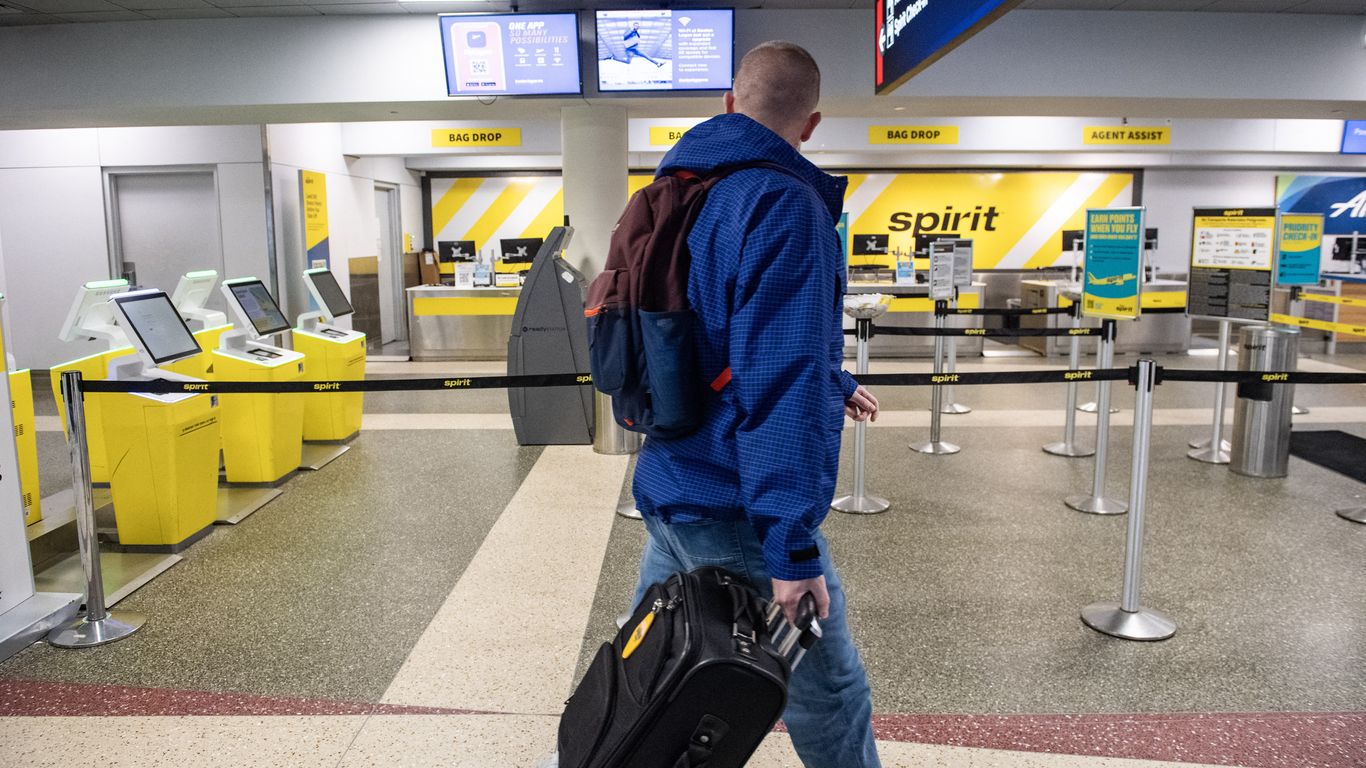
Spirit said it is going out of business and canceling all flights, leaving current ticket holders stranded and triggering automatic refunds only for those who paid directly by card. Rival airlines including Southwest, Delta, American, United, JetBlue, and Frontier are offering rescue fares and discounts to absorb disrupted travelers. The news is highly negative for Spirit and disruptive for the low-cost airline and broader domestic travel market.
This is less a one-day disruption story than a forced reallocation of capacity in the most price-sensitive segment of domestic leisure travel. The first-order beneficiary is not just the obvious legacy carriers on stranded itineraries; it is any airline with a dense network into Florida, the Caribbean, and key leisure trunks that can monetize same-day urgency at materially higher unit revenue than the ultra-low-cost model could sustain. Over the next 1-2 weeks, the market should focus on whether competitors are using "rescue" offers to convert one-off displaced passengers into repeat customers, which would partially reprice the loyalty economics of the affected routes.
The bigger second-order effect is on fare discipline. Spirit's exit removes a persistent low-end anchor, which should tighten pricing not only on overlapping routes but also on nearby domestic leisure markets where competitive response is usually fastest. That should be modestly supportive for AAL and UAL in the next quarter, but the cleaner read-through is for ULCC: the market may be underestimating how much of its network value was really option value on Spirit's collapse rather than standalone franchise strength. If Spirit's aircraft and slots are absorbed by competitors or lessors, the capacity gets reused, but the pricing umbrella still lifts because the most aggressive discount setter is gone.
The contrarian angle is that the near-term beneficiary trade may be overstated if this becomes a broad consumer-demand stress event rather than a pure supply shock. Disrupted travelers often rebook on the cheapest available carrier, which limits margin capture, and the rescue-fare discounts cap upside in the immediate days. The trade works best if the equity market extends the negative read-through to the entire leisure complex; if it does, the better expression is to fade ULCC relative to the network carriers rather than short the group outright.
AI-powered research, real-time alerts, and portfolio analytics for institutional investors.
Request DemoOverall Sentiment
extremely negative
Sentiment Score
-0.95
Ticker Sentiment
