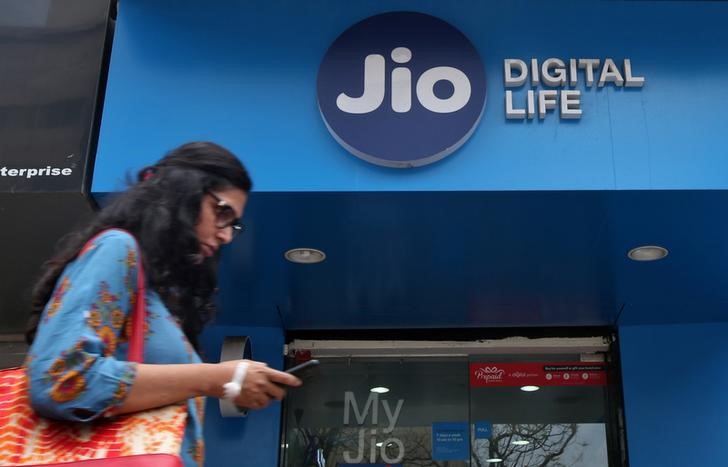
Reliance Industries is restructuring the planned Jio Platforms IPO into a fully fresh share sale after disagreements with investors over valuation and deal structure. The IPO could raise about 250 billion rupees ($2.6 billion) for debt repayment and expansion, but the shift may reduce the implied valuation from the previously reported $133 billion to $154 billion range. Jio could file draft papers within weeks, potentially pushing the listing to July.
The key signal is not the IPO itself, but the governance tilt: moving from an existing-shareholder sale to a primary issuance transfers bargaining power from legacy investors to the operating company and its sponsor. That usually improves execution odds in a weak tape because the capital raise can be framed as balance-sheet and growth funding rather than insiders cashing out, but it also tends to compress headline valuation because the market discounts control premium leakage and future dilution. For Reliance, that creates a cleaner path to de-levering the digital stack, but near-term it may cap enthusiasm from the late-stage growth funds that were underwriting scarcity value.
Second-order, this is a positive for India capital-markets depth and a selective negative for listed telco peers and adjacent vendors. If Jio comes to market with a primary raise and uses proceeds for debt reduction plus expansion, it can temporarily widen its pricing flexibility versus smaller competitors, who lack the ability to fund growth while simultaneously lowering leverage. Over 6-12 months, that should pressure Bharti Airtel and Vodafone Idea on investor attention more than on fundamentals, because the market will re-rate Indian telecom as a “Jio-led scale game” rather than a sector-wide recovery trade.
The main risk is timing: a July listing window leaves multiple macro gates open, including India risk appetite, rate volatility, and any disappointment in the final implied valuation range. If the book is forced below the previously discussed band, the market may read it as sponsor caution rather than prudence, which can keep the stock in a post-listing overhang for 1-2 quarters. The contrarian angle is that a modestly lower price could actually be bullish long term if it catalyzes strong aftermarket performance; in India, clean first-day execution often matters more than absolute valuation, especially for consumer-facing digital franchises.
For portfolio positioning, this is more about relative value than outright direction: the IPO can become a liquidity event that draws capital from incumbent large-cap Indian equities into the new listing, creating temporary multiple compression elsewhere. The bigger opportunity may be in trading the setup into pricing rather than chasing the first print, because primary deals with debt-repayment use cases often support better secondary performance than pure sell-downs. The market is likely underestimating how much a successful Jio listing could reset the benchmark for Indian private tech valuations over the next 12 months.
AI-powered research, real-time alerts, and portfolio analytics for institutional investors.
Request DemoOverall Sentiment
mildly negative
Sentiment Score
-0.15
Ticker Sentiment
