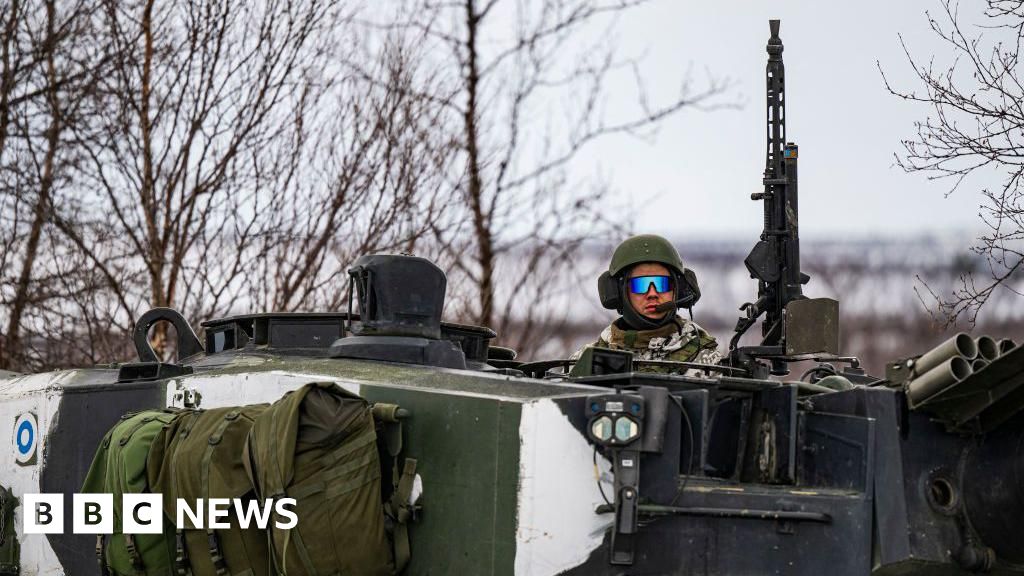
Finland's government has proposed amending the 1987 Nuclear Energy Act and the criminal code to allow nuclear weapons to be brought into, transported, delivered or possessed in Finland if connected to the country's military defence, aligning policy with NATO deterrence. The proposal — circulated for consultation until April 2 and backed by the governing right‑wing coalition — follows Finland's 2023 NATO accession and underscores heightened regional security risks along its 1,340 km border with Russia. For investors, the move raises strategic defence and political-risk considerations in Northern Europe, with potential implications for defense spending, regional military posture and investor risk premia, but is not an immediate direct market shock.
Market structure: NATO-alignment of Finland raises probability of multi-year increases in Nordic and EU defence procurement (we model a 5–10% incremental EU defence budget reallocation over 2–4 years). Direct winners: prime contractors with air/missile-defence, ISR and logistics exposure (Lockheed LMT, Raytheon RTX, Northrop NOC, Saab SAAB-B.ST, BAE BAES.L). Losers: regional low-tech contractors and sectors sensitive to trade/tourism near the Russian border; Finnish sovereign/franchise risk may reprice higher in fixed income and insurance spreads.
Risk assessment: Tail risks include Russian asymmetric retaliation (energy supply cuts, cyberattacks) or a miscalculated escalation that could spike commodity prices and risk premia; probability low but impact severe (equities down 15–30%, bond spreads +50–150bps). Immediate (days) — risk-off flows, FX volatility; short-term (weeks–months) — defense names re-rate on procurement signals; long-term (years) — sustained order books and capex for primes. Hidden dependency: any sustained upside hinges on explicit US/NATO basing/force posture commitments and national parliamentary approvals (consultation window to 2 Apr, final vote likely within 1–3 months).
Trade implications: Favor liquid large-cap defence names and ETFs, hedge with gold and volatility instruments for geopolitical shock. Options/structure: use 6–12 month call spreads on ITA/large primes to control theta while capturing re-rating. Fixed income: underweight long-dated Finnish sovereigns and buy short-dated protection if CDS cheapens; commodities: modest long uranium/nuclear-services plays only if civil-nuclear policy shifts.
Contrarian angles: Consensus assumes only upside for defence equities — missing risk of prolonged Russian hybrid responses that hit European industrial supply chains and insurance costs. Reaction could be underdone for small-cap regional suppliers and overdone for already richly priced US primes; look for mispricings in mid-cap European defence (e.g., SAAB-B.ST) and in sovereign CDS where markets may lag political risk. Historical parallels: Baltic/Nordic NATO expansions led to multi-year defence reallocation and 20–40% cumulative share gains for contractors over 2–5 years, but with 10–30% drawdowns on spikes of conflict.
AI-powered research, real-time alerts, and portfolio analytics for institutional investors.
Request TrialOverall Sentiment
mildly negative
Sentiment Score
-0.25
