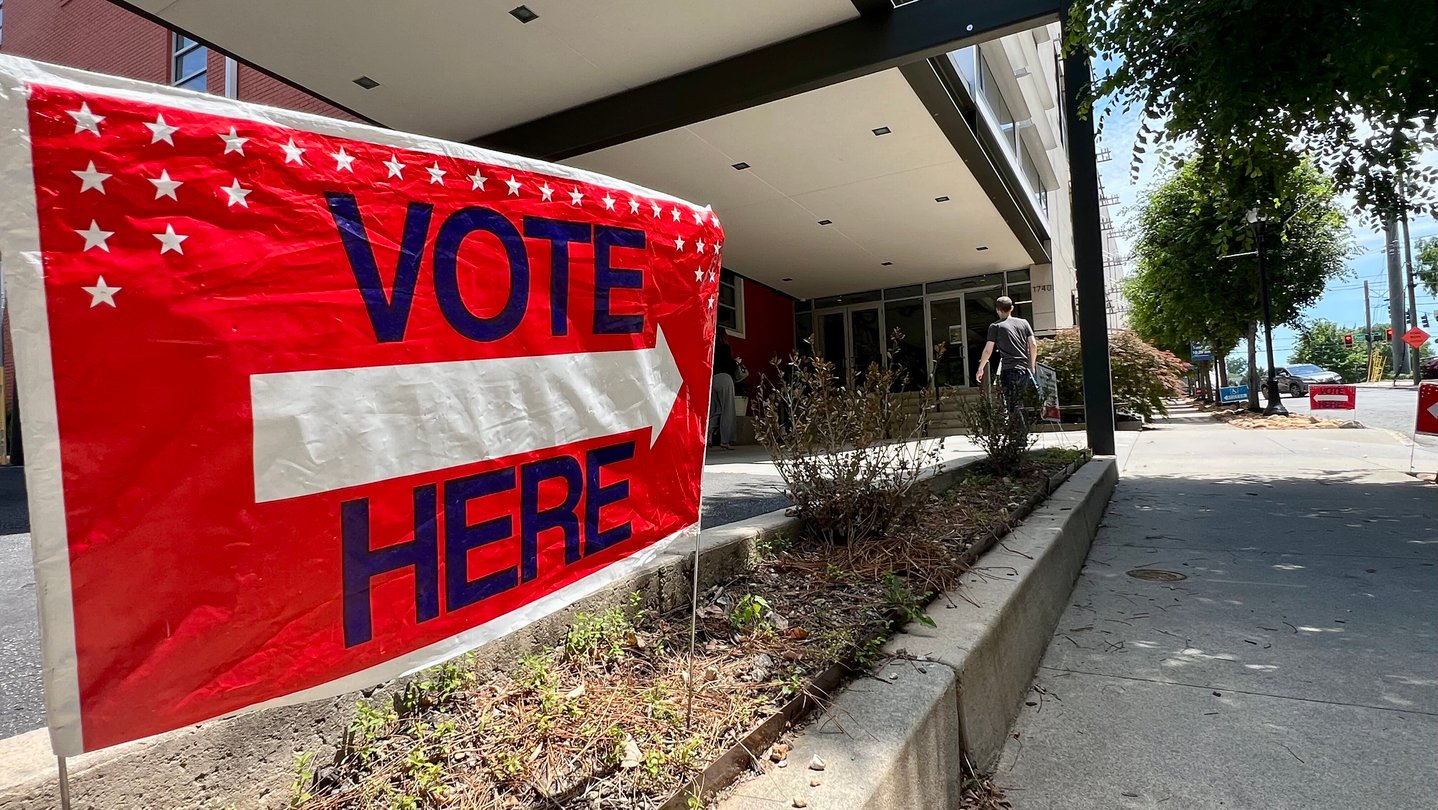
Georgia's primary elections are headed to June 16 runoffs in several key races, including U.S. Senate, lieutenant governor, secretary of state, and a local Fulton County commission contest. Former Atlanta Mayor Keisha Lance Bottoms won the Democratic gubernatorial nomination outright, while multiple congressional and judicial races were decided or remain unresolved. The article is a broad election-results roundup with limited direct market impact.
The market impact here is not about the names on the ballot; it is about the extension of uncertainty into June and the increasing probability that Georgia remains politically fragmented well into the summer. That matters because investors who treat Georgia as a clean red-vs-blue binary are likely underestimating the delay in policy visibility across taxation, labor, licensing, and election administration. The immediate beneficiary is political status quo: incumbents and local power centers retain leverage while donors, consultants, and advocacy groups extend spending cycles by another 4-8 weeks.
The deeper second-order effect is on candidate quality. Runoffs disproportionately reward higher-name-recognition, better-funded, and more ideologically activated voters, which tends to push final nominees away from broad general-election appeal and toward base mobilization. That raises the odds of a more volatile fall campaign in the Senate and governor’s races, with higher ad intensity and greater headline risk for Georgia-based corporates exposed to consumer sentiment, public-sector procurement, and state regulatory decisions.
For investors, the relevant catalyst window is the June runoff, not November. Any settlement of the GOP side in the Senate or governor’s primary could quickly reprice expectations around state policy direction and federal delegation alignment, but until then the market is being asked to discount multiple plausible end states. The contrarian view is that the runway of uncertainty is not purely negative: prolonged competition can suppress the chance of a clean ideological sweep, which may actually reduce the odds of abrupt policy shifts after the general election.
The most actionable setup is to fade complacency in Georgia-sensitive local financials and consumer-exposure names only if runoff polling starts to show a decisive hardline candidate emerging. Absent that, the risk/reward still favors a wait-and-see posture: volatility is likely to remain elevated into June, but directionality is not yet strong enough to justify aggressive outright positioning.
AI-powered research, real-time alerts, and portfolio analytics for institutional investors.
Request DemoOverall Sentiment
neutral
Sentiment Score
0.00
