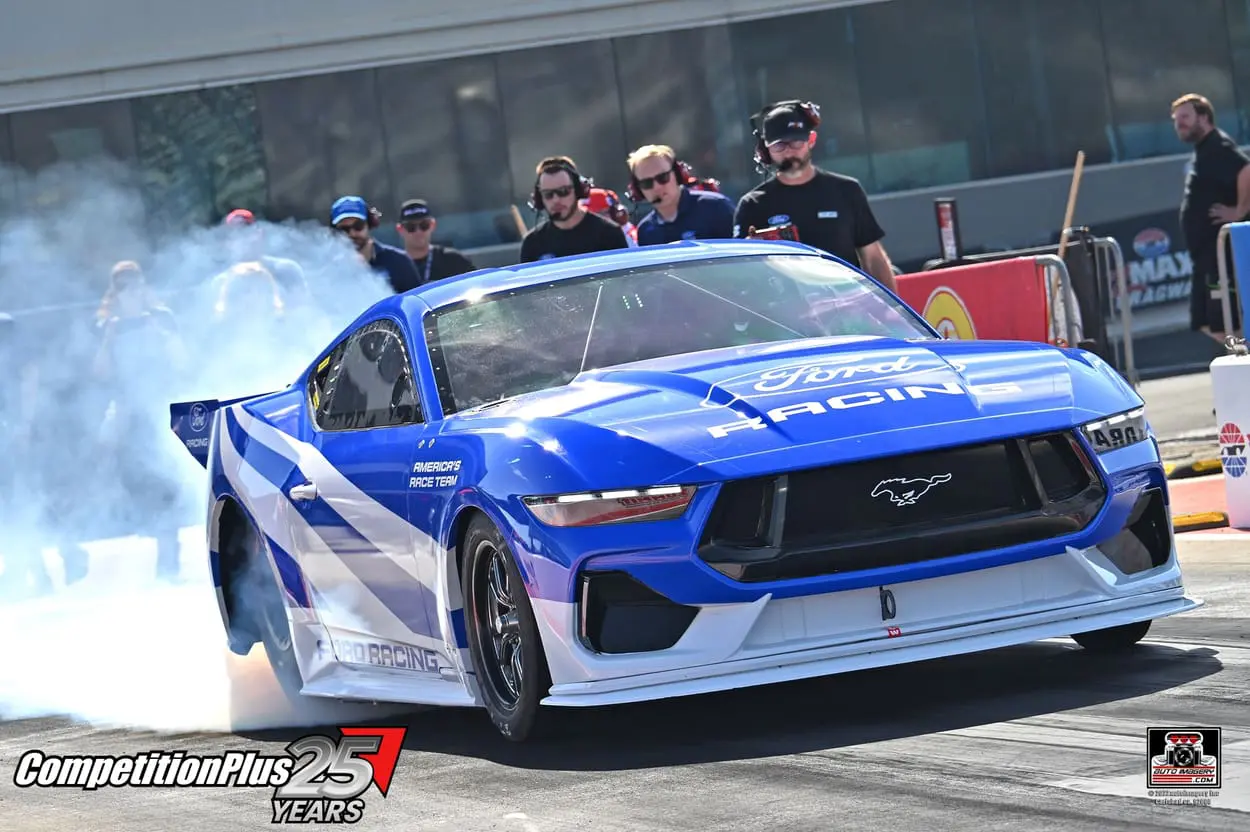
Ford Performance’s Mustang Cobra Jet 2200 posted a 6.832-second quarter-mile at more than 220 mph, described as the quickest recorded full quarter-mile run by an electric-powered vehicle. The result highlights continued progress in Ford’s electric drag-racing program, with the company emphasizing driveline control and mass reduction as key engineering challenges. The news is positive for Ford’s EV and performance technology positioning, though it is unlikely to have a material near-term impact on shares.
This is less a direct earnings catalyst for Ford than a signal that the company is using motorsport as a low-cost R&D stress test for EV powertrain architecture. The second-order benefit is reputational: Ford is implicitly widening the brand gap versus legacy OEMs that still frame EVs as compliance products, while also keeping enthusiasts attached to the badge even as the product mix electrifies. That matters because performance credibility can soften demand elasticity at the top end of the portfolio and improve pricing power across adjacent performance trims.
The engineering takeaway is that the bottleneck is no longer peak motor output; it is launch control, thermal stability, and torque management under repeated abuse. Those are the same failure modes that show up in high-performance street EVs, so the learnings likely bleed into future Mustang, Mach-E, and specialty derivatives with better calibration efficiency and lower warranty risk. The supply-chain winners are likely to be drivetrain, controls, and battery thermal-management suppliers rather than cell makers; the hidden loser is the narrative that EV differentiation is purely a battery-capacity race.
The market is probably overestimating near-term revenue impact and underestimating optionality value. This kind of headline can move sentiment for days, but the monetization window is months to years if Ford translates it into halo trims, track-focused packages, or motorsport-derived software features. The key risk is that the halo remains a showroom curiosity: if there is no follow-through into product, the stock gets only transient brand lift while capex and R&D spending stay visible.
Contrarian view: the real competitive message is not that EVs are ready to dominate drag racing; it is that legacy OEMs can still exploit their combustion-era institutional knowledge to solve EV problems faster than pure-play entrants can. That slightly favors incumbents with racing heritage and deep calibration benches, while making it harder for newer EV brands to claim an unassailable performance advantage. If anything, this narrows the premium multiple justification for some EV-only names that rely on performance mystique more than manufacturing depth.
AI-powered research, real-time alerts, and portfolio analytics for institutional investors.
Request DemoOverall Sentiment
moderately positive
Sentiment Score
0.55
Ticker Sentiment
