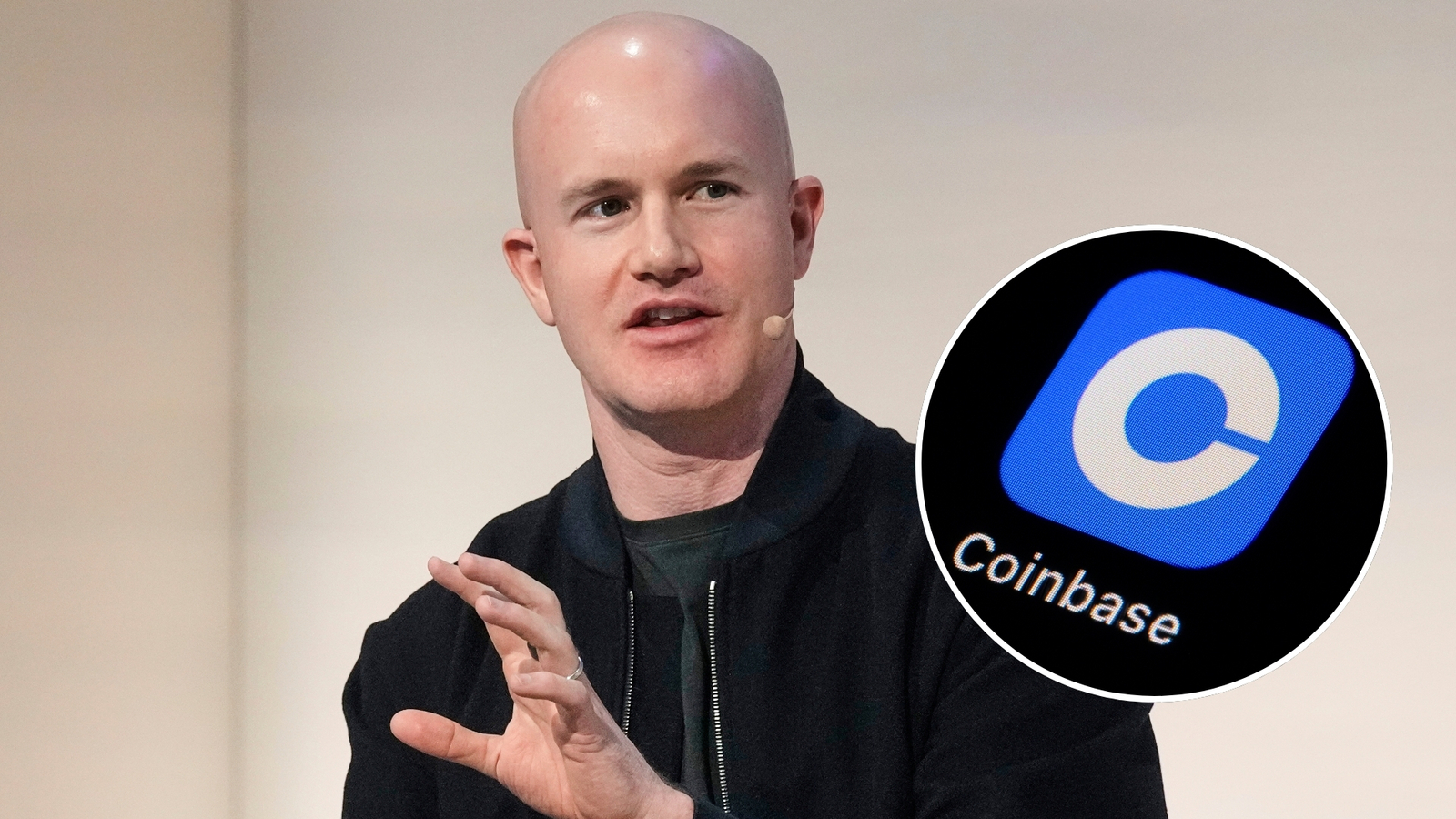
Coinbase said it will lay off 14% of staff as part of a broader restructuring to "fundamentally" change how it operates around AI. The article frames the cuts as part of a broader tech-sector uptick in layoffs tied to AI adoption, with executives arguing teams will be reorganized to use AI more productively. The near-term read-through is negative for Coinbase employment and morale, but the broader market impact is likely limited.
This is a margin-compression story masquerading as an AI adoption story. The second-order effect is that public software and internet companies with large knowledge-worker footprints will increasingly face investor scrutiny on whether AI is actually driving operating leverage or simply rationalizing slower growth through restructuring. That puts a premium on companies with credible AI monetization and a low labor-intensity profile, while compressing multiples for names where “AI efficiency” becomes a euphemism for organic demand weakness.
For META and AMZN, the near-term read is not that AI hurts them directly, but that the market will likely force a higher bar for capital intensity and productivity proof. If peers can cut headcount and still ship product, investors will ask why major platforms are not harvesting similar savings, which can cap sentiment on large-cap AI capex beneficiaries for 1-2 quarters even if fundamentals remain intact. The bigger beneficiary may be infrastructure and tooling vendors that help enterprises deploy agentic workflows, but that is not yet well-discounted in public market positioning.
The labor signal is also a proxy for a broader white-collar demand softening cycle: if AI is being used to justify restructuring at one firm, competitors can follow without waiting for a recession. That raises tail risk for consulting, HR tech, collaboration software, and certain cloud software names exposed to seat-based pricing over the next 6-12 months. A reversal would require either a regulatory backlash against AI-driven layoffs, or a clearer demonstration that AI-related productivity gains are expanding revenue faster than they are shrinking payrolls.
The contrarian view is that investors may be overestimating how quickly AI replaces labor versus how fast it changes org design. In the next 3-6 months, the visible effect is more likely to be lower hiring, flatter headcount, and better expense discipline than a wholesale destruction of demand. That argues for preferring relative shorts on labor-levered software over outright shorts on the biggest AI spenders, because the earnings damage will be uneven and mostly show up through guidance optics rather than immediate revenue collapse.
AI-powered research, real-time alerts, and portfolio analytics for institutional investors.
Request DemoOverall Sentiment
strongly negative
Sentiment Score
-0.60
Ticker Sentiment
