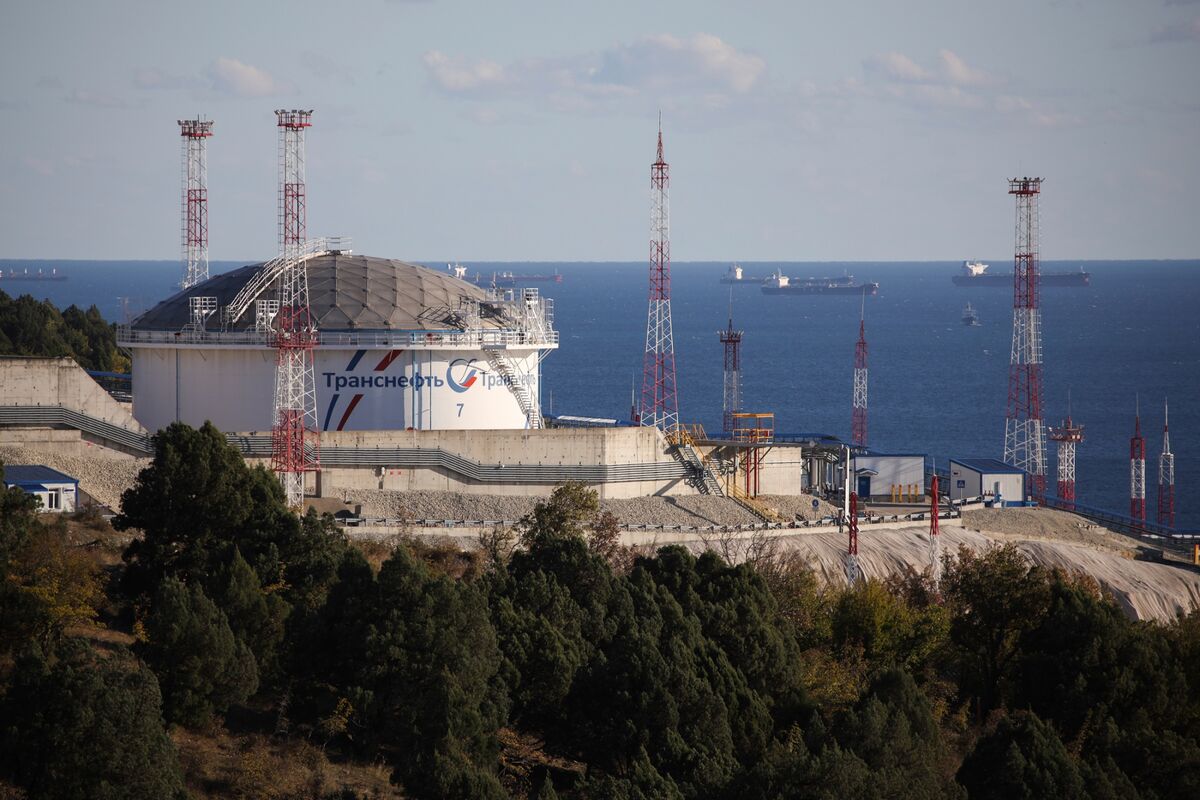
Russia’s Novorossiysk port resumed crude loading at berth 1 of the Sheskharis oil terminal, with the Samos tanker moored Thursday afternoon and loading starting later that day. The berth is designed for Suezmax tankers, suggesting a restoration of normal export operations at a key Black Sea crude outlet. The update is operationally important for Russian oil logistics but is still limited to a single port activity report.
The more important signal is not the loading itself but the restoration of optionality in a chokepoint that prices geopolitical risk into the wider crude complex. Even a modest normalization at a major export outlet can shave the scarcity premium in Urals-linked grades, but the effect is usually asymmetric: nearby prompt spreads and freight rates react first, while outright Brent often lags unless outages persist for weeks. That means the first-order beneficiary is less “lower oil” and more a reduction in the dislocation premium embedded in Black Sea-origin barrels.
Second-order, this is negative for vessel owners and traders who were monetizing rerouting and disruption. When a large berth comes back, the market typically sees fewer urgent cargo nominations, less optionality value in chartering, and tighter arbitrage windows for regional refiners that had been leaning on substitute supply. If throughput remains stable for several days, expect some easing in prompt Suezmax/aframax demand and a normalization in Russia-to-Asia and Med freight differentials.
The contrarian risk is that the market may overread a single loading event as a durable operational recovery. Black Sea infrastructure remains highly exposed to repeat interruption, and any setback would quickly reprice prompt supply because inventories and voyage timing are thin cushions. On a months horizon, the bigger question is whether this is just transient berth availability rather than a sustained increase in export capacity; if so, the impact on flat price should fade faster than the impact on time spreads and freight.
For portfolios, the cleanest expression is to lean into mean reversion in freight and prompt dislocation rather than directionally shorting crude. If the berth continues to operate for 3-5 sessions, the setup favors fading tanker names with high spot exposure and trimming hedges on nearby crude spreads; if operations break again, the move likely retraces quickly and offers a tactical long-volatility opportunity in energy logistics.
AI-powered research, real-time alerts, and portfolio analytics for institutional investors.
Request TrialOverall Sentiment
neutral
Sentiment Score
0.10
