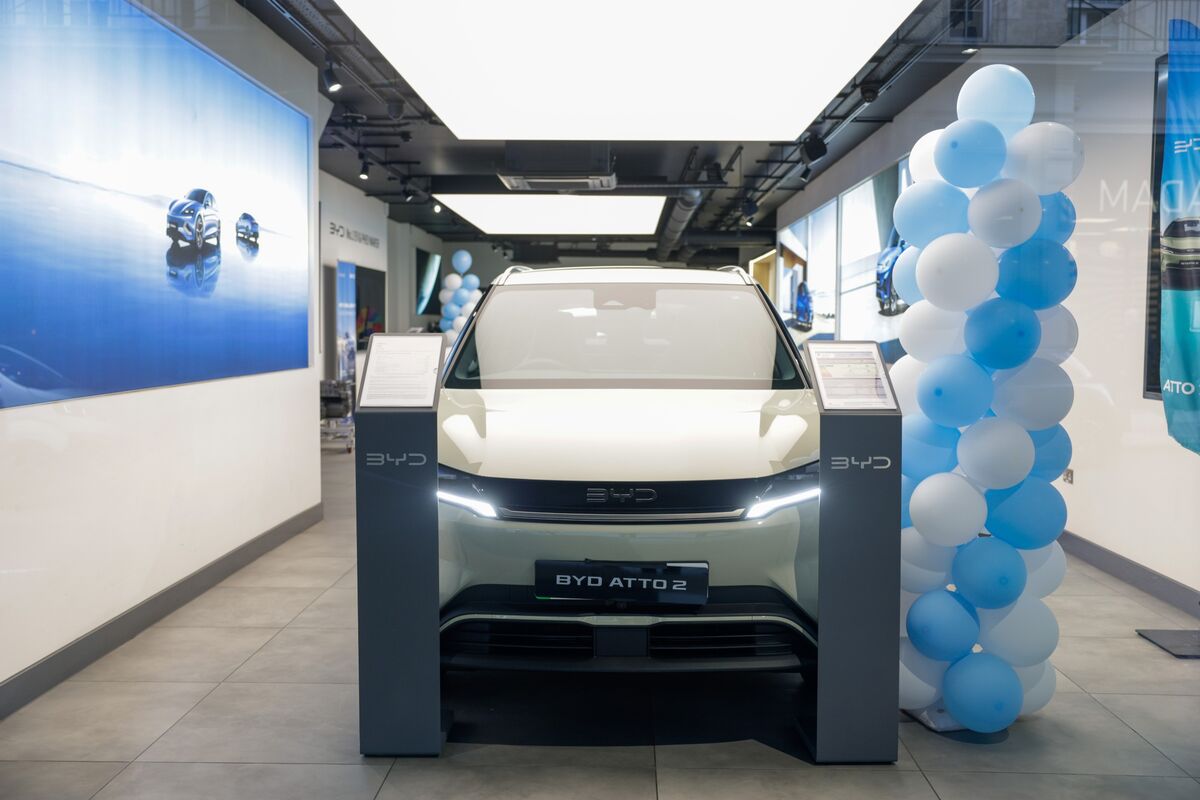
Chinese clean-tech manufacturers are seeing improved demand as higher oil and natural gas prices and Strait of Hormuz disruption push customers toward batteries and electric vehicles. The article frames the Gulf energy shock as a demand tailwind for greener alternatives, especially for Chinese clean-tech firms. The impact is positive for the sector, but still more thematic than an immediate market-moving catalyst.
The first-order winner is not simply “EV and battery makers,” but the subset of Asian manufacturers with exportable capacity and the lowest delivered-cost curve. A Gulf energy shock compresses the payback period for electrification, which should accelerate fleet and two-wheeler adoption faster than premium passenger EV demand; that favors battery cell suppliers, low-cost BEV assemblers, and charging-equipment chains over high-end OEMs. The second-order beneficiary is upstream battery materials processing outside the Gulf-linked energy corridor, because customers will prioritize supply security over absolute lowest sticker price. The more interesting read-through is margin asymmetry. If oil and LNG stay elevated for 1-2 quarters, clean-tech names with locked-in input costs can see demand inflect before their own cost base re-prices, creating a window for operating leverage. Conversely, companies dependent on petroleum-derived logistics or Gulf-adjacent feedstocks can see freight, insurance, and working-capital drag rise faster than end-demand, so the spread winners are likely those with local manufacturing and diversified sourcing. The main reversal risk is policy normalization rather than commodity mean reversion. If shipping lanes stabilize or strategic reserves/diplomacy cap energy prices within weeks, the demand spike could fade before it shows up in reported orders; that argues for favoring names with near-term backlog conversion over pure narrative beneficiaries. The contrarian view is that the market may be overestimating how elastic consumer EV adoption is in the current rate environment: for households, fuel savings help, but financing costs can still dominate, so the durable upside is more likely in commercial fleets and cost-sensitive urban mobility than broad consumer autos.
AI-powered research, real-time alerts, and portfolio analytics for institutional investors.
Overall Sentiment
moderately positive
Sentiment Score
0.45
