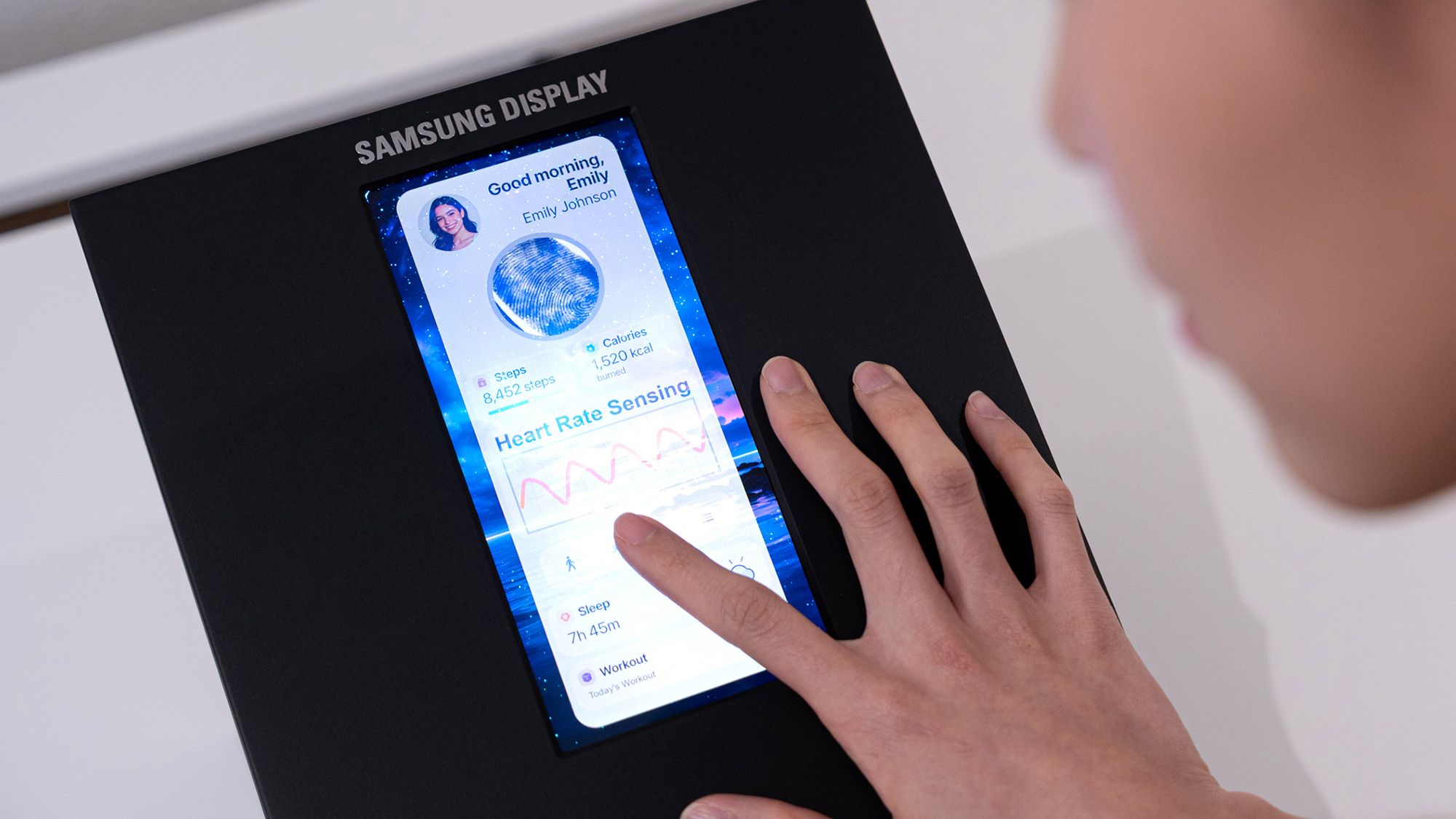
Samsung Display unveiled several next-generation panels at SID Display Week 2026, including a 500ppi Sensor OLED Display that can read biometric data such as heart rate and blood pressure. It also showcased a 3,000-nit Flex Chroma Pixel OLED, a stretchable 200ppi car display, and upgraded EL-QD panels aimed at higher color accuracy, brightness, and power efficiency. The announcement is positive for Samsung’s display technology roadmap, but the products are still in R&D with no consumer launch timing disclosed.
The immediate read-through is not a near-term revenue event for Samsung Electronics so much as a signal that display specs are moving from “visual quality” to “sensor platform.” That broadens the addressable value of the panel itself: if the screen becomes a biometric and privacy layer, OEMs can justify higher ASPs and pull more functionality out of separate components, which pressures standalone sensor vendors and discrete authentication modules over a 2-4 year horizon. The bigger second-order effect is that display suppliers with materials, deposition, and process know-how gain bargaining power versus handset assemblers, because the display becomes a system-level differentiator rather than a commoditized input.
The most investable implication is in the automotive display chain. Stretchable, high-density panels are still pre-commercial, but the development path points toward cockpit redesigns, larger content areas, and higher software monetization per vehicle; that favors tier-1s and display integrators with automotive qualification depth, while raising the bar for low-end infotainment suppliers. The key risk is execution latency: these features are easy to demo and hard to ship at yield, so the market may overestimate 12-month monetization while underestimating 3-5 year platform adoption.
On the health-sensing angle, consensus may be too focused on consumer wearables and not enough on regulated medical adjacency. If the phone can reliably capture pulse/pressure proxies, the first order winner is likely not a “health app” but whoever owns the data pipeline, privacy stack, and claims validation; that creates optionality for ecosystem leaders but also litigation/regulatory risk if consumer-facing health claims outrun clinical validation. In the nearer term, any premium phone cycle supported by this feature should be viewed as a modest ASP tailwind, not a volume catalyst.
Contrarian take: this is more useful as a proof point that Samsung Display is defending technical leadership than as evidence of immediate category disruption. The market may underprice the optionality embedded in panel IP while overpricing the speed of adoption; historically, these demos translate into a 18-36 month lead time before meaningful P&L impact, and only the highest-end devices/vehicle platforms will absorb the cost curve first.
AI-powered research, real-time alerts, and portfolio analytics for institutional investors.
Request DemoOverall Sentiment
mildly positive
Sentiment Score
0.20
