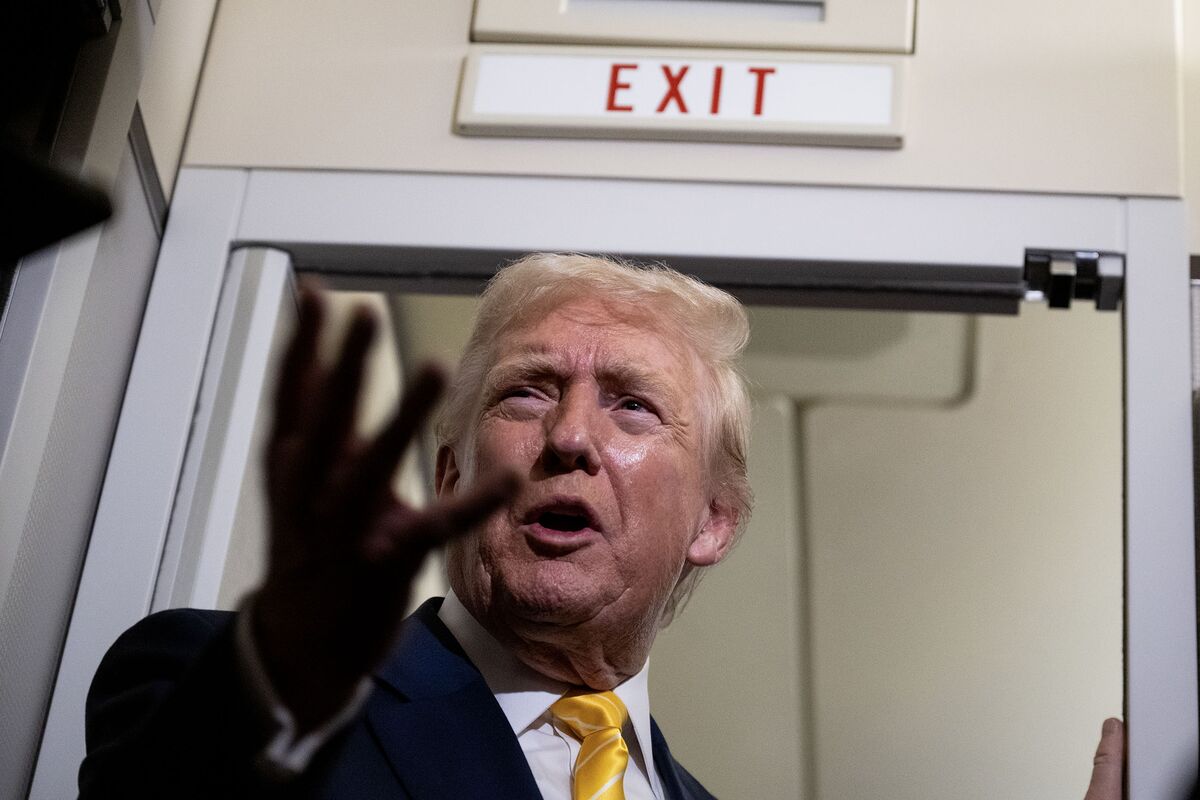
President Trump has proposed a $2,000 tariff rebate aimed at addressing affordability concerns, but the plan is meeting significant resistance from his allies and is described as a hard sell. While such a rebate could affect tariff pass-through to consumer prices and have fiscal implications if enacted, strong internal opposition makes near-term policy risk and market impact limited.
Market structure: A $2,000 tariff rebate (broadly applied) would mechanically favor import-heavy retail and consumer discretionary names by reducing tariff pass-through and boosting real purchasing power; estimate order-of-magnitude fiscal exposure ~$200–300bn if applied to ~100–150M households, implying a 0.5–1.5% GDP impulse concentrated over 1–2 quarters. Domestic materials and industrials that benefited from tariff protection (steel, some heavy manufacturing) would see pricing power pressured; pass-through to CPI for affected SKUs could fall ~20–50%, compressing margins for protected suppliers.
Risk assessment: Near-term policy risk is politically constrained (low-to-moderate probability, 10–30% within 60 days) so market moves are likely to be muted unless congressional whip counts shift. Tail scenarios: enacted rebate financed by new deficits could lift 10y yields +20–75bps (material for duration-sensitive sectors); alternatively, targeted rebates could boost discretionary sales with MPC ~0.1–0.3 yielding a 0.1–0.6pp GDP lift. Key catalysts: whip counts/OMB/CBO scoring in 2–6 weeks, monthly retail sales and CPI prints.
Trade implications: Tactical overweight consumer staples/retail (WMT, TGT, AMZN) and underweight materials (NUE, STLD); implement pair trades (long WMT, short NUE). Use option spreads to cap capital at times of political binary risk — e.g., 3-month call spreads on AMZN/TGT and short-dated puts on steel names. Time entries over 2–6 weeks as political clarity emerges; cut if 10y>4.5% or legislative support crosses 30%.
Contrarian angles: Consensus treats this as political theater; markets may underprice a 20–30% chance of passage that would re-rate discretionary vs materials by 5–12% in weeks. Historical parallels (2001/2008 rebates) show concentrated retail uplift for 1–3 quarters — if enacted, expect outsized relative alpha in small-cap retail and import-reliant apparel chains rather than broad market moves. Monitor whip tallies and CBO scores as binary triggers for scaling positions.
AI-powered research, real-time alerts, and portfolio analytics for institutional investors.
Request DemoOverall Sentiment
mildly negative
Sentiment Score
-0.30
