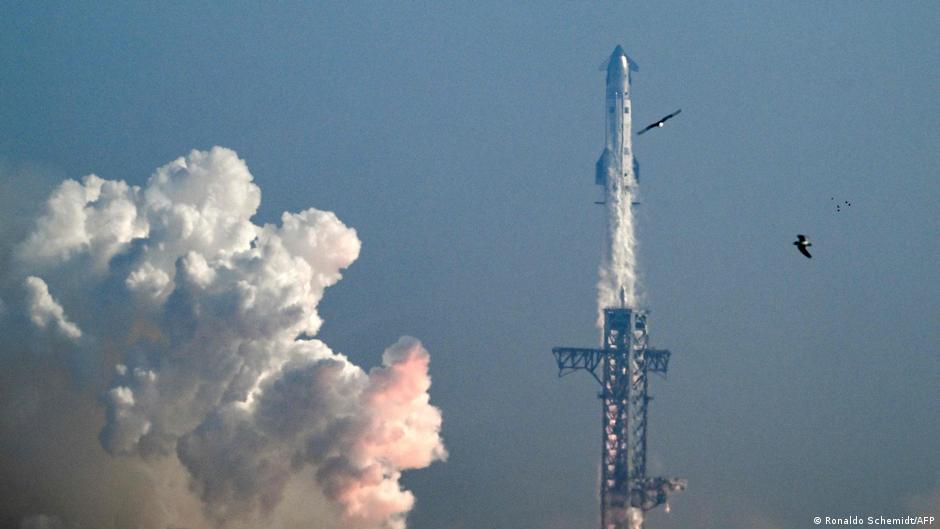
SpaceX launched its 12th Starship test flight, with the third-generation V3 vehicle reaching the Indian Ocean about an hour after liftoff from Texas. The flight had minor issues and ended with the rocket erupting on impact, but the test was framed positively by SpaceX and Elon Musk as progress toward future Moon and Mars missions. The article also notes SpaceX is nearing a potentially record-breaking public listing next month, alongside NASA's Artemis lunar program and related lander contracts.
The key market signal is not the test itself, but the credibility inflection it creates for SpaceX's capital formation. A larger, repeatable launch system reduces perceived execution risk right when private-market demand is likely to be price-insensitive ahead of an IPO, which supports a richer valuation multiple and a wider aftermarket halo across the space stack. The second-order winner is not just the obvious primes; it is the supplier ecosystem with flight-qualified propulsion, avionics, structures, and ground-support exposure, where even modest increases in launch cadence can re-rate revenue visibility by 12-24 months.
The deeper implication is competitive pressure on legacy launch and defense players that have priced in a slower cadence of reusability and higher marginal launch costs. If SpaceX demonstrates that larger vehicles can still mature operationally, procurement buyers will increasingly benchmark against its cost curve, forcing peers either into margin compression or heavier capex to stay relevant. That dynamic is especially acute for smaller public comps that depend on a narrative premium rather than near-term cash flow; the market will likely start discounting their TAM arguments if the launch cadence continues to improve over the next 1-2 quarters.
The main risk is that a high-profile launch campaign can create a false sense of de-risking: failures at the next one or two tests would matter much more if the IPO book is built on continuity rather than optionality. A drawn-out incident could hit sentiment fast over days, but the real downside would show up over months if it delays certification milestones tied to lunar and defense-related contracting. Meanwhile, the contrarian view is that the IPO may be the larger catalyst than the rocket — the public market could end up valuing SpaceX less as a moonshot and more as a vertically integrated launch infrastructure monopoly, which is bullish for quality but potentially caps near-term upside if investors anchor to aerospace comparables instead of software-like scarcity.
AI-powered research, real-time alerts, and portfolio analytics for institutional investors.
Request DemoOverall Sentiment
mildly positive
Sentiment Score
0.25
